#rendtheheavens Day 23

Day 23: (UN)CONSTANT/(UN)FAITHFUL

Galatians 4:16 Have I now become your enemy by telling you the truth?

I lost a few Facebook friends this year – but then, who didn’t? My second cousin unfriended me after she insulted a friend in her comments and I called her out on it. A couple of former congregants unfriended or learned to ignore my posts after several heated exchanges about politics and racism. I didn’t get uninvited to Christmas dinner, like a few people I know, and no one assaulted me or fired me or took away my credentials, like some others. But I know my words have troubled some and angered several.

I am, for the most part, okay with that.

Life feels more honest and roomier, these days. I threw off a few constraints on my own speech – both personally and professionally – and others got removed for me. This Advent writing practice has felt, for the first time in a very long time, like me writing myself, in my own voice.

It’s pernicious, the way censors sneak into our own consciousness, the ways we voluntarily oppress and silence ourselves after so long of paying attention to the external boundaries and accepted rules of play. I know that I inhaled, digested and breathed back out some nasty, oppressive, silencing bullshit from former contexts in which I desperately wanted to succeed and for which I was eager and willing to cut myself short.

I’ve just finished (4 more books to go on the 2016 reading goal!) Rebecca Solnit’s essay collection, ‘Men Explain Things to Me,’ about all the ways that women are silenced – casually and violently – in our present-day American capitalist culture. If you don’t know what mansplaining is, read the title essay. Be dumbfounded.

And yet, here I am, a woman given not only permission and privilege but a literal pulpit, a flesh and blood congregation. I preach. I am a preacher. I still get silenced, on the regular. But my day job involves speaking up and speaking out.

13532977_10154837198604918_146601177882045818_nI am sometimes unconvinced about the power of words, even though it has been words that so often changed my life. I struggle to appreciate the power of naming, calling out, reframing, suggesting, wondering, broadening, rebutting, truth-telling.

It’s a thing I do literally every week: this group of committed and faithful people allows me – pays me, even – to spend time thinking and reading and praying and listening for some good word and then writing, editing, speaking and preaching it. From a pulpit. And: wonder of wonders – they listen. They respond. They send me thoughtful emails mid-week about how they are still wondering with me.

It is a huge privilege, to do this for my life’s work. And it is a huge responsibility. It requires – as I see it – a commitment to honesty, and a commitment to rooting out all those oppressive, silencing constraints.

I am lucky, and blessed, and bewildered that this group of committed, faithful people seem to be okay with that part of the deal, seem to be okay with what one brother named this week as ‘the audacity to question.’ It has not always been my experience of preaching, this valuing of questions, truth-telling, wondering, breaking open…this valuing of honesty.

Who knows. Maybe these beloved sisters and brothers will be the ones unfriending me in several years’ time. Maybe that’s how truth-telling works. But maybe…maybe not. Maybe there is a place for honesty, even in this day and time, even in the church.

#rendtheheavens Day 22

Day 22: SWEET JESUS

Matthew 1: 18-25

18 Now the birth of Jesus the Messiah took place in this way. When his mother Mary had been engaged to Joseph, but before they lived together, she was found to be with child from the Holy Spirit. 19 Her husband Joseph, being a righteous man and unwilling to expose her to public disgrace, planned to dismiss her quietly. 20 But just when he had resolved to do this, an angel of the Lord appeared to him in a dream and said, “Joseph, son of David, do not be afraid to take Mary as your wife, for the child conceived in her is from the Holy Spirit. 21 She will bear a son, and you are to name him Jesus, for he will save his people from their sins.” 22 All this took place to fulfill what had been spoken by the Lord through the prophet:

23 “Look, the virgin shall conceive and bear a son,
    and they shall name him Emmanuel,”

which means, “God is with us.” 24 When Joseph awoke from sleep, he did as the angel of the Lord commanded him; he took her as his wife, 25 but had no marital relations with her until she had borne a son; and he named him Jesus.

A sermon:


Usually, the fourth Sunday in Advent focuses on Mary – the mother of Jesus, the unwed teenage mother who consents to bearing God’s own son and sings this incredible song of revolt and upside down transformation of power while she does it.

This is almost always the lectionary pattern. Fourth Sunday of Advent: MARY. It’s not just the lectionary, either. Think of all the hymns and songs and prayers and practices that celebrate Mary – who she was, what she did, the way she responded, how she literally labored to bring about the new Kingdom of God, how she spent her life watching her own son grow into such a strange and unique man.

It’s so ingrained in me to celebrate Mary on this fourth Sunday of Advent that our worship team even chose hymns and music to match that scripture. We were going to have this great prelude today – an a capella version of Mary Did You Know, from Pentatonix.

(Side note: yes, Mary knew. An ANGEL came from heaven to tell her exactly all those things the song asks about. She was well-informed, probably more in the know than anyone else around.)

But.

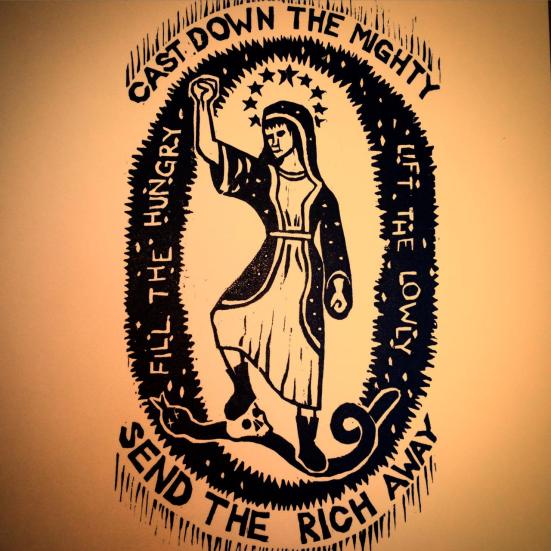
This year, the lectionary doesn’t give us Mary. It doesn’t ask us to reflect on the ways we are called to be like her, consenting, rebellious, laboring and birthing new worlds with our own lives. The lectionary, this year, doesn’t ask us to question whether or not Mary knew what she was doing, it doesn’t give us her beautiful song about the Lord lifting up the lowly and filling the hungry with good things while scattering the proud, throwing down the mighty from their seats of power and sending the rich away, empty and unsatisfied.

And man: was I disappointed when I realized that I didn’t get to preach on Mary and the Magnificat this year. I love the Magnificat. I love that Mary was who she was. I love that Jesus’ birth is announced by an angel who comes to the least likely place in Nazareth, and announces to the least likely person that she – a teenage woman with no social standing or political power, not even a husband or a house of her own – announces that SHE will be the theotokos – god-bearer. And in response, Mary picks up on this beautiful reversal of power and privilege, picks up on the ways God upturns every human expectation, and sings a gorgeous song of revolt, a song of transformation of the very world order.

I would have loved to have preach on all that today. (Notice, how I got some of it in, even while I am telling you that I don’t get to preach it?)


But the lectionary, this year, in 2016, does not ask us to reflect on the place and person of Mary.

Instead, this year, we get the story of Joseph.

Huh.

Joseph doesn’t show up at all in the Gospel of Mark, the book that was the first story of Jesus’ life to get written down. The Gospels of Matthew and Luke rely on Mark’s story to shape their own, as well as some other shared source, and Joseph is in both of these versions.

And, if you think about it, Joseph’s presence could be sort of ancillary to the story of Mary getting pregnant by the Holy Spirit and birthing the Son of God. Joseph, as non-biological father, could be extraneous to this cosmic incarnation that the gospel writers are trying to tell.

Some scholars say that Joseph got added to the story to answer the lingering questions about whether or not the Messiah had really descended from the lineage of King David – Joseph was in that line. Some scholars say that Joseph’s presence is important because he provided much needed security for Mary, an unwed pregnant teenager.

I am unconvinced by these arguments. Yes, Jesus’ lineage was an important marker of his Messiah-dom for those first followers. And yes, it would have been true that Mary would have been particularly vulnerable in her pregnancy. But given the ways that God is working in this story, choosing an unlikely person in an unlikely place, choosing vulnerability and creating new worlds out of it, I am unconvinced that Joseph’s presence was necessary for either patronage or protection. If God can bring a Messiah into the world through a vulnerable woman in a totally out-of-the-way place, then God could have handled those questions in other ways.

So: what’s the deal with Joseph?

As much as I love Mary, I do not exactly identify with her. I have a couple of friends who have spent an Advent season or two being pregnant with their children. They tell me that this synchronicity – growing a person in their own body while following the journey of Mary, who was growing a god-person in her own body – was incredibly meaningful for them. They tell me that the experience changed both the way they understood Jesus and the way they understood themselves.

I find that deeply meaningful and deeply beautiful. I rejoice with my friends who found that new perspective and deepened faith.

But I myself have never had occasion to identify with the God-bearer, seeing as how I have never had the occasion to be a mere human-bearer.

That’s not exactly the way identification works, I know. Finding that we relate to a biblical character or story is not a one-to-one correlation. The Spirit works in us in mysterious ways, connecting us to God’s story and God’s presence in unexpected and interesting ways.

Still, I know that the overwhelming focus on Mary as Jesus’ parent isn’t relatable to many of us. Not all of us have been or can be pregnant. Not all of us are chosen as unlikely bearers of God’s birth in such a visceral way. Not all of us can or will sing incredible songs of revolution and transformation that get passed down generation to generation.

So: What’s the deal with Joseph?

Maybe Joseph is here for many purposes. Maybe one of those purposes is to serve as a model for participating in God’s new reign, God’s birth into the world, God’s transforming power of salvation and incarnation – participating even when we are not the so-called ‘chosen’ one, even when we don’t get fancy Greek titles like theotokos, even when the kid is so clearly not ours, even when we could easily choose otherwise.

Maybe Joseph offers a model for those of us who feel a bit distanced from God at work in the world, a bit distanced from the hungry and the poor and the disenfranchised that God promises to fill and lift up and make first in line, a bit farther removed from the action of God’s transformation in real time.

st-joseph-and-christ-child-284x300

Because Joseph could have so easily said “no.” In fact, that’s what he was planning to do. He and Mary were betrothed, but when he found out that she was pregnant – and that it clearly wasn’t his kid – he planned to get a quiet divorce. He wasn’t going to make a big scene, he wasn’t going to hang Mary out to dry, exactly, but he was going to quietly walk away and resume his own life, away from this particular drama.

How often are we – the ones who might feel a bit removed from the action of justice and transformation – tempted to walk quietly away and resume our own lives, far away from the drama of world-shaking, power-shifting, kingdom-inbreaking presence of God?

How often? I confess to walking away every single day.

//


A few months ago, I went to hear Rev. William Barber speak. Rev. Barber is the head of the NC NAACP and the architect of Moral Mondays here in North Carolina. If you haven’t heard him preach, you should. I knew that he was a powerful preacher and a force for justice here in North Carolina, but I had also felt stuck on the outside of his movement, as a white person newly arrived in the state. I’m not a part of the black church tradition that formed Rev. Barber, I’m not really the target demographic for the NAACP, and even though I am attracted and intrigued by the ways he is witnessing across the nation, I still felt like an onlooker, an outsider, a hanger-on.

But here’s what happened when I heard Rev. Barber speak: he told the story of being invited, several years ago, to preach out in Western North Carolina. You might have read about Rev. Barber being threatened and arrested in various contexts – notably kicked off an American Airlines flight or arrested in front of the state capital. But this story that he told was about traveling into a tucked-away mountain county where he knew the Ku Klux Klan to be active, and where he was quite literally scared for his life. His church sent extra people with him, and the group that invited him took extra security measures.

I cannot imagine doing life like that.

When Rev. Barber got up to speak out in western NC, he said that the crowd was mostly white. He preached – his message about justice and fusion coalitions, connecting people across lines of race and politics to push a moral agenda on those in power. After he spoke, he said, this group of what he called ‘old white mountain ladies’ got so excited that they begged Rev. Barber to start their own chapter of the NAACP.

No kidding.

Rev. Barber’s message of cooperation and justice, mercy for the least of these and accountability for the powerful was so convicting that these white mountain ladies wanted to join the National Association for the Advancement of Colored People.

That story convicted me, not because I want to join the NAACP, exactly, but because I am from a long line of old white mountain women. I have heard story after story of my great-grandmothers riding up and down the Appalachian hollers, delivering babies and caring for their coal-mining husbands. Rev. Barber laughed a hearty laugh when he told this story, but when I heard it, some door opened in my heart. Maybe, I thought, just maybe there is a place for me in this movement, too. Maybe I can work together with all kinds of different people to make a new world possible, too.

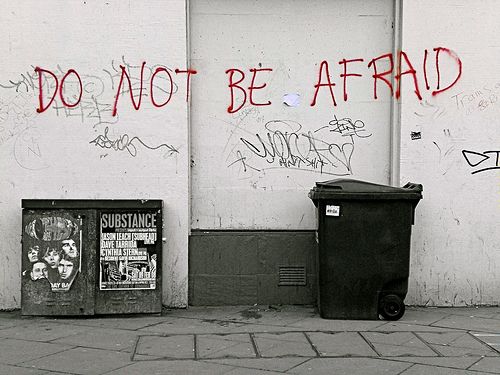
I think that heart-opening feeling must have been how Joseph felt when the angel came in a dream and said “Hey, Joseph! I know what you’re planning – to quietly slip away from the action and go back to your own quiet life. But DO NOT BE AFRAID! Yes, this baby is not your biological child. Yes, you have been a bit distanced from the action. Yes, Mary is the one carrying the child. But there’s a place for you here, too. You have a job! You have an important role in this drama. YOU get to name this child – Emmanuel, God-with-us, Jesus the Christ. Don’t slink away, just yet. There’s a place for you in the new kingdom, even if it feels like you’re supposed to steer clear. Stick with us. It sounds insane, I know, but just give it a chance.”

Maybe a door opened in Joseph’s heard during that dream. Maybe he heard the invitation, like I did, to take his place in the movement of God at work in the world.

What insane invitations are God’s angels whispering to you? To adopt a baby that is not yours? To join an organization that seems to be meant for exactly the opposite of who you are? To endure ridicule and get ostracized for following some absurd intuition? How is God asking you to stick around? Where is God asking you to lean in, instead of sneaking out? What is it that you are afraid of?
508f6e99fa5d66024aa5e0d185a69f61

Because God’s word to Joseph is God’s word to us: Do not be afraid.

There is a place for you in this coming kingdom of justice and mercy.

Even if it seems insane, even if it makes no sense, even if no one else around you will understand: stick around. Draw nearer.

Do not be afraid. The Lord is here, with us, and things are about to get messy.


#rendtheheavens Day 21

Day 21: TUMULT

John 3:36 Whoever believes in the Son has eternal life; whoever disobeys the Son will not see life, but must endure God’s wrath.

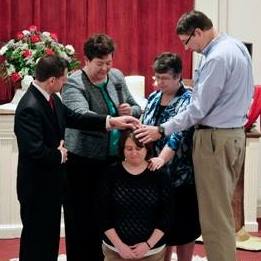
My mom got ordained this year.

She finished seminary, worked as a hospice chaplain, and on Valentine’s Day, she was ordained to preach the gospel in the Church of the Brethren.

One of the hymns she chose for the service was this one: Jesus Calls Us O’er the Tumult.

The hymn is a summons, an invitation to listen for Jesus’ call to make a life of faithful discipleship our ultimate concern, more important than wealth, busyness, employment, home, family. It mentions the apostle Andrew, who was called to follow Jesus from the beach, where he’d been a fisherman. He left his boat, his net, his livelihood, his family, his home…and followed.

I hate the immediacy of the gospels. I hate that Andrew meets Jesus one day and immediately drops his entire life to follow him. Today’s lectionary text was about Joseph hearing from an angel in a dream, waking up and totally abandoning his entire hard-won, agonizingly discerned life plan. I hate the way plot gets hurried along in scripture, carved down into bite-sized storylines.

Surely – surely! – Andrew and Joseph and Mary and all those other biblical characters who heard a call from God did some soul-searching before they said YES, right? It’s a lot to give up, to choose to follow Jesus wherever he asks, even away from the things we love most deeply.

I know part of that is my particular personality – I am slow to decide and have a bone-deep need to carefully consider all the facts and potential outcomes before committing.

But I think this weight of the reality of a life of discipleship is exactly why my tradition doesn’t baptize babies. We expect people to count the cost of a life lived in pursuit of Jesus. We expect people to be made aware of the heavy decisions that following Christ may require of them. We expect people to commit of their own free will and volition.

A bunch of our ancestors got oppressed, imprisoned and killed for their faith commitments, so the insistence on deliberate decision making is not a pro pro of nothing.

Still, what convinces me over and over that choosing faith and discipleship is worthwhile is the promise of greater life, greater joy, a fullness more than, as Paul says, we can ask or imagine. If I love these this much and they love me, what greater love could be still possible, yet?

#rendtheheavens Day 20

Day 20: RAW

Galatians 4:4 But when the fullness of time had come, God sent his Son, born of a woman, born under the law, in order to redeem those who were under the law, so that we might receive adoption as children.

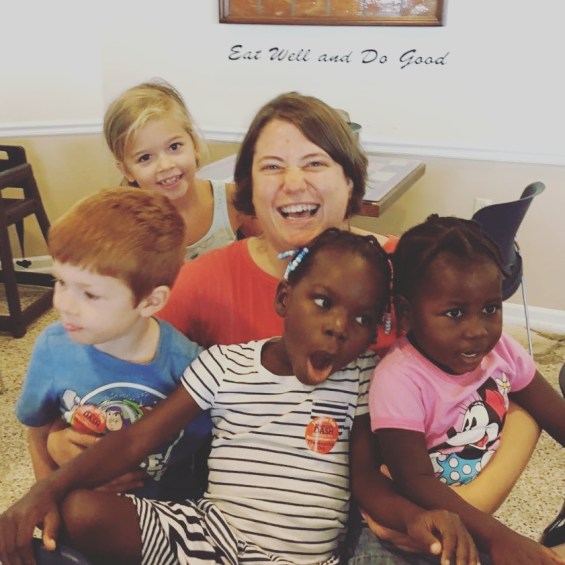
I met two new tiny cousins this year. My cousins adopted two little girls from the Democratic Republic of the Congo. The story of their adoption is long, complicated, heart-wrenching and incredible. We knew them from afar for years before they arrived here in the U.S.

I can’t pretend to know what life feels like for my new cousins, their tiny siblings, and their persistent, passionate and endlessly energetic parents. I know it has been intense.

I have read about the D.R. Congo. I know that the influx of refugees in my own city includes a large number of people fleeing that country for some measure of safety here. I know that next week, the democratically elected president’s term ends, and they have no plans for another election. Yesterday, the government ordered a blackout of social media in order to prevent public protests when the term expires and the leader attempts to remain in power.

I have begun to think a tiny bit differently about the world since learning to know and to love my newest tiny cousins. They’re African, and American. Their skin is dark, and they live, now, in the American south. I worry about them – what kind of world they’ll encounter as they grow up in our racist country, in my racist hometown, in the racist structures of American life. Loving these tiny girls has made my understanding of our racialized realities and my motivation to participate in their dismantling all the more immediate, all the more real, all the more necessary.

14054174_10101340112575477_4827045610808378007_n

At a recent training for volunteering with recently resettled refugees, someone asked how we should respond if a refugee friend asked us about the anti-black, anti-immigrant, anti-Muslim sentiment run amok in our country.

The woman leading the training responded, as gently as she could, that most refugees are pretty damn familiar with being treated unfairly, and that we shouldn’t be worrying about how to explain oppression to them.

Which made me wonder: instead of worrying so much about my tiny cousins, what could I be learning from them?

And good lord, y’all. The resiliency, the adaptability, the curiosity, the tenderness and the bombastic JOY of these kids; their ability to make space for themselves, to shed old habits and learn – slowly, slowly – new ones, their willfulness and survival instincts, their bent toward excitement and experience…I could go on. It is all raw – so much unedited experience of the world, from all of them. I am so, so grateful to get to know and love them, all of them.

#rendtheheavens Day 19

Day 19: ANGUISH

Psalm 80:4-6

O Lord God of hosts,

    how long will you be angry with your people’s prayers?


You have fed them with the bread of tears,

    and given them tears to drink in full measure.

You make us the scorn of our neighbors;

    our enemies laugh among themselves.

Y’all know what’s happening in North Carolina today?

The Republican governor, having finally – after a month of whining and complaining and manufacturing chaos – conceded the race to his Democratic challenger, got backed up by the Republican legislature that took over a special called session of the legislature to introduce measures to hamstring the new governor: the bill, essentially assured of passing the Republican-held GA, due to illegal gerrymandering, limits the number of positions the Governor can appoint (from 1,500 to 300), changes the make-up of Election Boards, re-establishes partisan elections for judgeships, makes a huge swath of the Governor’s appointees require Senate confirmation, modifies the appellate court process, and gives outgoing Governor McCrory power to appoint more agency heads before he leaves office.

Essentially, the losing party is refusing to cede power to the new, democratically elected leadership.

In other words: democracy is being blatantly and shamelessly destroyed.

I don’t put my ultimate faith in democracy – my Anabaptist theology warns me of the dangers of placing trust in political and government institutions.

But I am pretty appalled at the wanton disregard for law, convention, and basic morality on display here, today.

North Carolina is absurd. We are, in fact, the scorn of our neighbors.

But the way things have been going, North Carolina, scorn of the country, is actually pretty predictive of what’s coming in the larger political spectrum.

I hate politics. A lot. I would like to hide behind my radical reformation theology and say, with a self-satisfied sort of conviction that we could have predicted this, that plenty of people did predict it, that crumbling political infrastructure is the inevitable result of a spiritually-bankrupt people. Seriously, I could say, read any biblical prophet! Death comes to human power structures. Inevitably.

But that self-satisfied position is not one I can take honestly. Honestly? I am still feeling anguish. I am still feeling the privilege of surprise and despair. I am not as cool-headed, cynical and condescending as I would like to be. I am also not as clear-eyed, deeply-rooted and sure about where my allegiance and joy lie, either.

Instead, I am anguished, here in the middle, in North Carolina.

#rendtheheavens Day 18

Day 18: BROKEN/SHATTERED

Matthew 8:29 Suddenly they shouted, “What have you to do with us, Son of God? Have you come here to torment us before the time?”

I was on a call the other day, a conference call with dozens of women in ministry processing how they were feeling and thinking in the wake of the election – in the wake of our country electing to highest office a man who has demeaned, dismissed, groped, and assaulted women, in public, with no shame.

For an hour and a half, these women shared where and how they were. There was grief, and anger, despair and depression. There was sadness, dejection, confusion, and lament. There were some who were ready for action, swift and bold; there were some who still dumbfounded and in shock.

There was also hope.

One woman – a woman who is no stranger to grief herself – shared her hope. Maybe, she said, all this grief and despair is breaking us open to something new.

img_20161213_143523

Maybe.

I do believe that’s how it all works, the death and resurrection business. You don’t get newness until the old passes away. You don’t get resurrected until you know death.

This verse from Matthew is demons, shouting in protest of their impending exorcism.

Jesus is about to cast them out of a human being and into a herd of swine. They are afraid.

In Mark’s version of the story, the man who had been possessed tries to follow Jesus – attempting to stow away in his boat when Jesus gets up to leave, begging Jesus to let him go with him. I would do it, too, if someone like Jesus showed up one day and cast out every demon dogging me.

But Jesus won’t let the newly-healed man get in the boat. “Go home to your friends,” he tells him, “and tell them what the Lord has done for you, what mercy the Lord has shown you.”

Can you imagine THAT guy’s testimony back at temple the next week? “Yep, right into them there hogs, I tell ya!”

Healing requires pain, I think. All the demons have to get out, somehow, and that particular exit cannot be pleasant. The demons do not want to go. “NO,” they shout, “STOP TORMENTING US! WE WANT TO STAY RIGHT HERE!” Like lancing a boil, cleaning a cut, clearing the air: all the nastiness has to exit before the wound can heal.

So, maybe it is true. Maybe all the grief and despair – the honesty about exactly how broken and shattered we are, the revelation about how deep the wound was, the pulling back the curtain on who and how we really are – maybe it is all making way for some new thing headed our way.

Maybe.

#rendtheheavens Day 17


Day 17: CONSPIRE

Jude 20-21: 20 But you, beloved, build yourselves up on your most holy faith; pray in the Holy Spirit; 21 keep yourselves in the love of God; look forward to the mercy of our Lord Jesus Christ that leads to eternal life.

I am missing Mary Jo today.

Mary Jo was my friend and mentor, co-conspirator for a decade. She died this spring, unexpectedly, from a brain aneurysm. Congenital, they said, a defect present since birth, there with every breath she breathed. But not a problem until the month before her 60th birthday.

Mary Jo made space for me. I met her during a summer internship program in college. She visited me in seminary, a denominational Brethren bigwig in a state with no Brethren congregations and she took me out to dinner. When I decided to do a volunteer year after graduation, she created a position for me. When the volunteer year ended, she created another position – this time with pay. She introduced me to people and places and processes that I would have never have had access to otherwise. She trusted me with important work and important stories. She modeled what it is to wield power with grace, to witness people’s pain and joy in equal measure, to lead with humility and boldness.

Mary Jo was always out there in front, paving the way, making space not just for me, but for so many others. She was a woman executive in a field and tradition that does not always take kindly to women in leadership. She navigated conflict and vitriol with a lightness of being and attention to relationship that I pray I might learn someday to possess.

Mary Jo believed in me. She didn’t just encourage me, she told me what she thought I was capable of and then threw me into actually doing it. She made ministry a real possibility. She showed me the joy of it, somehow, without ignoring the depths of the pain that it necessarily entails.

Mary Jo was a co-conspirator. Conspire is from Latin – to breathe together. We did that. We worked closely on project after project. We planned, we wrote, we edited, we taught, we implemented. We brainstormed. We complained. We lamented. We failed. We tried again. We invited. We retreated. We shared meals and airline miles and hotel rooms and leadership. We celebrated successes – fists in the air, shouts of joy kind of celebrations. We sat together in silence, uncertain about what would happen next. We breathed.

I miss her, so, so much.


12801261_10101181405924877_1814180121738119089_n


Mary Jo preached at my ordination service. It was Pentecost, and she preached about the Holy Spirit:

The Holy Spirit hovered over the face of the deep at creation.

The Holy Spirit broke into the quiet calm of that room in Jerusalem

like the rush of a violent wind and with flames descending.

The Holy Spirit breaks into our work, our worship,

our fears, our hopes, our anxieties, our dreams,

our call, our response…..

In Hebrew, the word for ‘spirit’ is ruach. The same word, ruach, is also the word for ‘breath.’

To breathe is to be in-spirited.

To conspire, to breathe together, is to be connected by the ruach, the wind, the Holy Spirit.

And the Spirit doesn’t exist only in life – the Spirit is that thing that transgresses and inspires and comforts and compels. The Spirit binds us beyond this life.

I am praying in the Holy Spirit tonight, praying that I might be both worthy and not dwarfed by the honor of carrying on some piece of Mary Jo’s legacy. I miss my co-conspirator. I miss her encouragement and her leadership and her laughter and her joy. And I am grateful for all that breathing we got to do together.

#rendtheheavens Day 16

Day 16: VISCERAL

Psalm 42:3-4

My tears have been my food

    day and night,

while people say to me continually,

    Where is your God?”

These things I remember,

    as I pour out my soul:

how I went with the throng,

    and led them in procession to the house of God,

with glad shouts and songs of thanksgiving,

    a multitude keeping festival.

I talked to a good friend today whose body is not cooperating.

She wants to do things, normal, everyday things, but her body is having trouble communicating with itself, and doing those normal, everyday things swings from difficult to near-impossible.

For all of our medical marvels and healthcare technology, we are still beings with bodies. This is how we experience the world: viscerally.

Viscera is latin for intestines. It’s the innards. Our innards.

In Sunday School this week, we told stories of times we’d been lost, or lost people we loved, and how it felt when we – or they – were found.

As I listened, I could feel my innards clenching with anxiety, spasming in sympathetic terror. And I could feel – viscerally – the release and relief when someone was found. I could FEEL it.

Generally, I am not great at paying attention to my body. I’d rather live up in my brain and treat the rest of me as accessory to intellect. This is not a great way to encounter the world. I miss out on all kinds of input – beauty, grief, the joy of that feeling of relief at being found – when I ignore my viscera.

But the thing is: God came to us incarnate: In carne. En-meated. Viscera-ed. Jesus was a being with a body. God did not say to Godself, “Hmmmm, I’d like to draw near to those humans. I think I’ll send a giant intellect to earth and inhabit it.” God did not say, “Oh, yes, the best way to be WITH my children will be to swoosh around them as a wily spirit.” No, God arrived complete with intestines, uncooperative nerve-endings, and the capability to experience the world through taste and touch and smell.

God arrived embodied.

That makes God seem vulnerable, and it makes me seem ignorant.

If God not only created me as a being-with-a-body, but also decided to come on over and join all of us as a being-with-a-body herself, well, I should probably be paying more attention.

That will probably mean NOT eating the next batch of party mix I make in two sittings flat.

And listening to my viscera more intently, hearing its willingness and unwillingness to cooperate, blessing its abilities and lamenting its inabilities.

Because apparently, that’s what God is up to.

#rendtheheavens Day 15 (a sermon)

Day 15: HOPE(LESS)

Matthew 11:3 “Are you the one who is to come, or are we to wait for another?”

Is it cheating to blog my sermon from this morning? I already wrote this verse.

I hereby declare it not cheating.

Here ya go.


Do y’all know about #biscuitgate?

Nine years ago, a group called Love Wins Ministries started sharing Bojangles sausage biscuits and coffee on Saturday and Sunday mornings in Moore Square Park in Raleigh. The ministry was supported by several churches in the area, and led by Mennonite pastor, a part of the Raleigh Mennonite congregation, Hugh Hollowell.

For six years, Love Wins shared food and coffee for free to anyone who showed up at Moore Square park on weekend mornings. They did this because at that time, there was nowhere that homeless women and men could go on the weekends – not just no food available, but nowhere to be, to sit, to rest, to exist. The official shelters closed on Saturdays and Sundays. Love Wins had been filling in the gap by partnering with churches and bringing biscuits every weekend morning for six years.

They didn’t have permits to operate in the park itself (each one cost $800), so they consulted with police and the city and determined that they could set up on the adjacent sidewalk, as long as they didn’t impede traffic and as long as they cleaned up afterward. They did this work out in the open, publicly, in view and conversation with Raleigh government and police. Every weekend morning for six years, they shared food.

Then, three years ago, on a Saturday in August of 2013, the Love Wins crew showed up at Moore Square Park and were met by Raleigh police officers who told them that if they handed out the 100 sausage biscuits they had brought to the 70 hungry people waiting in line, they would be arrested. It was, they said, illegal to feed people now.

The details behind why things changed so suddenly are not entirely clear, but the following weeks did reveal that city officials had been plotting for months ways to throw the sausage biscuit sharers out of the park. The chief of police and the director of the city’s parks department sought legal council and changed regulations to ban certain classes of people from public spaces. The moment that a Raleigh police officer threatened to arrest Pastor Hugh and others for sharing sausage biscuits was the culminations of a quiet campaign to keep certain ‘kinds’ of people out of certain public places.

(you can read about #biscuitgate here)

What happened next is hopeful: Congregations and supporters of Love Wins Ministries rallied. The City Council appointed a special task force to study the issue of weekend service provision for those experiencing homelessness. In the fall of that year, the Council voted to approve the recommendations of the task force: to find and secure a building near Moore Park that would serve as a location to offer multiple services to the city’s most vulnerable citizens. The Oak City Outreach Center opened in June of 2014, a temporary weekend space for meals and gathering, funded by the city.

The City also promised to work with the Raleigh/Wake Partnership to End Homelessness to create a more permanent Center where people experiencing homelessness can find bundled services: mental health services, medical services, and access to government benefits like food stamps.

Pause the story there, with this lingering promise.


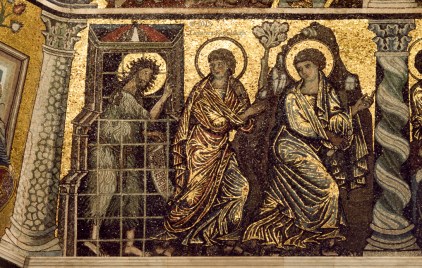
In our scripture for today, John the Baptist is in prison.

John is not in prison for feeding people Bojangles.

But John is in prison for some similar kinds of things. John stood up to Prince Herod, telling him that he could not marry his brother’s wife. John – in addition to his stint in the wilderness eating bugs and honey, wearing camel’s hair and preaching repentance and the coming Messiah – also stood up to those in power, calling them back to morality and what they knew to be the right thing to do. As so often happens, this made the ones in power angry.

And just like the Love Wins crowd in the park in Raleigh, the powers told them that if he kept it up, this practice of calling out the morality of the government, he would be arrested.

Unlike the people with Love Wins, John didn’t seek an alternative means to his purpose – there was no committee, no task force, no recommendation to City Council. John was arrested and thrown in prison.


florencebaptmosaics_27

So, here in this bit of Matthew’s gospel, John is sending a question from prison through his disciples to Jesus:

Are you really the Messiah? I have been waiting and watching, preaching and baptizing, witnessing to your arrival. I know I recognized you there at the Jordan River and told everyone that you ARE the Messiah when I baptized you, but I’m stuck here in prison and people are still asking me, and I can’t tell from here what’s happening, and, by the way, I am still in prison and aren’t you, the Messiah, supposed to be the one who takes over everything and rises into political power and sets prisoners free? Just, you know, wondering, Jesus. Signed, Your Prophet in Prison, John.

When John’s disciples bring the question to Jesus, I imagine he must have chuckled.

“Go,” he told them, “and report to John what you hear and see. Those who were blind are able to see. Those who were crippled are walking. The people who had been cast out are welcomed back to the fold. The ones who were deaf now hear. The ones who were dead are alive again. The poor have good news proclaimed to them!”

These signs of the Kingdom – blind seeing, deaf hearing, the dead being resurrected and the poor having good news – these are ancient signs of God’s presence. Jesus isn’t just making up this stuff on the fly. He’s quoting Isaiah. John’s disciples would have known exactly what Jesus meant: are you guys not paying attention, here, he was asking. You know the scriptures, right? You know what a Messiah looks like. And here – right here and right now – you are witnessing all those things in real time. Tell John what you see. He’ll know what it means.

So, John’s disciples leave, and Jesus turns back to the crowds that he’s been preaching to. “What did you go out into the wilderness to see?” he asks. John had quite a following, and people were flocking to him. “Were you looking for a stalk blowing in the wind when you went out there to hear John preach? What did you go out there to see? A man dressed up in silk and refinement?

Look, you guys, the silk-suit wearers are in royal palaces. What was it you went to see? A prophet? Yes. And more.”

Jesus knows the ways we humans fail and falter – even John himself, the one who announced Jesus’ arrival, recognized him there at the Jordan river and baptized him into the start of his ministry on earth – even JOHN was wavering in his faith that this was really the Messiah he had been preaching about. Of course all those people who had traveled out into the wilderness to hear John preach would be wondering and wavering, too.

We are like those listeners: we expect a Messiah to be wearing silk-suits and sitting in powerful Oval Offices. We expect that the Kingdom will look official, will be televised, will come with pomp and circumstance and trumpets announcing its arrival.

And so, Jesus’ words are for us, too: What did you expect?

Have you not read the scriptures? You know – YOU KNOW – that the Messiah does not come in silk and sit in royal palaces. Remember Isaiah? Remember John? You know that the Kingdom is near when you see blind people seeing, sick people being healed, outcasts being welcomed back in, poor people hearing good news, dead people being raised back to life. You KNOW what to look for. So what else did you expect?

I don’t know about you, but I am prone to forgetting all this stuff I know. I am so easily taken in by the overpowering political and cultural discourse of our day, so easily distracted by pomp and circumstance and electoral statistics. I forget, over and over and over, that God’s record for showing up is consistently among the poor, the outcast, the blind, the deaf, the ones deemed unimportant or unworthy of attention or airtime by the ones in power.

I find myself hoping and despairing in sync with the rise and fall of celebrities and politicians and forgetting, entirely, to focus my attention and my energy on the places where the kind of Kingdom that Jesus inaugurates is emerging. I need reminder after reminder from Jesus: what did you expect? Don’t you know where to look to find the Kingdom?


There is a lot of news coming out of Raleigh this week. The old governor has finally conceded defeat in the election and taken a meeting with the President-elect, who was named Time’s Person of the Year. Our former senator has listed his $7 million dollar home for sale. Parties are arguing about adding seats to the State Supreme Court.

But here’s another thing that happened in Raleigh this week:

The Oak City Outreach Center – that temporary space created by the city back in 2014 after police threatened to arrest people for feeding other people in the park – was up for a vote about its expansion by the City Council. Remember that in its original decision, the City agreed to fund a more permanent space, where vulnerable citizens could come for all kinds of support? Well, they had finally found a location in SE Raleigh, but people were up in arms about it. Several City Council members even went on record as opposing it.

On Tuesday, the Raleigh City Council had the Outreach Center on its agenda. Love Wins had gotten word out that the proposed site was in jeopardy and that they needed support. When the council asked those in attendance to support the project to stand, over 100 people did so. When they asked those opposed to do the same, only 2 people stood. The City Council voted to move forward with the construction plans for the new Outreach Center.

I confess that I don’t know any of the people who will show up at the Raleigh Outreach Center. But I trust Pastor Hugh and Love Wins, who say that this decision by City Council is a victory for them.

I’m not sure exactly what will happen there, but I suspect that if we got to visit when the Center is completed, we very well might find crippled people being helped to walk, poor people hearing good news, outcasts being welcomed back into the fold, people who had been as good as dead finding new life.

And we might find that we ourselves had been blind, and that we were given new eyes.

Here’s what Pastor Hugh wrote after Tuesday’s vote:

There are people who will tell you that the way things are is just the way things are going to be. They will tell you that your voice does not count, that you have no power to effect change, that the fix is in and the best we can do is try to survive in a broken world.

Do not listen to those people. When we work together, our ability to move the marker toward the better world we all dream is possible is near endless. If the last three and a half years teaches nothing else, I hope it shows that.

In this Advent season, I am grateful for Jesus’ reminder of what we’re supposed to be expecting, what it is we’re supposed to be waiting and watching for. I am grateful that even John the Baptist was unsure, because that helps me have grace with myself for the times that I am unsure. And I am grateful for glimpses of the Kingdom unfolding, even, especially, in the shadow of political corruption and silk-suited people with the power to arrest, detain, and discourage any attempt to call them back to their innate moral duty.

What other glimpses of the Kingdom have you seen?

#rendtheheavens Day 14

Matthew 3:10 The ax is already at the root of the trees. Therefore, every tree that doesn’t produce good fruit will be chopped down and tossed into the fire.

I am tired of apocalypticism. Two weeks of prophecies of fire and destruction seem plenty, don’t they?

And yet, they keep coming – in the scripture and in the real world.

My urge has been to stick close to the ground. I don’t mean hiding out, though that possibility has certainly crept in, too. I mean weathering apocalyptic eras by learning from the people who weather apocalypses day in and day out. The hysteria of friends and colleagues is exhausting. So is the turbo-charged political energy and commitment. It feels like that January 2 crowd at the gym: newly committed to a program that will last all of three weeks.

No, I want to learn about living in apocalypse from the people who have learned to do it long-term. I want to learn what it means to live in the face of crumbling infrastructure and destructive policies from people who have done that for generations.

I want to get low to the ground, practice downward mobility and abdication of privilege. I want to know the time-tested wisdom of people who have always lived outside the circle of white American middle-class exceptionalism.

That means: most of the world throughout most of history.

I heard yesterday that if we were to translate the energy required to run an American house for one twenty-four hour period, it would take 40 people working 8 hour shifts to generate that kind of power. And, the thing is: somewhere – hidden from my view – at least that many people are working at least that many hours to make my lifestyle possible. How is that different, the friend who shared this anecdote asked, from slavery?

The world has always been ending.

And there is a way to live with that reality, a way to live inside that reality with the hope and the joy of the new earth and the new heaven. It’s just that my particular ancestors ended up not needing the wisdom of that, and it got discarded somewhere along the way. Others have it, share it, live it. It’s just a matter of paying the right kind of attention in the right kind of places.

From Jan Richardson:

Blessing When the World is Ending

Look, the world

is always ending

somewhere.

Somewhere

the sun has come

crashing down.

Somewhere

it has gone

completely dark.

Somewhere

it has ended

with the gun,

the knife,

the fist.

Somewhere

it has ended

with the slammed door,

the shattered hope.

Somewhere

it has ended

with the utter quiet

that follows the news

from the phone,

the television,

the hospital room.

Somewhere

it has ended

with a tenderness

that will break

your heart.

But, listen,

this blessing means

to be anything

but morose.

It has not come

to cause despair.

It is simply here

because there is nothing

a blessing

is better suited for

than an ending,

nothing that cries out more

for a blessing

than when a world

is falling apart.

This blessing

will not fix you,

will not mend you,

will not give you

false comfort;

it will not talk to you

about one door opening

when another one closes.

It will simply

sit itself beside you

among the shards

and gently turn your face

toward the direction

from which the light

will come,

gathering itself

about you

as the world begins

again.

Jan Richardson