not afraid of our own depths

Sermon 3-13-16

John 12:1-8

Peace Covenant CoB


Our scripture this morning is one of the strangest passages in the lead-up to Jesus’ trial, crucifixion and resurrection. I mean, almost everything that involved Jesus’s story is strange, but this one in particular is excessively, effusively strange.


We find ourselves in the home of the siblings Mary, Martha and Lazarus, at Bethany. These were Jesus’ friends – we don’t hear a lot about the inner workings of Jesus’ personal relationships in the gospels, which has led to all sorts of myth and fable about who he was or was not romantically involved with, random false “discoveries” of fragments of papyrus with weird mentions of Jesus’ “wife” kicking off a media spiral and hysteria among Christian traditionalists. We know about his family – his mother and father and that he had brothers – and we know about his colleagues – his disciples who tried and failed and tried again to live up to his high expectations, those followers he eventually relented to call “friends,” – but we don’t hear very much about Jesus’ community, Jesus’ people, Jesus’ soulmates.


Except for Lazarus, Martha and Mary. These were Jesus’ people. They offered him respite in their home during all those years he spent as an itinerant preacher. Jesus returns again and again to their home at Bethany – for rest, for respite, to soak in the love of these people who knew him the best.


And even of these three friends, we know very little. We know the story of Mary and Martha competing in the ways they love their friend – practical or emotional, Mary fixing giant feasts for Jesus and those gathered to listen to him, Martha tucking her legs underneath her as she knelt, conspicuously at his side, joining in on the theological discussions and claiming her place, even as a woman, in his world.


And we know that when Lazarus got sick and succumbed to the illness, Jesus waited two days after he got the news to come running. We know that Jesus loved this friend so much that when he did arrive – after Lazarus had died – and saw the household of his friends in such disarray and grief, Lazarus laid out as the women prepared him for burial with oils and cloths, anointing his hands and his feet even through their tears, Jesus himself sat down and wept before raising Lazarus back to life.


These relationships were deep ones, soul-friendships, friendships of both shared interests and activities but also friendships borne of spiritual connection. Mary and Martha and Lazarus KNEW Jesus. They didn’t just follow him, they didn’t just gossip about him from afar. They weren’t his constituents or his admirers, not his disciples and not his family. They were his friends, the people with whom he found refuge and the ones who loved him the most intimately.


So, when this passage opens with Jesus in the home of Mary, Martha and Lazarus, we know that he is in a place of refuge, in a place where he is loved and cared for, in a place where the people with whom he seeks and finds comfort and care are all gathered. The family gives a dinner for Jesus and his disciples, who are there with him. Martha served – because, of course, she is Martha. Lazarus was there, too, so recently the recipient of the kind of new life Jesus has been preaching and will soon embody in his own limbs and organs. And Mary, who we know has no trouble doing what she feels called to do, breaking convention for the sake of love and loyalty, goes back into the closets of the house and digs out one of the leftover jars of anointing oil that they had used when Lazarus died, one of great expense that the family had decided to save for the next ritual of grief and loss, and comes back into the room.


In scripture, people use oil for a bunch of reasons. Oil was a common tool, a household good. It was used in lamps, and on skin. People bathed with water less frequently but rubbed oil on their skin more often. Oil was the tool and symbol of leadership, too – kings get oil poured over their heads at their coronation, a sign of their riches and power. And oils were used at death, to prepare the bodies for burial.


It would seem that Mary has had, during this dinner, a premonition. She knows Jesus very well, and something about the conversation or the tension in the room that night has convinced her that he is about to face some very, very dangerous days. Something has convinced Mary that her dear friend is himself about to die. And when people die, you spare no expense in preparing them for burial. You bring out the deeply scented oils and anoint their lifeless body, you breathe in the scent of death and pair it with the scent of holy, healing, life-giving oil. Death is no time to be stingy with the resources. In grief, all the barriers come down. No expense is spared. No holds barred. If you can’t use it now, when can you?


So, Mary walks back to the dining room and kneels, once again, at Jesus’ feet. She empties the entire jar of costly nard over them – not on his head, not to mark him as a king, but on his dusty, dirty feet – and then she lets down her hair, a scandalous act for a respectable woman, and uses it to rub the oil in.


This is not an act of madness, though the entire room is scandalized by what she has done. This is an act of extravagant, intimate love. This is the no holds barred love of one of Jesus’ closest friends, the deep care of a woman who knew who he was, what he was doing, and what terror lie just ahead for him. Jesus loved his friends in this way: deeply, intimately, to the end and then some, and his friends loved him back.


Imagine being in that room that night. Imagine you were a disciple – someone who has followed Jesus and been close with him but also held him in some form of awe – at arm’s length. You would never attempt to show your respect for Jesus in such an intimate way, though he is the very best and smartest and most world-shaking person you have ever met, even though he has called you into this ridiculous adventure and convinced you that all he says – all the talk about a new world and God’s kingdom and upside-down justice – is true. Still, there’s a distance between you and him. You might feel the urge to anoint his feet with oil, but never would you act on it – too disrespectful, too weird, too undignified. You have to remain respectable, even in these strange times.


And imagine what you’d feel, as a disciple, watching Jesus’ friend Mary come out with the jar of oil, kneel down and empty it, shaking it upside down to get out even the last clinging drops; let down her hair and begin wiping his feet with it. Imagine how you’d feel – awkward? Weirded out? Worried about what other people will say when they find out just what’s been going on in that house where Jesus spends so much time? Ashamed that you couldn’t find the guts to love Jesus in the way that this woman seems to do so easily?


Judas, who was in that position, cannot take the awkward. He knows a little more than the other disciples, maybe, has just a bit more to feel guilty about. Maybe he’s already talked with the Romans, already begun to conspire against Jesus. Whatever is going on inside him, Judas is the one to speak up. He makes no mention of the foot-anointing or the hair-cloth, chooses to ignore these signs of intimacy and deep love that are making him and the rest of the room uncomfortable, and chooses, instead, to carp on the money.


OH, you guys. How easy is it to mask our feelings of awkwardness or insufficiency or shame with money talk? How many of us have deflected an unwanted emotion by picking on the economics involved? I KNOW that defense mechanism. It is easy to talk relative economic merits, and hard to admit that we have emotional issues with the situation at hand.


Judas drives straight to the heart of the money deflection: THAT OIL COULD HAVE FED A FAMILY FOR A YEAR! By which he really meant to say “HOW DARE YOU LOVE JESUS BETTER THAN I CAN?! HOW DARE YOU EXPOSE MY TREASON AND MAKE ME FACE UP TO MY OWN SINFULNESS AND BETRAYAL?!”


And Jesus, who knows everything swirling in each of their hearts, says “Leave her alone. She knows what she is doing. You know you wouldn’t sell that oil and give it to the poor, Judas, but there will come a day when you’ll have the choice to act with integrity – that choice will always be before you. For now, you get this chance to love me. And Mary is choosing the right way. She is acting with integrity right now.”


Mary loved Jesus deeply. She was one of his closest friends, and she knew who and what he was. And in this moment, her actions lined up perfectly with her emotions. She felt love, and acted on it. She didn’t deflect that scary sense of intimacy by locking herself away in the kitchen, she didn’t try to pick a fight about theology or money, she didn’t make an excuse to leave the room in order to escape her own feelings. She felt deep love, and moved to act on it. That is integrity. And Jesus commends her for it.


I wonder, then, how often we choose to ignore or disrespect or deflect our own deep emotions. I wonder how many times a day we feel something deeply and choose – instead of feeling it – to ignore it and distract ourselves. I wonder if that isn’t the point of this passage: that we are created with the ability to FEEL, deeply and that we are called to acknowledge those feelings and, occasionally, to ACT on them.


Mary gets a bad rap in the Christian tradition. She gets made into damaged goods, a woman of loose morals, an inappropriate companion for Jesus, Lord and Savior. Her openness and richness of affection for Jesus becomes sullied as something distasteful and dangerous. I think this is one of the worst things that the Church has done – and not just for women, but for all of us. By casting Mary Magdalene as dangerous and dirty, all of us lose out on Jesus’ affirmation of deep love. By equating intimacy with only sexuality – and the wrong kind of sexuality, at that, all of use lose out on the possibilities of deep, soul-friendships. By making any act of loyalty and love suspect, all of us turn to Judas-like behaviors: defending and deflecting, knee-deep in our own shame and guilt.


I think that what Jesus is saying in this moment, when he silences Judas and affirms Mary’s strange, unconventional, boundary-busting demonstration of the depth of her love for Jesus is that none of us need be afraid of our own depths. That this abundance of relationship, love, and care is not something we need to shy away from. That celebrating relationship while it exists is the way to go.


This morning, we have the opportunity to participate in the practice of anointing. In the Church of the Brethren, we anoint one another – a simple touch with cool, fragrant oil on the forehead – for healing, for forgiveness of sin, and for strengthening of faith.


Some of us this morning may be in deep need of healing, physical or emotional or spiritual. Others of us may be in need of forgiveness. And still others may come for anointing so that our faith may be strengthened. All of those are real and valid reasons to request anointing. The oil and blessing are meant for all these things.


And. As we reflect on the story of Martha anointing Jesus’ feet, I also wonder about anointing one another for boldness and abundance – that our faith might be strengthened enough for us to love one another without fear. That we might be given the courage to speak our care for one another, to share friendship in the forms of encouragement and phone calls and casseroles and hugs, to be freed from the chains of shame and respectability and fear that hold us back. To be granted the grace to love one another just as Jesus has loved us: with such abundance and effusiveness that he knelt, just a few days later, and repeated Mary’s strange act: with water instead of oil, a towel instead of hair, but kneeling, nonetheless, at the feet of his friends, proclaiming his deep love for them.

 

home by another way

Sermon 1-3-16

Peace Covenant Church of the Brethren

Matthew 2:1-12


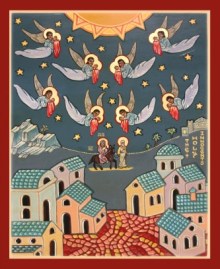
There are all sorts of fun facts about the three wise men. First of all, the only reason we assume there were three of them is that Matthew lists three different gifts – gold, frankincense, and myrrh. He doesn’t tell us that there were three guys, just that however many men there were, they brought three different kinds of gifts.

“Wise men” is an assumption, too. These guys also get called “kings,” but the word Matthew uses is “magi,” meaning something like “magicians.” Magi were followers of the Zoroastrianism, one of the world’s oldest religions with around 2.6 million people still practicing it today. Zoroastrians believe in one God, like Jews and Christians, and they also expect a Messiah to come and restore the world. It might have been that Zoroastrians from the East of Bethlehem also practiced astrology – paying close attention to the heavenly bodies and making meaning out of their movements for life on earth. So, it makes sense that when these faithful Zoroastrian men whose faith taught them that God would one day send a Messiah to earth to change the world noticed something new and different in the heavens, they set out to follow that star’s lead.

The Christian church celebrates these magi arriving and meeting Jesus in the holiday of Epiphany, which is always on the 6th of January. In many countries around the world, Epiphany is a much bigger holiday than Christmas. So what’s the big deal with these men from the East? Why are Jesus’ visitors celebrated, in most of the world, more than the birth of Jesus himself?

There are several reasons: first, that the magi were from far away and traveled long distances to catch a glimpse of this tiny baby savior means that God’s incarnation isn’t just for Joseph and Mary and the tiny city of Bethlehem, but for all the world. The magi hear about Jesus’ birth and travel far away from home to find him. It tells us that this thing that’s happening isn’t just for some people, not even just for the Jewish people, but for EVERYONE. Even foreigners, even weird magicians from far away.

And, the magi bring Jesus gifts. Of course, any newborn king would get showered with presents – even our own non-royal babies are often buried in tokens of good will and celebration. But the kinds of gifts that the magi bring are really interesting – riches, fancy perfumes, and the trappings of human power structures.

You can imagine how those packages looked once they opened them in the dirty stable where Mary and Joseph were hiding out…completely irrelevant to the task at hand. I heard someone say that if the magi had been women, or men more attuned to what a newborn requires, they’d have brought extra diapers, casseroles and offered to let Mary and Joseph get some sleep while they watched baby Jesus. The picture of these foreign stargazers showing up with royal gifts in the dark cave of a stable tells us just how strange what God is doing really is: this King is not going to act like all those other Kings. This new reign will be something very, very different.

And, actually, if we’ve been paying close attention to the story, we already know this. When the magi arrive in Jesus’ state, they start asking around for where this new King of the Jews has been born. King Herod, that old-model, tyrannical, power-hungry kind of King, hears that they’re asking around about some new-fangled kind of newborn King, and calls them to his palace to interrogate them.

Herod, you might or might not know, was an interesting character. He was friends with big time stars Marc Antony and Cleopatra and Marcus Agrippa, too. He took Antony’s side in epic Egyptian power struggles. He steadily increased his territory, and built enormous palaces, fortresses, and the Temple of Jerusalem. Herod was not Jewish, so it might seem strange that he’d put so many resources into rebuilding the sacred home of a religion not his own. But the Jews made up a large portion of his populace, and he seems to have fancied himself their protector, going to great lengths to win their favor and act as their patron. The relationship was not necessarily mutually agreeable. The Pharisees, Jewish leaders, did not appreciate Herod’s patronizing leadership. They saw him as an outsider prone to worldly excess, living dangerously in the halls of precarious worldly power, and they generally kept a safe distance from him.

But the magi were foreigners, probably unaware of all these political dynamics, not aware of the complicated relationship between Herod’s power and the Jews’ hope for messiah power. So, when Herod summoned the magi to tell him what’s going on, they’re honest. They tell Herod what they know: they saw a peculiar star that meant the new King had been born, and followed it all the way to this place. But they couldn’t find the exact spot where Jesus was, so they were asking around.

Herod, who must have been really anxious about this new info, sensing that his reign might be about to be threatened, called together all the priests and scribes from the Jewish world. He asked them what their faith told them about where the Messiah would be born. Herod, of course, wasn’t Jewish, just the state’s ruler over all of them, so he had no idea that the tiny little town out on the edges of his territory was the subject of ancient prophecies that explicitly threatened his own power. But the priests and scribes knew immediately what was going on. “Oh, yes, you’re talking about Bethlehem! That’s where this has been foretold to take place. Are you telling us that it’s HERE? The time has come?! Are you SERIOUS?”

Herod takes in the excitement of the scribes and priests and the deep curiosity of these foreign magi, and knows that something big is up. And, since he is Herod, hyper vigilant of all that might aid or detract from his ability to rule absolutely, he also knows that this big thing has great potential to interrupt his path toward greatness. So, Herod gets wily. He tells the magi to continue their search with this new information he’s provided them, to find the Messiah, and then to report back to him so that he, too, can go and worship him with some royal sorts of baby gifts. You can hear the duplicity in his lines right there in the text. You can see his sly smile as he formulates his plan to rid the world of this gigantic threat to his hold on absolute tyranny.

The wise men make their way to Bethlehem, where the scholars and priests have told them they’ll find the great, long-awaited miracle King, and – wonder of wonders – they do. There he is, little baby boy, far from home and shut out of every official establishment, hanging with his young, exhausted mother and travel-weary father in a barn. They give their ridiculous gifts, pay him the homage due, and “having been warned in a dream not to return to Herod, they left for home by another way.”


This is where our reading ends, today, but it is not where the story of Jesus, the Magi, and Herod ends. The next few verses tell us in plain, stark detail, what Herod’s reaction was to being disobeyed and played for a fool. He’d been expecting those magi back, trusting his informant plants to report back to him all the missing information about this threat to his reign. But they evaded him, allied themselves with the baby King, refused to participate in his rule of terror and might. They simply went home by another way.

Which, you might imagine, infuriated old King Herod. The stress of being a tyrannical dictator was starting to wear on him, and he’d suffered a few illnesses of both body and mind by this time. Even before this betrayal by the magi from the East, Herod had been be so far gone to madness that he’d murdered his wife, his children, his brother-in-law and mother-in-law. Soon after, he’d unsuccessfully attempt to kill himself and die of heart problems not too long later. So, you can imagine what sort of state of mind he was in when the newborn King of the Jews happened to be living in his territory and foreign visitors started taking the kid’s side over his, pledging their allegiance and their protection to this kid in a stable instead of to him.

Betrayed, infuriated and half crazed with madness, Herod needed to get rid of this threat. He ordered every male child under the age of two within the realm of his governance to be killed. Luckily, Joseph had heard in a dream that he should flee to Egypt, not back home to Nazareth, and not to a proper house in Bethlehem. Instead, Joseph and family fled, becoming refugees abroad until Herod finally died.

But all the rest of those babies in Bethlehem were not so lucky to be warned and have fathers who risked flight to save them. They were, in fact, killed by this state-sponsored terrorist, the ruler of the land, the one who fancied himself the protector of the Jewish people. We remember this in the church calendar as what’s called the “Slaughter of the Holy Innocents.” Jesus was spared, yes, but the tyrannical regime of Herod killed dozens, hundreds, of other innocent children.

This is not a part of the Christmas story that we talk about very often. We tend to imagine the three kings arriving at the manger as the end of the nativity play. The wise men from afar have arrived, and they’ve brought gifts! Yes! The story is complete! But this awful thing, too, is part of the story of Jesus’ arrival here on earth. This story of tyrannical governments, refugees fleeing violent lives, and state-sponsored killing of innocent people: it’s all right here in the Christmas story. It’s all right here in scripture.


__________________


I couldn’t stop thinking about Tamir Rice this week. Do you know who Tamir was? He was a twelve year old boy who lived in Cleveland, Ohio. Last November, he was playing in the park by his house with his older sister, who had to go home for a minute and left him alone. Tamir had his toy gun with him, and someone nearby saw him, a boy alone in the park with what looked like a weapon, and called 911. “It’s probably a juvenile,” the caller said, “and the gun is probably fake.”CLEVELAND-web3-blog427

Two Cleveland police offers showed up at the park, drove their squad car through the playing field, yelled out the window for Tamir to “drop his weapon,” and within two seconds – TWO SECONDS – had shot him in the stomach, inflicting fatal wounds that would kill him the next day. The officers offered no assistance to the boy. One of them tackled his sister, who heard the gunshots and came running, and they threatened his grieving mother, weeping and wailing upon hearing that her son had been shot, with arrest if she did not calm down.

Tamir is in the news this week because a year after police officers shot and killed him in his own neighborhood park, a Grand Jury refused, on Tuesday, to indict either of the two police officers in his death. They will not be charged, they will not be tried, they will not be sentenced or punished, not called to account in any legal way for killing an unarmed, innocent twelve year old boy in his own neighborhood park.

There is much, much more to the story of Tamir Rice – more about his family and more about the Cleveland police department, more about how his death is but one among many murders of black people at the hands of local police. But to have this decision by the Grand Jury come this week, the week when we are remembering the legacy of those holy, innocent children also killed by someone in power pretending to be a protector, also dead as a sacrifice at the altar of some version of the tyrannical version of a violence-hungry state gone mad with power…well, that is just impossible to ignore.


The Reverend Doctor Wil Gafney wrote a lament for Tamir on her blog this week. She said:

Herod didn’t invent state-sponsored genocide. Nor did it end with him.

My people are being slaughtered in the street, in our doorways, in our homes, in our beds, in our churches, in jail cells.

We can be murdered in public, on film and then be blamed for our own murder, with none held accountable.

Rachel, the heart-mother of Israel was said to have wept for the slaughter of the Holy Innocents as her spirit did in Jeremiah’s time, (Jer 31:15; Matt 2:18). She refused to be comforted because her children were gone.

I am so struck by the murder of holy innocents that continues to wrench our hearts. Herod didn’t invent state-sponsored killing. And it didn’t end with him, either. It still happens. Tamir Rice was and is one of our own, modern-day Holy Innocents.

And in the face of that reality – the heart wrenching news that kids are still being killed as sacrifices at the altar of an old-style tyrannical kind of power and kingdom – I often feel pretty helpless and unsure of how to act. I can’t unknow what I’ve learned. I can’t forget that Tamir was killed by his own police in his own neighborhood. I can’t refuse the reality that people whose skin is darker than mine are much more likely to face this kind of violence and obscene death. I can’t unknow any of that.

So, it is helpful, for me, to think about the magi. These faithful foreign men came, seeking a King. They knew what Kings looked like, they asked in all the right places to find out where royalty might be residing. They won an audience with Herod himself, gained his confidence and could have returned, coughed up the information and lived happily in his graces. The wise men were people of distinct privilege, maybe a little bit blind to what was really going on. But they didn’t stay blind.

What the magi discovered was really surprising. They found a king lying in a manger. The star led them to an unlikely place, but there in that dark, dank stable, they beheld the very face of God, and they were changed. They couldn’t unknow what they’d learned, couldn’t forget how God decided to come in this very tiny, helpless form on the margins of society, couldn’t refuse the reality that they had been shown a new King whose power lay not in tyranny or violence but in unexpected vulnerability. And so, having had their eyes opened and being unable to unknow any of what they’d learned, they “returned home by another way.”


What I hear in that simple phrase is the decision of the magi to ally themselves with the baby in the manger and not with the tyrant in the palace.

What I hear in that phrase is their agreement to avoid returning to the halls of power and, instead, follow this tiny prince out toward the margins.

What I hear is that the magi, suddenly confronted with some world-shaking truths about who the Messiah really was and how the Divine really operated, altered their path. Changed their trajectory. They couldn’t unknow what they’d learned, couldn’t ignore the horrific reality of Herod or the unimaginable grace of Jesus, so they shifted their allegiances and stood with the vulnerable one on the margins, the one born in a barn, threatened with death by the state, forced into becoming a refugee.


It makes a difference where we stand and who we trust. Imagine if the magi had retraced their steps and informed Herod of Jesus’ exact whereabouts. Imagine where we’d be, then.

The thing is, we are all magi. We are all seeking a Messiah. We are all having our expectations turned upside down, being surprised by the unbelievable, upside-down ways God is at work in the world. And once we’ve seen the face of God, we can’t unknow what it is we’ve learned. So: Will we turn around, go back the way we came, report our findings to the authorities and pretend to live lives of admirable respectability? Or will we choose to go home by another way, to ally ourselves with the Vulnerable King, the Refugee Messiah, the Great and Holy Innocent?


Books, 2015

Because Daniel set forth the challenge, because I just read this and felt moved to write something real and immediately, because my new lifestyle affords me a some structured but unadulterated writing time, because I set myself a little reading goal and actually achieved it (quick, somebody get me a Personal Pan Pizza and a hologram button!) and because every single one of these books is worthy of a little evangelism:


Best Books I Read, 2015 Edition


All My Puny Sorrows, Miriam Toewsindex

Despite my friend Cal’s decade-old insistence that Miriam Toews was really “my kind” of writer, despite her repeated lending of her older novels and their repeated stints of inhabiting my bookshelves for months, this was the first time I’d actually read the Canadian-born, Mennonite-bred novelist. Verdict: I love her. She’s really my kind of writer. All My Puny Sorrows is a story of sisterhood and suicide, and it is (in spite of or in the face of, both or neither) one of the most hilarious books I have ever read. Not puns, not laugh-out-loud, just a particular angle on seeing the absurd in the world, a gift for good dialogue and perspective. I’m currently gobbling up every other word she’s written.


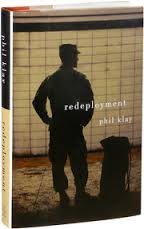
Redeployment, Phil Klayimages

Every person who claims pacifism as a tenet of their faith should have this book of short stories as required reading. Phil Klay, Iraq veteran and stunning chronicler of what war is really like, writes about the absurd economics of war, the realities of killing both people and animals, the brutality of life on front lines, and the omnipresent questions of faith and existence with a precision that made me gasp, cry, cringe, and open my heart just a bit wider. Not recommended for bedtime reading.


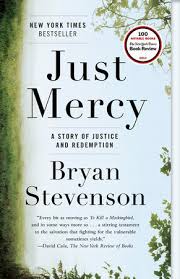
Just Mercy, Bryan Stevenson

index2This book was recommended to me by just about every Christian radical friend I know BEFORE it appeared on every Starbucks counter in the land. That’s some serious crossover cache, I think, to be tripping off the tongues of Christian anarchists AND the biggest coffee capitalists the world over. I guess it’s a testament to how beautiful a book it is. Stevenson has been working for decades as a lawyer on behalf of those on death row, kids tried as adults, and impoverished people encountering our unjust justice system. His stories are harrowing, his writing is generous, and – though he never frontloads it – his faith is strong and shining. If you’ve been wondering where to find stories to complete the picture of Michelle Alexander’s statistics, if you’ve been hoping for some deeply invested, even-handed, mercy-for-all perspective on the American criminal and penal systems, or if you just appreciate passionate people writing compassionately and engagingly about their lives’ work, go pick it up.


 

Daring Greatly, Brene Brownindex3

Brene Brown and Liz Gilbert (whose Big Magic was also a great read this year) have been busting up my inner anxieties and insecurities right and left this year. Their books are getting slotted into “self-help” genres, which is not my usual shelf perusal. I’m actually having trouble right this instant not apologizing or shrugging off my love for them: self-help! And lady-lit self-help at that! (See what I did, there? Squeezing in some equivocation even under the guise of refusing to do so?) But, good grief, y’all. These women are bringing it. Brown is a researcher in the fields of shame and vulnerability, and her work is about what it is to live life wholeheartedly. I am learning, slowly, slowly, slowly, to shed my preoccupations about presenting an impenetrable front and allowing myself to be who I am and to care about what I care about, and that is just not an easy thing to do (see the article I referenced earlier). Brene Brown kicks ass, in confessional, compassionate, smart-as-a-whip kind of ways. I want to learn THAT.


Lots of silly fiction that turned out to be not so silly after all.

Oh, I read plenty of heavy theology (and wrote about it here and here and here), but the majority of my leisure time reading this year was remembering why I love reading in the first place. I allowed myself to read novels – silly novels, less-than-literary novels, fun stories that sucked me in and transported me from Richmond living room to far-away times and places. It was delightful. I finished Madeleine L’Engle’s Wrinkle in Time series, read every Meg Wolitzer I could find (and got to hear her read in person, too, just as prickly and writerly as I’d hoped), got introduced to Chris Bohjalian’s wicked weaving of mysterious plotlines, and totally enjoyed Martin Clark’s legal thrillers set in Southwest Virginia. And, it turns out, those “silly” novels are the ones I actually enjoyed most thoroughly and without apology, and the stories are the ones animating my imagination as I turn from unlimited free time to regular sermon-writing and pastoring here at the end of the year.


So, what did you read? Worth a shout-out?

0db72d8ce9412f050d44d592e0a34fdc

Now, someone get me that Personal Pan Pizza! Pepperoni, please!

who do you belong to?

This is the 2nd assignment in my self-imposed course: Readings in Surviving Empire. Obviously, it’s a tad belated, but the instructor (me) was kind enough to grant the student (me) an extended extension. That’s just the kind of grace there is in a self-imposed, self-assessed syllabus.

Last summer, I got to be a part of a weeklong writing workshop. One of the requirements was to share a piece of work with the group, which meant we’d all read one other’s writing before meeting anyone. Once we arrived and began putting words with faces, the conversation turned toward depth pretty fast.

I submitted a piece I’d written about a beloved church member’s funeral. He had been a Civil War re-enactor in our historic-battlefield town for years. During the last months of his long illness, he planned – down to the last detail – his own Confederate military funeral. There was a horse-drawn caisson, a musket salute and dozens of mourners in period dress. It was one of the most bizarre and beautiful things I’ve been a part of, so I wrote about it. And then I shared it with these fellow writers.

On the first day of our time together, several of us were walking down a dirt road by the retreat center, trying to connect each flesh-and-blood person with the writing we’d been spending time with over the last few weeks. “Oh,” said my new friend Josina, “you wrote the Civil War piece! I have so many questions for you!” “Really?” I asked, assuming she, too, found the humor in the funeral and maybe wanted to know more about the caisson or the eulogy from Robert E. Lee.

“Yes,” she said. “Are there any black people in your church?”

______________________________________________________________________________________________

Manassas has been a place keen on its history for 200 years. Two big-time Civil War battles happened there, including the first major battle of the war. Southern pride – that collective consciousness of rebellion, defeat, and entitlement – runs deep, even though the town now sits squarely within the confines of Northern Virginia: the richest, best educated, most powerful metropolitan area in the country.

Two hundred years ago, families in Manassas fought for the state’s ability to self-rule, for its economic prosperity, and to maintain the right to own other people as property. These days, some people are still fighting: for the state’s ability to refuse hospitality, for its economic stratification, and to maintain the right to air out their atrociously racist opinions.

The City of Manassas is one of 78 American localities that have had a dramatic demographic switch in the last thirteen years: in just over a decade, these places have seen the former racial majority become a minority. In 2000, Manassas’ residents were 67% non-Hispanic white. In 2013, only 45% were. That’s a lot of change. Just down the road, the city of Manassas Park is set to become the first place in Virginia where people who select “Hispanic” as their race on demographic forms will outnumber those who choose “White.”

This change has not been a peaceful one. People are talking about these demographic shifts, arguing about “best uses of public funds” and the sudden influx of Spanish-language businesses, the “commotion” caused by those quinceneras happening in parks and fellowship halls every weekend. Last year, when a private residential center for troubled youth in town began accepting and caring for some of the thousands of unaccompanied, undocumented children crossing the U.S. border, the place spiraled into a tizzy over crime, gangs, money and, believe it or not, genocide:

“Any act or nonaction by the federal government to bring about such large influxes of non-Southern peoples is genocide and is viewed as [that] by native Southerners…is, in effect, an act of war upon our people.”

In the Civil War, Brethren refused to fight altogether. The Manassas congregation wasn’t founded until 1885, but it was family members of John Kline, the famous Brethren preacher and doctor, that did so. Kline, decidedly anti-slavery and decidedly anti-secession, spent years riding across battle lines to preach and teach and minister to Brethren on either side. It got him killed.

These days, in a vibrant, prosperous, loving congregation in the midst of D.C. madness, one made up of people from across the political, social and economic spectrum, being decidedly anything is very, very hard.

Were there any black people in my church? Yes, but not many. We were a mostly non-Hispanic white congregation, a group of people experiencing the swift change from demographic majority – descendants of generations of land-owning farm families – to demographic minority, and doing our best to avoid that change completely.

_________________________________________________________________________________________________

I’ve been reading Willie James Jennings’ book The Christian Imagination for months, now. The book’s subtitle is “Theology and the Origins of Race,” and while I assumed it would talk about intersections of race and theology, or the ways theology has ignored or exacerbated racial strife, I did not expect to be so clearly and powerfully indicted, as a Christian and as a theologian, in the very beginnings of our own destructive form of Western racism.

That’s what Jennings does: lays out, clearly and calmly through biography and history and primary sources the ways that Christian theology itself laid the ground for the depth of racism that stalks our everyday existence in America today. In colonialism, missionary efforts, empire’s reach, slave boats and the Church’s migration into the “new” world, Christian thought and practice was not only complicit in but actually actively helped to create the wrenching sin of racism that still rips apart our society today.

So. That’s something.

imaginationChristian theology, Jennings says, still imagines the world from “commanding heights.” We operate under the assumption that we are the ones in charge, here, and anyone else we happen to encounter can choose to fall in or choose to fall out. Whiteness became the signifier of all things good and literally holy as Christ’s white people moved across the world and demanded subservience from all the “evil heathens” they came across. “It is as though,” Jennings says, “Christianity, wherever it went in the modern colonies, inverted its sense of hospitality. It claimed to be the host, the owner of the space it entered, and demanded native peoples enter its cultural logic.”

In this new colonial world, place no longer functioned as the thing that shaped peoples’ identity; bodies and skin color did. Identity couldn’t be folded into a thick reality of geologic features and generational communities and ancient practices. In this new, mobile world assumed by the white Christian colonists, identity had to be portable, worn on one’s flesh, shallow and easily readable. This is a deep, deep loss, one of “a life-giving collaboration of identity between place and bodies, people and animals. The loss here is also of the possibility of new identities bound up with entering new spaces,” (63).

Instead of encountering new places and new peoples with an openness to being transformed, the colonists entered new worlds assuming that their identity, worn so obviously on their skin, was permanent, correct, immutable and holy.

This is a posture built on hubris, and a fundamental misunderstanding of Christ’s call to humility and hospitality. It is a betrayal of Jesus’ incarnate presence, an inability to become vulnerable and enter into intimacy with others who seem to be unlike us. “The theological imagination that deploys divine presence without concomitant real presence and real relationship may be enacting a form of Gentile hubris that believes we have the right to claim the very reality that was only announced over us by a gracious act of the Holy Spirit in the presence of Jewish believers,” (167).

I’ve been reading and re-reading this book for months, reading while the world and the church have started talking, again, about how racism is ripping us apart. Reading the book has functioned as a spiritual practice, and forced me to ask and answer questions – like Josina’s – that I do not want to ask or to answer. The question that made me stop, put down the book and close my eyes, though, was this one: “The problem is in imagining whom we theologians belong to as we write, as we think, as we pray,” (202). To whom do I belong?

To whom do I belong?

________________________________________________________________________________________________

That question rocks me a little, these days. I’m a single, unemployed lady pastor without a family or a congregation or a place, yet, to put down roots. I have a lot of people, plenty of possibility, and a generous friend who’s invited me into her home for as long as I need. But last Sunday was Love Feast, and I didn’t have anywhere to go, no one to wash my feet.

In Manassas, I belonged to the people of the Manassas Church of the Brethren. That was good, and that was bad. There were plenty of people to wash my feet. There was always a potluck or a dinner or a luncheon to join. There was consistently good work to be done, gospel to be preached, teenagers to be led, and coffee to be consumed. I belonged. There was a place for me, and a role to step into each and every day.

I was also constantly on the move, traveling for my other work, to retreats and conferences and congregations across the country. I belonged to the Church of the Brethren, and all those places held some familiarity and some sense of ease in them. I was busy. Very busy. And I had very little doubt about my status: I belonged.

But being so scheduled and co-opted, so certain of my belonging and my importance left me very little time to ask the question: Who do I actually belong to, here?

I didn’t pay attention to the shifting demographics in town, even though my afternoon office hours at Panera were consistently filled with the sound of at least five different languages and a regular cycle of new employees who were also clearly new immigrants. I didn’t make friends with my neighbors, even though the smell of their tamales on the grill made my mouth water every weekend. I didn’t get involved with my neighbors at the Free Clinic across the county or the food pantry right across the road, even though the youth and I heard disturbing statistics every time we went to volunteer for an hour or two – that over 800 families in our own small city needed free food each month, that there were not enough beds to house homeless children.

I assumed that I belonged to the people of my congregation, people who looked like me, worshipped like me, ate beef and bread and sop like me; people who, like me, belonged in this place. I assumed that their reality – my reality – was the one that mattered.

I never said hateful things about my neighbors, and I certainly didn’t stand up at city council meetings and claim that these new citizens’ presence in town was tantamount to genocide. In the three and a half years I lived there, I had one or two well-intentioned, anti-racist thoughts. Once or twice, I might have even preached something that looked like the Gospel and alluded to hospitality. But I never once dwelt for any significant amount of time on the question: To whom do I belong in this place?

_________________________________________________________________________________________________

The question scares me. It assumes my assumptions might be wrong. It assumes that I might NOT belong in the ways I thought I did. And the answers…well, the answers are even more terrifying.

What if I belonged to Joe, the chronically homeless and excessively cologned man who wouldn’t let our congregation forget him? What if I actually belonged to my downstairs neighbors and had to hear their stories of why new young men came to live with them every few months, why they all had permanent coughs from the concrete they worked with and couldn’t seem to get to a doctor, why their little girl would look at me curiously but simply refuse to speak a word. What if I belonged to those 800 families who didn’t have enough to eat, or the kids who were staying next door to the church building with their grandma while their mom was serving time? What if I belonged to those kids up at Youth For Tomorrow, kids whose lives before now were so dangerous or so bad that their parents would send them off alone to cross international borders and figure out ways to fend for themselves in hope that THAT would be better than what was? What if I actually belonged more to those people who were, in the minds of some of my congregants, dirty, lazy, greedy, assaults on our own identity, our own sense of belonging?

And, even scarier, what if I didn’t belong to them? What if I didn’t belong to anyone?

I’ll start a new job, soon, in a new place. I’ll belong, again, to a congregation: a group of people who will offer to wash my feet and feed me casseroles and invite me into their lives. I’m grateful, incredibly grateful, for that grace of how the Church creates and sustains belonging in community.

But it won’t be enough anymore. I think I’ll always be asking myself if I’ve asked myself enough: to whom do I belong, here? What identity am I assuming? Who am I refusing to encounter? What intimacy am I sacrificing for the sake of a shallow sense of security?

Jennings ends his book with a beautiful hope for intimacy beyond the mangled racial spaces we’ve created, an image of bodies touching, of the divine present in spaces of deep and dangerous belonging. This is what we were created for, the place to which we ultimately and decidedly belong: “a Christian doctrine of creation is first a doctrine of place and people, of divine love and divine touch, of human presence and embrace, and of divine and human interaction,” (248).

Amen, Brother Jennings.

the upside-down, gospel good-news

My syllabus project has been sorely neglected these last few weeks, but for good reason! I’ve been spending my time and energy saying goodbye to the precious people of Manassas Church of the Brethren. Writing, of late, has been for them.

I’m only marginally employed through the summer, so I expect more Readings in Surviving Empire work to bubble up and surface here in this space. In the meantime, here’s my last sermon from Manassas. The audio is also available on the MCoB website, here.

Sermon 6-28-15

Unexpected Healings

Mark 5:21-43

21When Jesus had crossed again in the boat to the other side, a great crowd gathered around him; and he was by the sea. 22Then one of the leaders of the synagogue named Jairus came and, when he saw him, fell at his feet 23and begged him repeatedly, “My little daughter is at the point of death. Come and lay your hands on her, so that she may be made well, and live.”

24So he went with him. And a large crowd followed him and pressed in on him.

25Now there was a woman who had been suffering from hemorrhages for twelve years. 26She had endured much under many physicians, and had spent all that she had; and she was no better, but rather grew worse. 27She had heard about Jesus, and came up behind him in the crowd and touched his cloak, 28for she said, “If I but touch his clothes, I will be made well.” 29Immediately her hemorrhage stopped; and she felt in her body that she was healed of her disease. 30Immediately aware that power had gone forth from him, Jesus turned about in the crowd and said, “Who touched my clothes?” 31And his disciples said to him, “You see the crowd pressing in on you; how can you say, ‘Who touched me?’” 32He looked all around to see who had done it. 33But the woman, knowing what had happened to her, came in fear and trembling, fell down before him, and told him the whole truth. 34He said to her, “Daughter, your faith has made you well; go in peace, and be healed of your disease.”

35While he was still speaking, some people came from the leader’s house to say, “Your daughter is dead. Why trouble the teacher any further?” 36But overhearing what they said, Jesus said to the leader of the synagogue, “Do not fear, only believe.” 37He allowed no one to follow him except Peter, James, and John, the brother of James. 38When they came to the house of the leader of the synagogue, he saw a commotion, people weeping and wailing loudly. 39When he had entered, he said to them, “Why do you make a commotion and weep? The child is not dead but sleeping.” 40And they laughed at him. Then he put them all outside, and took the child’s father and mother and those who were with him, and went in where the child was. 41He took her by the hand and said to her, “Talitha cum,” which means, “Little girl, get up!” 42And immediately the girl got up and began to walk about (she was twelve years of age). At this they were overcome with amazement. 43He strictly ordered them that no one should know this, and told them to give her something to eat.

This passage from the Gospel is an incredible feat of storytelling. Mark packs all kinds of narrative punch into just a few verses – there’s drama, suspense, unexpected twists, and a double dose of miraculous healing. This scene would fit easily into your favorite mystery novel or primetime crime-solving drama.

Here’s Jesus, crossing the sea in a boat, and being greeted on the shore by a big crowd of excited, adoring followers. They’ve heard of him, heard about the crazy faith healings he’s been doing, casting out of demons and curing people’s diseases, and they all want to see him for themselves. Everybody has some kind of malady in need of care, don’t we? We’re all in need of some kind of healing or another. We understand this impulse to flock together to see a teacher rumored to have the miraculous power of making all things well. We can easily imagine ourselves in that crowd.

Like any crowd, it was probably populated by all kinds of people – rich and poor, men and women, sick and well, those who had particular needs of healing and those who just joined the crowd rushing through town to see what all the commotion was about. You can imagine the camera panning the faces, old, young, short, tall, ragged and well-groomed. You can see the people, know who they were.

And then, the camera comes to rest on a tall, broad-shouldered man striding toward the crowd from the direction of the local synagogue. It’s clear that he is a well-respected man – you can see it just by the way he carries himself.

This is Jairus. We, the readers, know that he’s an important guy because of his name – it’s a variation on a Hebrew name for one of the Judges, used in three different books of the Old Testament. Jairus is the heir of generations of religious clout. He’s an important man around town, one of the leaders of the synagogue, installed in the upper echelons of polite society, used to getting what he asks for and assured of his ability and his right to part the gathered crowd and march straight up to this storied teacher called Jesus and ask him to come to his home and heal his dying daughter.

And, because Jesus’ healing is for everyone and because all who seek shall find and any who ask, to them it shall be given, Jesus follows him toward his house. And the crowd follows Jesus.

But here’s where things get interesting. On the way to Jairus’ house, the camera pans to the margins of the crowd, and rests on the face of a rather unkempt woman – hair tangled, clothes torn, eyes with that look you’ve seen before, the look of someone who hasn’t engaged in civil conversation with another human being in quite some time. It’s not just that people have neglected her – she’s actually been forbidden to interact with people because of the laws of the society. The structure of the people’s life together is such that someone with her physical reality – she’s been bleeding for twelve years, despite every effort from doctors and treatment – is relegated to a solitary, “unclean” life.

We know that she’s of little import to her community because not only does she lack an important family surname…she has no name at all. She is and will forever be anonymous. Unnamed. Unseen. Unknown.

This woman has never been certain of her access to healing. She’s never enjoyed the privilege of striding confidently through a crowd, never assumed she could speak freely to a leader. She has never been granted access on the sole basis of her name or her appearance, and she is suffering, suffering mightily.

And yet, something about this Jesus guy strikes her as worth a shot. She’d never march up to him and ask him to his face to heal her, but she can’t resist his powerful presence. So she sneaks through the crowd and grabs a handful of his coat. Just a handful, and just for a second.

And, because Jesus’ healing is for everyone and because all who seek shall find and any who ask, to them it shall be given, her bleeding immediately stops. And Jesus stops, too.

“Who touched me?!” He asks, aware that something has gone down. And, stunned to her core, the no-name woman stands up, wavers her way toward Jesus in fear and trembling, falls at his feet and tells the truth, the whole entire ugly truth and the completely unbelievably beautiful truth, and Jesus confirms it all for her: “Daughter, your faith has made you well. Go in peace and be healed.”

But there’s still the matter of Jairus’ dying daughter – Jairus, who has been, we assume, right beside Jesus all this time, impatiently awaiting more of his attention. Before they can return to their journey, some of Jairus’ servants appear and tell them it’s too late – she’s already dead. But Jesus, who deals not only in preaching, teaching and healing the sick but is also in the business of resurrecting even those who’ve died complete and utter deaths, says calmly, “do not fear. Only believe.” And walks the rest of the way to Jairus’ house, clears out the wailing mourners, takes the dead girl’s hand, and resurrects her from the dead. “There you go,” he says, “now why don’t you fix her some dinner? Surely that journey to the underworld has left her mighty hungry.”

What we assume at the outset of this story is this: the important leader of the synagogue, the one with the powerful family lineage and societal clout is in need of healing, and Jesus is going to show him, to humble him, to make it known that even the most powerful religious leaders are in need of God’s grace and Jesus’ healing.

And that happens. Jairus humbles himself by asking for Jesus’ healing, and he receives it.

But that is not what this story is about. This story, it turns out, is about the interruption, the unexpected, the random, unnamed woman claiming her place in Jesus’ reign as well. What we think is going to be a simple moral tale about Jesus’ power and our need for humilty turns into something unexpected. Our gaze is turned away from Jairus and toward this anonymous woman and all of the sudden we are wondering about her – where is she from? What is her name? Where did she find the courage to approach Jesus? What is it that she needs?

Jesus’ healing is for everyone. Everyone. Everybody matters, everybody is seen, everybody is acknowledged, everybody is offered access to the power that brings about wholeness and fullness of life.

That’s what this gospel story says. Jesus’ healing is for everyone.

But this story does not stop there.

Mark is making another, wilier point,

a point that might even have the power to transform and redeem us if we’re willing to hear it.

The healing of the synagogue official’s daughter

is real, and deep,

and the joy of finding his daughter alive again is surely unparalleled.

But.

The way Mark tells this story reminds us that the healing granted to the man who everyone assumed to be deserving of it is not the best part of the narrative.

The way Mark tells this story forces our heads to swivel around and acknowledge the unnamed interloper, the woman who’d been shunned and disrespected, turned out from polite company and removed from any status she could have hoped to enjoy.

The way Mark tells this story, the interruption becomes the point.

Maybe you know what happened here at our church during the last Love Feast. Maybe you remember that particular interruption.

I was across the room and noticed something strange, but I didn’t learn the whole story until months later. Maybe I should listen to this gospel story a bit closer, pay attention to the interruptions more, worry less about making sure things go off in the proper and well-ordered way.

Last spring, we held our regular, Maundy Thursday evening Love Feast. Most of us know how Love Feast goes, and we assume that it will be familiar, comforting, assuring us of our own belonging in this place and with these people. It is a great gift to us, this practice of eating together and washing one another’s feet. But this particular Love Feast was interrupted.

An anonymous man wandered into the church. No one knew him, no one knew his name, but he was welcomed. Several men led him to a table, sat with him during the meal, and attempted to learn his story. He seemed rather out of it, and when it came time for communion, he took the bread and the cup, but seemed to get stuck. While the rest of us gathered around the tables down in the fellowship center went on with our eucharistic ritual, ingesting the bread and blood of Jesus that we have been told for decades was broken and shed FOR US, our visitor stalled. He held the cup in his hand, but couldn’t seem to bring it to his lips. Finally, someone close to him said, simply, “That’s Jesus. It’s for you.” And he drank it.

The best part of this story, the upside-down gospel, good-news part

is that all of our assumptions about who is in and who is out get up-ended.

All of our assumptions, no matter how tightly we hold onto them, simply dissolve in the face of Jesus’ incredible, powerful, universal gift of healing.

The best part of this story, the upside-down gospel, good-news part,

is that what we think is the point of what we’re doing

is almost never the point of what God’s up to.

The best part of this story, the upside-down gospel, good-news part,

is that God’s Kingdom comes through us,

despite us,

not to spite us

but always to open our hearts to the largeness of God’s grace.

In the gospels, we are constantly, constantly reminded to pay attention to those things we’re tempted to write off as unimportant, anonymous interruptions. We are unendingly called to turn our heads and shift our gaze away from what we think of as the necessary, important, respectable things of the day and investigate that glimpse of something over there on the margins, to attune our hearts to the people who wander in or sneak up to touch Jesus’ cloak, the ones we’d never choose to associate with, the ones we’re most likely to ignore or shoo away.

And the beautiful thing is that no one is discarded. In Jesus’ world, in his ever-present Kingdom, no one is ignored. No one is left without healing, no one is refused an audience. The gospel is for EVERYONE.

In the three and a half years that I’ve gotten to be a part of this congregation, I have been so deeply transformed by your love and grace. I could tell the story over and over and never tire of it: that you all called me to a position I wasn’t qualified for or even excited about, that even with those reservations it was a clear call from this congregation and the Holy Spirit, that all of us together consenting to experiment with something none of us were sure about led to amazing relationships and some serious, unexpected healing. I am in awe of the ways you love one another, the ways that you have loved me. And I want more of the world to know that love.

Like Jairus in the gospel, this congregation comes to the present moment with a long, beautiful, rich heritage of faith. Manassas Church of the Brethren carries the name and respect of forefathers and foremothers who invested their lives in work for the Church and God’s Kingdom. It is a precious gift, and part of the inheritance of that gift is a certainty that we belong here, that we are worthy of compassion, that Jesus’ healing power is, in fact, a gift that we can claim. And, like Jairus, Jesus has answered many of our prayers for healing. Daughters have been healed, sons have been returned to us, we have found community in our suffering, and relationships have been restored even in the midst of conflict.

And yet. This story reminds us that we are not the main characters of this gospel story.

There are others, not far from us, who are not so convinced that healing is for them.

There are others, very near to us, who have been taught that they don’t belong, that their names are not even worth speaking aloud, that respect and compassion will never be gifts that they expect.

There are others, even here in our midst, who are living life like the anonymous woman, sneaking in through the back door of the sanctuary, sitting silently, grabbing what they can of Jesus’ coattail, hoping to scurry away unnoticed, trying to secure healing in whatever wily way they can.

I love this congregation. You have broken my heart and opened it, leading me to love in ways I honestly had no idea I was capable of. You have instilled confidence and compassion in me, made me into a pastor, encouraged me to use the gifts God has granted me. You have transformed my faith, given me boldness, and opened my eyes to the infinite, creative, joyful, awe-inspiring ways that God is always and everywhere at work in this world.

I am so astoundingly grateful for each of you, and for who you are as a congregation. The piece of the Body of Christ that calls itself the Manassas Church of the Brethren has taken up residence in my heart, and, I imagine, will remain there for all of my days. You, as a congregation, are really, really good at forming, encouraging, and loving people. God is at work within and among you in creative and surprising ways.

So here’s my challenge to you: Look around for the anonymous, suffering people in the crowd who are in need of healing but unsure about whether or not they’re worthy of it. Pay attention to the interruptions. Be a little less worried about getting the business done and a little more concerned with sharing who you are and what you’ve been given. You have love to share. You have compassion in spades. You have the ability to heal people by restoring them to relationship and community. It’s not something you have to go out in search of: these are gifts bestowed upon you by God, and you know it deep in your bones. But it’s helpful, sometimes, to remember that the story is not really about us. It’s about the interlopers, the interruptions, the show-stealers, the ones who come to us in unexpected ways seeking unconventional healings.

That will undoubtedly get messy. You know that. It will mean that programs might not work, that staffing will get all wonky, that there will be people in the building who might not look like they belong. I don’t know exactly what the future holds for this congregation, but after these three and a half years with you, I have absolutely no doubt that it will NOT BE BORING. And the secret is: it only gets messier from here. Jesus doesn’t call us to lives of sterile respectability. Jesus calls us to live lives of powerful, chaotic, joyful discipleship. It gets messy.

But, beloved friends, don’t be afraid to wade into the mess.

Remember what Jesus says to Jairus, after he’s been interrupted, after his daughter has DIED because of that interruption: “Do not fear. Only believe.” And then – after interruption, after death, after Jairus consents and believes and walks on with Jesus – THEN comes the resurrection.

Do not fear. Only believe.

This morning, we have the opportunity to participate in one of my favorite Brethren practices: anointing. The deacons and I will anoint one another, and then we will move to different points throughout the sanctuary. When you come forward, we may ask if there is anything specific you are desiring to be anointed for. In the Church of the Brethren, we anoint for 3 things: healing of mind, body, or spirit; strengthening of faith; and forgiveness of sins.

Are you here with the full knowledge that you belong, in need of healing and sure that Jesus’ promise of healing is for you? That is good and right and beautiful. This is for you. Come, and be anointed.

Are you here unsure about whether or not you should be, uncertain about whether or not you deserve to be healed, deserve to ask for such a powerful thing from the Lord? That is also good and right and beautiful. This is for you. Come, and be anointed.

Are you here realizing that you have stumbled, that you have hurt or wronged or excluded or neglected another, in need of repentance, forgiveness, and restoration of relationship? That, too, is good and right and beautiful. This is for you. Come, and be anointed.

syllabus: Readings in Surviving Empire

Readings in Surviving Empire (Practical Theology 101)

Spring (and maybe Summer and probably Fall) 2015

Instructor: Me

This course is designed (with plenty of input from wise friends and companions) by myself for myself. The goal of the course is threefold:

a) to be reminded of the rich and diverse resources within the Christian tradition that witness to, offer up and put into practice modes of discipleship that are bent – either intentionally or coincidentally – away from or piercing through or in opposition to the totalizing power of Empire;

b) to reflect deeply and prayerfully on the context of near-unadulterated Empire in which I keep getting called to be in community, service and ministry;

and

c) to bring these – resources and reflections – to bear, one on the other, equally informative, equal parts of creating theological meaning.

Also, (fourfold!) to think more, whine less, engage the world and fulfill an intention of writing regularly.

Also too, to have some freakin’ FUN.

Reading list:

indeximagination paradise faith

William Cavanaugh, Torture and Eucharist: Theology, Politics and the Body of Christ (Wiley-Blackwell, 1998).

Willie James Jennings, The Christian Imagination: Theology and the Origins of Race (Yale, 2010).

Wes Howard-Brook, Come Out, My People: God’s Call Out of Empire in the Bible and Beyond

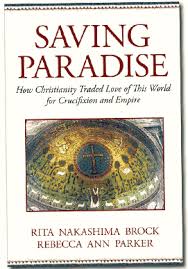
Rita Nakashima Brock & Rebecca Ann Parker, Saving Paradise: How Christianity Traded Love of This World for Crucifixion and Empire (Beacon, 2009).

Mitri Raheb, Faith in the Face of Empire: The Bible Through Palestinian Eyes (Orbis, 2014).

Assignments:

For each book, the student (me) will be required to write an essay of indeterminate length applying the major concepts of the work to some particular situation, dynamic, conversation or consideration of the immediate lived context. That is, to explore how the theology is or is not directly related to discipleship on the ground, in either personal or communal or congregational life. Each essay will be posted here, on this blog.

In Addition:

This syllabus is a) subject to change; b) open to interpretation; c) begging for scrutiny and critique from others who have already engaged in similar undertakings and might offer a more excellent text, assignment, or conversation.

refusing empire

I//

I did not remember Sara the second time I met her. She reminded me, without much grace, that we had, in fact, met not that long ago. When we met – for the second time, that is – Sara was two weeks into her orientation for Brethren Volunteer Service, one among the thirty or so volunteers that I was meeting for the first time that fall, one among the seventy or so volunteers I meet for the first time every year.

But Sara was insistent that she knew me already, an insistence on connection that I would find in coming years to be one of the best parts of her fierce existence. And, it turned out, she was right. We had met earlier that year when we sat next to one another at a young adult retreat. She remembered, I did not: another pattern that our relationship would follow for several years.

Sara is one of the hardiest women I know. Adopted from Russia as a toddler, and then adopted a second time not long after arriving in the U.S., she’s weathered three entire families’ worth of abandonment. She tells her story much better than I will ever be able to, and there are whole chapters of which I remain completely ignorant. What I know is that Sara survives, leaving created communities of care in her wake.

Not too long after that second meeting, Sara came to live with me in our church’s parsonage. And not too long after that, she discovered that – through some fluke of neglect or paperwork – her American citizenship was not exactly documented. The discovery led to three intense and absurd years of navigating the cruel, byzantine, systematically dehumanizing bureaucracy of the USCIS. I got to witness the process, and to walk – along with our entire congregation – alongside Sara on the journey.

I have very few words to explain my incredulity in the face of what we refer to as our American immigration “system.” It became clear, over the course of visits, phone calls, delay upon delay and form after form that no one – not a single person – employed by the federal government was interested in listening to my friend long enough to understand what the legal implications of her situation were.

The story is Sara’s to tell, and I couldn’t make heads or tails of it even if I tried. Suffice it to say: even as a citizen, adopted as a child, a graduate of American public schools, a holder of several official forms of identification, upstanding member of church and community represented by competent legal counsel, a woman filled with integrity and patriotic love of this place, it still took Sara THREE YEARS to finally stand in a bland conference room with ill-prepared employees conducting an underwhelming ceremony completely inappropriate for her situation and receive the paperwork that allowed her to vote and work and live legally in this country.

II//

We live in Rome. By that, I mean that we live in the center of modern-day empire, the place where power dwells, the nucleus of the perpetrators of unimaginable violence and oppression. Max Weber defined a “state” as “a human community that (successfully) claims the monopoly of the legitimate use of physical force within a given territory.” “Empire” really only means a group of states under a single authority, but its modern-day connotations ring a much more nefarious tone. The word catches whiffs of colonialism, war, totalizing hold over vocabulary and imagination. Simone Weil, in her 1940 essay on the Iliad, talks about an “empire of force:”

To define force – it is that X that turns anybody who is subjected to it into a thing. Exercised to the limit, it turns man into a thing in the most literal sense: it makes a corpse out of him. Somebody was there, and the next minute there is nobody here at all; this is a spectacle the Iliad never wearies of showing us.

Empire runs roughshod over humanity. It transforms people into things, communities into territories, relationships into commodities. The biblical prophets knew the force of empire – the Israelites were forever having to claim their right to existence as people, as a people. The gospel writers knew it, too. Jesus is always tangling with the authorities, refusing to forfeit any person’s existence to the totalizing power of Rome: not a Samaritan woman, not a woman caught in adultery, not his disloyal disciples. Jesus refuses to relinquish even agents of the state itself, recognizing centurions and executioners as his brothers. Even these are children of God, not instruments of empire.

We live in Rome, in Empire, in the center of all that threatens to deny us our status as beings made in the image of God, sisters and brothers made for community and connection. Mostly, we assume that the physical violence of empire happens far from us, but more and more our comfortable distance is being interrupted by tiny storms of reality. Everybody feels it; everybody knows that crisis is coming, and soon. Empire doesn’t last forever – never has, never will. Totalizing power cannot survive the irruption of the reality of human identity and connection. We feel the end on its way, and – depending where we’re standing – it is intensely encouraging or intensely frightening. Depending on where we’re standing, it might even be both.

I have been formed in a tradition that knows Empire, and knows the wisdom of how to resist its power and survive its reign. I believe that wisdom to be embedded in scripture, and I know the practice of it is part of this particular stream of Christianity that grew me and forms me and keeps luring me forward, ever onward, into the thick of it.

III//

Which brings me to William Cavanaugh’s Torture and Eucharist. Cavanaugh writes an ecclesiology, an exploration of the Catholic church under General Pinochet’s reign of terror in Chile. He is reaching for what the church is and can be under the thumb of empire, and the Church – the Chilean Council of Bishops in particular – proves a striking example of both the failure and success of the church’s task of living as an alternative reality in the midst of torture, exile, and society’s dissolution.

indexCavanaugh’s understanding of the Pinochet regime is that the general and his forces perpetrated a hidden, secret violence: disappearing its opponents, carrying out torture in psychological and other invisible ways, distancing people from one another psychically and spiritually, wreaking havoc on the bonds that sustain civil society. The practice of torture “atomizes the citizenry through fear, thereby dismantling other social bodies which would rival the state’s authority over individual bodies,” (2).

Since the Chilean torture practices were aimed not only at individuals but also and blatantly at the organization of civil society, our standard appeal to the language of human rights was not sufficient to confront the realities. In this way, the regime created enemies of ordinary citizens, since “to unite for any purpose with one’s neighbors, to participate in a soup kitchen or a sewing circle, is enough to bring one under suspicion,” (38).

In this context of fear, distrust and anxiety, the Chilean church was the only major civilian organization to survive the military takeover. Since Pinochet considered himself deeply Catholic and his reign allied with the Church, he could hardly afford to antagonize it. This alliance, however, made it difficult for the church’s leaders to understand what the dictator was doing, how the people were suffering, and what havoc Empire was wreaking on the country.

Cavanaugh goes into great detail about how the bishops – in particular and as a group – came to the awareness and the motivation to begin offering sanctuary and siding with the people of the country as opposed to its torturous regime, but that is not the part of his argument that interests me the most. I am far less concerned with how the powerful bishops come to conscience than I am with the ways that the church – long before the bishops joined them – was embodying an alternative reality, a community against empire, a body that not only offered social glue and interpersonal relationships but, in fact, served as a bold and effective weapon against a torturous regime.

The Chilean church, both because its structure remained intact AND because it already imagined itself as a BODY – in particular, the body of Christ – was able to resist and repel the dissociative torture of Empire. We ourselves are often at a loss for how to fight the horrors of modern-day empire: war, racism, oppression, slavery. The tactics closest at hand insist that we craft our argument and action around the sacred idea that every human being is, first and foremost, an autonomous entity endowed with certain rights

But Cavanaugh argues that this tactic was fruitless in the face of Pinochet’s regime. We’ve experienced this ourselves, as even a declaration of human rights cannot stop torturous regimes and military coups, Boko Haram and ISIS from tearing us apart from one another. The genius in the Chilean church’s response, according to Cavanaugh, is that “Christians…make the bizarre claim that pain can be shared, precisely because people can be knitted together in one body,” (272).

IV///

What in the world does this have to do with Sara, or with my average suburban congregation? Sara’s drawn-out fight with the USCIS was a drawn-out struggle with the forces of Empire. The process threatened not only her ability to vote or work, but her origin, her belonging, her name, her very identity. The USCIS, arm of Empire, tried and tried and tried to turn Sara – living, breathing, blessed and blessing, fiercest woman I know, beloved child of God and member of the Manassas Church of the Brethren and the Body of Christ – tried to turn this precious person into nothing more than a disposable, disregarded thing.

Long before I met her, Sara had become a part of the Manassas congregation. By the time she moved in with me, she’d lived with two other families from the church, joined the close-knit youth group, loved and been loved by dozens of Brethren, and she’d been baptized – three dunks and a prayer, she says – claimed by God and by these particular people. Sara already knew, long before the USCIS attempted to strip it from her, who she was. Sara already knew she was loved, already knew that she belonged.

And it was the church that taught her this. Don’t take my word for it, read it in her own gorgeous poetry. “Manassas,” she writes, “you are exactly what love is.” The USCIS did not succeed in getting the best of Sara. A large part of that is because of who she is, her inner strength, her sense of humor, her simple refusal to back down even in the face of towering absurdity. But another large part is, I believe, because the church, this church, this particular piece of the Body of Christ, assured Sara of who she was, loved her well, and created a place where she was SARA: beloved and loving, blessed and a blessing.

Cavanaugh sums up his argument with a picture of an alternative reality: “The church creates spaces of resistance where the Kingdom of God challenges the reality and inevitability of secular imaginations of space and time,” (272). I’m sold. Not only does his ecclesiology live up to my own rather high expectations of what the Church can and ought to be, but I have SEEN IT HAPPEN.

I have watched the church – this church – refuse empire’s insistence on making a person into a thing.

I have seen the church – this church – persistently and consistently offer a space where the Kingdom reality opens up and challenges the imposed reality of Empire.

I have experienced the church – this church – care not only for its people’s souls but for the immediate, grubby realities of their bodies.

I have known the church – this church – to house and feed and invite and hug and share and wash feet, proclaiming again and again, over and over, day in and day out that we belong to each other, that our bodies join together in The Body, that when one of us suffers, we all suffer, when one of us rejoices, we all rejoice.

One of Cavanaugh’s great lines in the book: “The body of Christ is liturgically enacted, not institutionally guaranteed,” (221). Put your money where your mouth is, he means. Just do it. Stop talking about justice and practice it. Stop whining about the clenching fist of Empire and live out an alternative reality. Stop complaining about the commodification of your friends and your lives and start living in a way that values each Other as a precious part of your own Body.

We are not a Church because that’s what the sign out front says, or because that’s what the graying steeple on top of the building indicates, or because we have a duly ordained minister or properly appointed bishop standing in our pulpit or working in the office. We are the Church because we act like it.

We are the Church because we create space and live in it, space that holds each one as a member of the Body of Christ. We are the church because we treat people as people, born for relationship and connection and incapable of being turned into things.

We are the Church because – get this – we act as an alternative to torturous regimes.

here’s the plan

If we were to fashion a bar graph of Things Dana Likes, books and people would be tall towers, soaring over the rest of the things (bacon, banjos, bluegrass and the Blue Ridge, to name the “Letter B” category, for instance). I’ve discovered – belatedly, and to my own delighted surprise – that I like people slightly more than I like books. Someone even recently complimented me on my pronunciation of the word – PEOPLE – one of the kindest and most winsome compliments I’ve ever received.

But I still love books a lot. And I miss reading them in an orderly and pointed way. I want someone to hand me a syllabus at the beginning of each year, a list of curated books all bent toward answering some pressing and relevant question. I want a peer-reviewed selection of smart things written by sharp people in an attempt to make sense of some absurd portion of the human experience.

I want to know how to live a sustainable faith. I want to know how, in the face of crushing absurdity, mounting violence and institutional collapse, reasonable or revolutionary people keep their heads in the game and their hearts open wide. Working with people is a sure and persistent way to run up against the vanity of vanities, the insufferable systems and unflinching cruelty of our world. In the past few years, I’ve had the privilege to be with people in the face of sprawling enterprises of injustice: the immigration system, mental health treatment mazes, courtrooms, hospital beds, funeral homes, racism and bigotry, poverty. People are always having to nudge their lives up against these massive leviathans, and it inevitably results in pain, loss of hope, ridicule, disrespect.

I want to know how this theology I profess stays alive in the face of all that. Because its claim is not only survival but actual, corporeal, unbelievable resurrectional transformation.

So, I made my own syllabus, and I’ve started reading. And then I started this blog, with the intent to write about people, and how I’ve discovered that I love them. Here’s my plan: I’m going to read some serious books, and I’m going to go be with people, and then I’m going to come here and write about how each of the two informs the other. Read, be, write. That’s the proposal. I’m gonna need some accountability, and I’m gonna need some conversation partners. I’ll try to be good about replying to comments, and would love it if you’d share your perspective, whether you agree or disagree with mine. Actually, I’d especially love it if you’d share your disagreement. Iron sharpens iron, eh?

First up: William Cavanaugh’s Torture and Eucharist. Look for it later this week.

do you know?

“Do you know what I have done to you?”

That’s what Jesus asks his disciples at their last meal together, after he tied a towel around his waist, knelt down, and washed each of their feet, the job of the menial door servant.

“Do you know what I have done to you?”

The question makes me catch my breath at every Love Feast, each time we read the gospel and enact Jesus’ command that follows: I washed your feet. So, also, you should wash one another’s feet.

So, we do. We tie towels around our waists, kneel down, and wash each other’s feet. Thousands of years later, millions of people enacting his words, libraries of theological tomes, tens of thousands of Christian traditions, from Palestine to Rome, Pyongyang to Roanoke, we do what he did to us.

And every time – every time – the question makes me catch my breath. Do I know what this is? Do I understand how it shapes us? Can I explain to a bunch of jr. highs or a sanctuary of people what happens when we keep kneeling down, tenderly touching one another’s feet? Will I ever?

The answer, Jesus, is always no. I do not know what you’ve done to us. I do not know what this does to us.

______________________________________________________

I’ve been reading William Cavanaugh’s Torture and Eucharist this week – appropriate Holy Week reading – and I cannot get the images of firsthand accounts of torture under Pinochet’s evil regime out of my imagination. Cavanaugh is judicious, offering only what a coddled American reader can stomach, nodding tactfully to the horrors that lie beyond his selections. And still, the stories are haunting. Pinochet, unlike other torturous dictators, did not flog his victims in public. The tormentors would “disappear” the victims and submit them to electro-shock, nightmarish psychological abuse, and other invisible horrors.

The point was not to “make an example” of someone, not to terrorize the people with visible signs of the regime’s capabilities, but to so atomize and isolate the population, to separate and segregate them, to destroy any semblance of human connection so that each person lay vulnerably without buffer between them and the vile, abusive state. The torture of a single person’s body was not sign or symbol: it actually isolated her, exposed her, singled her out and removed her from any possible current or future hope of living in a community of trust or mutuality ever again. The state derived its power from its torturous practices of isolation.

Cavanaugh is headed toward the power of eucharist to resist evil, to connect us one to another, to sustain the church as a force for trust, relationship, togetherness even in the face of such nefarious and unbelievable evil. But as I am reading, all I can think about is this practice we have, of tying towels around our waists, kneeling down on the floor, and dipping our hands into a basin to touch the unappealing feet of another with tenderness.

______________________________________________________________________________

No, Lord, I do not know what you have done to us. I doubt I ever will. The meaning, the reality, the shimmering truth of what it is keeps unfolding, keeps unspooling. But tonight, having had my feet washed and my cheek kissed, my stomach filled and my neck hugged, having sung in harmony and shared a meal, nurtured the ties that bind us together and cried at the joy of the mysterious thing the Spirit does when we gather and obey your simple commands…tonight I’m wondering about a new bit of the answer. Maybe what you’ve done to us is offered us a way of refusing torturous regimes. Maybe what you’ve done to us is gifted us with this weird, wonderful, ineffable reality of your Presence in our gathered Body, this reality that has the power to resist evil, to deny death, to defeat torture, to overcome despair.

_____________________________________________________________________________

The Jr. Highs gobble up the uneaten communion bread, chug the thimbles of undrunk grape juice. “Want some, Pastor Dana? It’s like two things in one – you get extra communion AND you help clean up.” What have you done to us, Jesus? This is like ten thousand things in one – extra communion, power over death, unspeakable joy of being allowed to become like children: vulnerable, assuming our safety, untroubled by the evils that may be lurking.

Do you know? I don’t. I hope I don’t ever exhaust the meanings. I hope it remains this beautiful mystery, sustaining us and transforming us, all at once.

a foolish experiment

I gave up solitude.

For Lent, I mean, mostly.

You might have caught a subtle hint or two of my introverted nature here on this little blog of mine, a refined whisper, delicate allusion, artful inclusion of the fact that I would rather spend the morning getting a root canal than walk into a crowded room and be forced to INTERACT with all those people (HEY: that dentist’s chair is easy, you know? You’re confined to a single place, rendered voiceless, and the drone of that drill pretty much rules out any excessive jawing from the doctor or her hygienists.).

I recognize this tendency as one with potential to be problematic. It’s the trait I I regularly choose to hide behind in practiced avoidance of awful, threatening things like CHANGE and TRANSITION. “Oh,” I think, “I really ought to have some alone time right now to figure things out.”

“Figuring things out,” BTW, is another prominent tendency with oodles and oodles of potential for delaying decision-making and bullet-biting.

[Meyers Briggs: INTJ; Enneagram: 5; Gilmore-Fraleigh: BLUE, for all y’all aching for a personality text box in which to shove me. Added bonus – Dressing Your Truth: 2.]

Anyway, recognizing my tendencies toward hermit-ville, and my further tendency to use that hermit vibe as excuse for sitting things out, thus refusing to listen, trust, or obey what God may or may not be calling me to do, I thought a discipline of connection might be a good Lenten practice.

So, for Lent, I sort of gave up solitude. I accepted every invitation, made purposeful effort to connect in person and email and on the phone, and – maybe most strikingly – had a housemate move in on Ash Wednesday. You extroverts are wondering what the big deal is; my fellow introverts are writhing in pain. It was all people, all the time.

Here’s what happened: I got so exhausted I couldn’t think straight. I’m not exaggerating. I could not think in logical patterns. My brain simply threw in the towel and refused to make connections, leaving me stranded in the land of “like” and “um” and verbal stalling techniques. I felt more exhausted than I ever have, slept ten hours a night, got myself tested for the flu, googled the possibilities of a mono relapse. I spent three weekends in a row leading youth trips and women’s retreats, not only surrounded by people every waking AND sleeping moment, but surrounded by people who kept looking at me for direction and content and leadership. I came home after that third weekend and promptly booked a cabin on a mountain ten miles out of any town for the next two nights.

What happened was: I couldn’t hack it. I quit a week early. I cried uncle and went to the mountains and wrapped myself in a cocoon of silence. I didn’t even do anything at that cabin other than read a book and cook some brussels sprouts. I couldn’t even bear to play music: my entire being was demanding a long, empty stretch of nothingness to sort itself out and work all that interaction overload out of its system.

What I’m learning this year is that fasting – and maybe, for that matter, spiritual practice in general – is not about changing one’s self. What a foolish experiment, to force myself into such a clearly unhealthy practice with the hopes of learning to be less of who I am. Fasting ought to be a means of drawing closer – to God, to others, to the depths of one’s self. Spiritual practice ought to be deliberate, thoughtful, repeated attempts to allow God to work on and in us. We don’t get to change ourselves. We get to be ourselves, and to be loved thoroughly for who and what we already are.