barn raisers

For the last few (too few) years, I’ve been learning and lamenting the white supremacy and racism that shapes everything about our world here in the U.S. White supremacy lives in policies and political structures, institutionalized assumptions and interpersonal interactions, and white supremacy lives in me, too. There is no perfect way to talk about this: I’m a white lady who arrives in every situation and to every page with my white lady formation and white lady assumptions, and those things shape my understanding and my action, all the time. The trick, for me, is balancing that self-awareness, inner work and humility with necessary boldness in joining in, showing up, and participating in collective moves toward change.

To be honest, I prefer the inner work to the showing up. In a job interview last week, the interviewers asked about my commitment to and experience in working in racially diverse contexts, and I had to answer that while I have a deep commitment to racial justice, most of my professional life has been in primarily white institutions, which have struggled (and sometimes outright refused) to incorporate racial diversity or even racial awareness into their corporate realities, and I have not been sure how to address that in good, generative ways. The action part is hard for me. And, thanks to friends and colleagues who insist on it, I am learning.

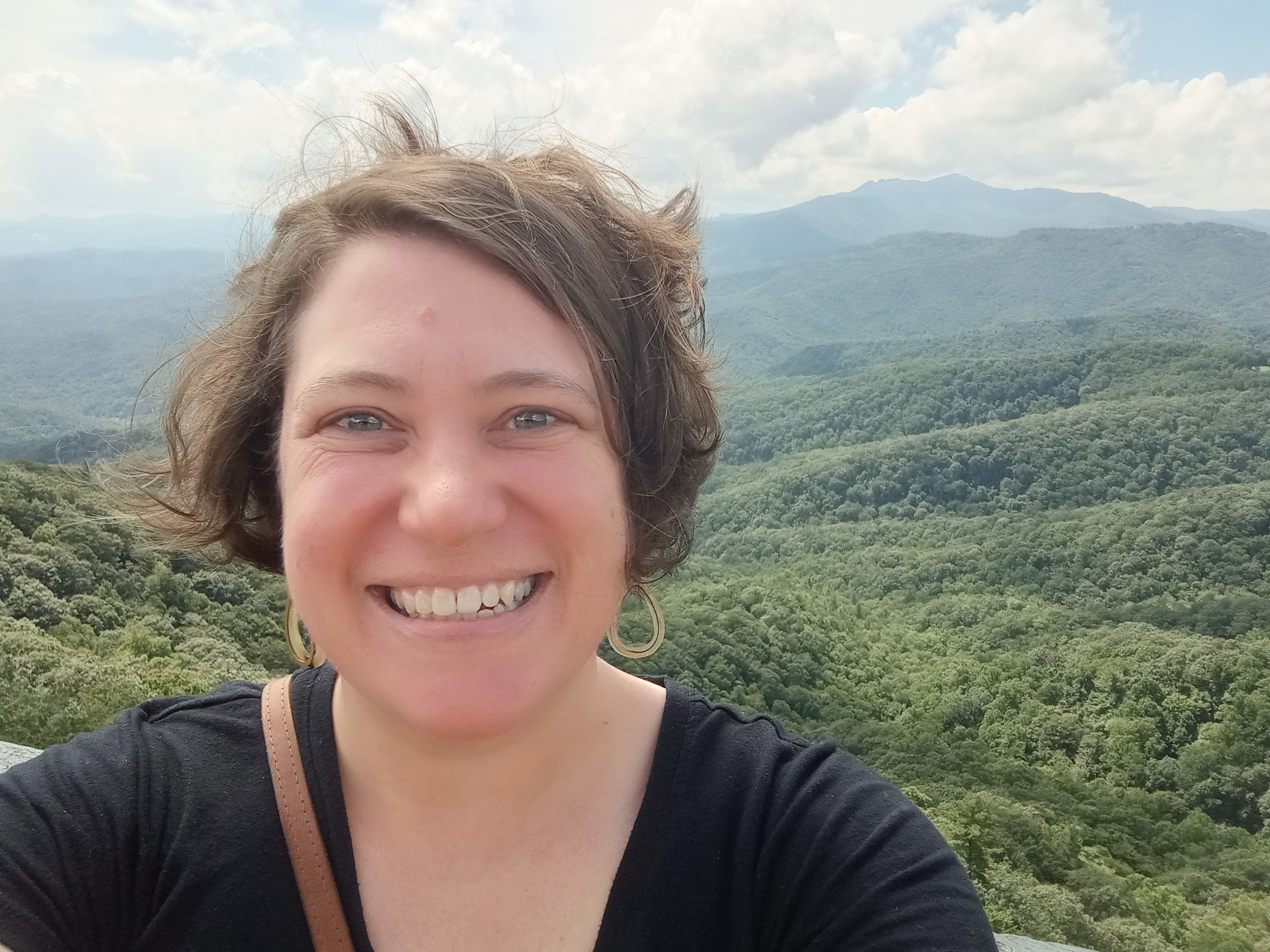
This fall, I joined a cohort with the Barnraisers Project. I first heard about founder Garrett Bucks when he was interviewed in Anne Helen Petersen’s newsletter, Culture Study (the best thing in my inbox each week, go subscribe.) I was taken by Garrett’s combination of deep analysis and humor. The cohorts that he and the team at Barnraisers run are designed to move white people from that space of feeling guilty and knowing we should do SOMETHING to figuring out what that something might be and how we can go about it with integrity and care. The cohorts teach a model of organizing. Every session, Garrett told us a story about real white people in history who acted in cooperation with people of color to make real, material, visible change in the world. And every session, we entered into scenarios where we imagined ourselves into figuring out what we would or could DO in situations where it would be easy, a piece of cake, really, to avoid taking some risky action needed to connect, challenge, and love the white people who disagree with us.
I struggled with the work of this cohort. I am in a weird place, vocationally, and it was hard to imagine the specifics of scenarios, hard to grasp the particular context in which I could or would be organizing other white people. Other folks had clear and specific goals, already: one pastor was working with a community organizing group in his city, and had already been about the work of instigating and entering into pointed listening conversations with his congregants. A young woman in D.C. wanted to know be a better ally with BIPOC people in the very white reproductive justice space there. I felt adrift, not quite sure that “organizing” was an entirely ethical thing to do with the same people that I pastor, and also not really connected enough in other spaces to imagine doing the work elsewhere.

But the real struggle was Garrett’s insistence on loving other white people. Look, I’m a pastor. Loving people is literally my job. But in this organizing context, the context of hard conversations that include a lot of listening and lead to something specific and concrete, loving people means not only accepting who and where they are at any given moment (which I am practiced at doing) but ALSO being confident that they are capable of engaging, listening, and changing their mind. Loving people in this way means trusting that they are just as complicated as I am, that we are both doing serious internal work, that their commitments and concerns are valid and worth hearing, that there can be common ground for us, even if that common ground is our struggle to find common ground.

It is hard to love people like that in the contexts where I am working. Just last week, some of my colleagues were upset with me. I don’t know exactly why they were upset, because instead of respecting me enough to reach out directly, they called my District Executive to tattle and complain. I do not trust that other white people in my networks are capable of engaging, listening and changing their minds, in part because they have repeatedly proven otherwise. And that leaves me in a bind, spiritually as well as logistically.

And how, after telling you all that, am I going to land this plane on the promised runway of HOPE? The Barnraisers cohort pushed me to consider my antipathy and start moving beyond it. Our homework assignments included a worksheet called “loving yourself/loving other people,” which instructed us to list our own strengths, and those of others: “What amazing things could be true if this person were committed to anti-racism?” And later in the semester, we were assigned a “love/struggle” story, where we had to dig down to the vulnerability in our own anti-racist journey and figure out ways to share THAT, instead of just our superiority and successes. I’m slowly – very slowly – starting to understand that connection begins in shared vulnerability, that there is no traction or prize in being a “good white person” who has figured SO MUCH MORE out than these other people. I have started asking myself why these folks continue to upset me so much and if, perhaps, it has anything to do with my own tentativeness and failure in the same arena.

I’m still struggling. My pastor job is shrinking to 1/4 time in the new year and I am actively interviewing for new full-time jobs, most of them not at all related to church work. I have no idea what kind of organizing I can or should be doing. I’m still way more comfortable with the quiet inner work than the active outer work. (See: this blog post. See: my every blog post, ever.) But Garrett’s good humor and insistence that we won’t get anywhere by blaming and shaming other white people, the work of entertaining those simple questions oriented toward compassion and benefit of the doubt, paired some practical tools and skills around organizing have moved me closer to taking the leap. I still do not know what that leap is, and I mostly feel stuck in mid-air. But I am more hopeful than I’ve been in a long while that something else is possible and that I can be a part of its arrival.

inciting joy

I read a lot. 110 books so far this year, with another three weeks and a TBR (To Be Read) stack of 6 left to go. It’s not a new thing: I always won the personal pan pizza in the Pizza Hut Book-It elementary school challenge. Reading is like breathing – I cannot imagine life without it. I used to fret about what I was reading, trying to stay abreast of the trends in literary fiction and reading only the Important Books of the year. It turns out, though, that a lot of the Important Books are also Soul Killing ones. My friend Jess gave me that line years ago, when we were trying to find books that weren’t written by middle aged white men with chips on their shoulder. “These guys kill my soul,” she said. I read a lot of Jonathan Franzen and Jeffrey Eugenides, and while I don’t really ever regret reading, I do wish I’d had a broader booklist back then.

I’ve since expanded my reading wheelhouse. I read way more women and people of color, books in translation and non-fiction. But I also settled in to middle age by giving myself permission to read gobs of romance novels and mysteries. Gobs of them. They are charming, sweet, certain to be resolved, and they go down easy. They remind me why I learned to love reading in the first place: because it’s FUN. Maybe another hope post is about the joy of those books this year.

But today’s post (on the 3rd Sunday of Advent, known as “Gaudete Sunday,” the Sunday of JOY) is about the best book I read in 2022: Ross Gay’s “Inciting Joy.” It’s so good that even though I spent a good chunk of this fall culling my bookshelves and getting rid of over 100 books, I have just about convinced myself to go buy a physical copy of this one that I read as a library e-book. It’s good enough to own.

Ross Gay is a poet and a teacher, and his writing is gorgeous and precise. His earlier book of essays, called “The Book of Delights,” was also a stunner, and I’d been looking forward to this one for a while. He writes about incitements toward joy, including grief, gardening, cover songs and basketball. Like the best poetry, Gay draws deep meaning from what most of us pass by as mundane, insisting that joy is not something we have to go out and discover but something embedded within everyday human living. He writes about what joy feels like, in his body, and he writes about where he feels it, places that include the community orchard he helped plant and his father’s deathbed. He writes long, meandering explorations of the best cover songs in existence and the joy of sharing ideas. His footnotes are an entire category of joy in and of themselves, and he is very, very funny.

“My hunch,” Gay writes, “is that joy is an ember for or precursor to wild and unpredictable and transgressive and unboundaried solidarity…My hunch is that joy, emerging from our common sorrow…might depolarize us and de-atomize us enough that we can consider what, in common, we love.”

I am learning, through this writing, about the ways that hope and joy are not external to our lives, not something we set out searching to find and obtain, but inherent, embedded, co-existent with our lives as they are right now. In an interview with The Nation, Gay says that he is “arguing for joy as a rigorous emotion that excludes no one and the repression of which is a kind of alienation, a suggestion that we ought to be alienated from one another. I think we have a profoundly immature idea of emotional states and have developed a sensibility that suggests sorrow and delight cannot coexist.”

Sorrow and delight, joy and pain, hope and despair not only can but also do co-exist. I have had trouble living that way these last few years, watching people I love grow sick and die, global pandemics sweep across the globe, religious institutions fail spectacularly at meeting the moment, politics get all the joy leeched out of them by either overly earnest or profoundly greedy people. What Ross Gay does is what Reservation Dogs does is what Jesus does in his parables is what, I now realize, I am trying to do in these dashed-off daily reflections: to remind us that THIS, right HERE, these bodies in this place at this moment, are the real thing. That we are capable of joy and delight even alongside the grief and struggle, that in fact, that mash-up of weeping and rejoicing is the only way hope has ever been, the only way hope will ever be.

reservation dogs

If you haven’t watched Reservation Dogs yet, WHY NOT!?

Yes, sure, fine, watching television is hard these days because you have to subscribe to one zillion different services and juggle all the webs of shared subscriptions and remember to Venmo your roommate from nine years ago to cover your part of her Hulu subscription only AFTER your cousin offers to PayPal you some cash for your Netflix account their kid watches all the time, and maybe you have just thrown your hands in the air and given up on television altogether. I would not blame you.

Except if that’s what you’ve done, you are missing out on some serious beauty and some real deep hope. There is a truckload of vapid, disgusting television, to be sure, and I am not entirely opposed to it (this week, I watched reruns of “Reba,” the sitcom starring the country music singer, during my lunch break, which is pretty much as vapid as it comes.). But if you’ve got the bandwidth and the attention span, you might be surprised.

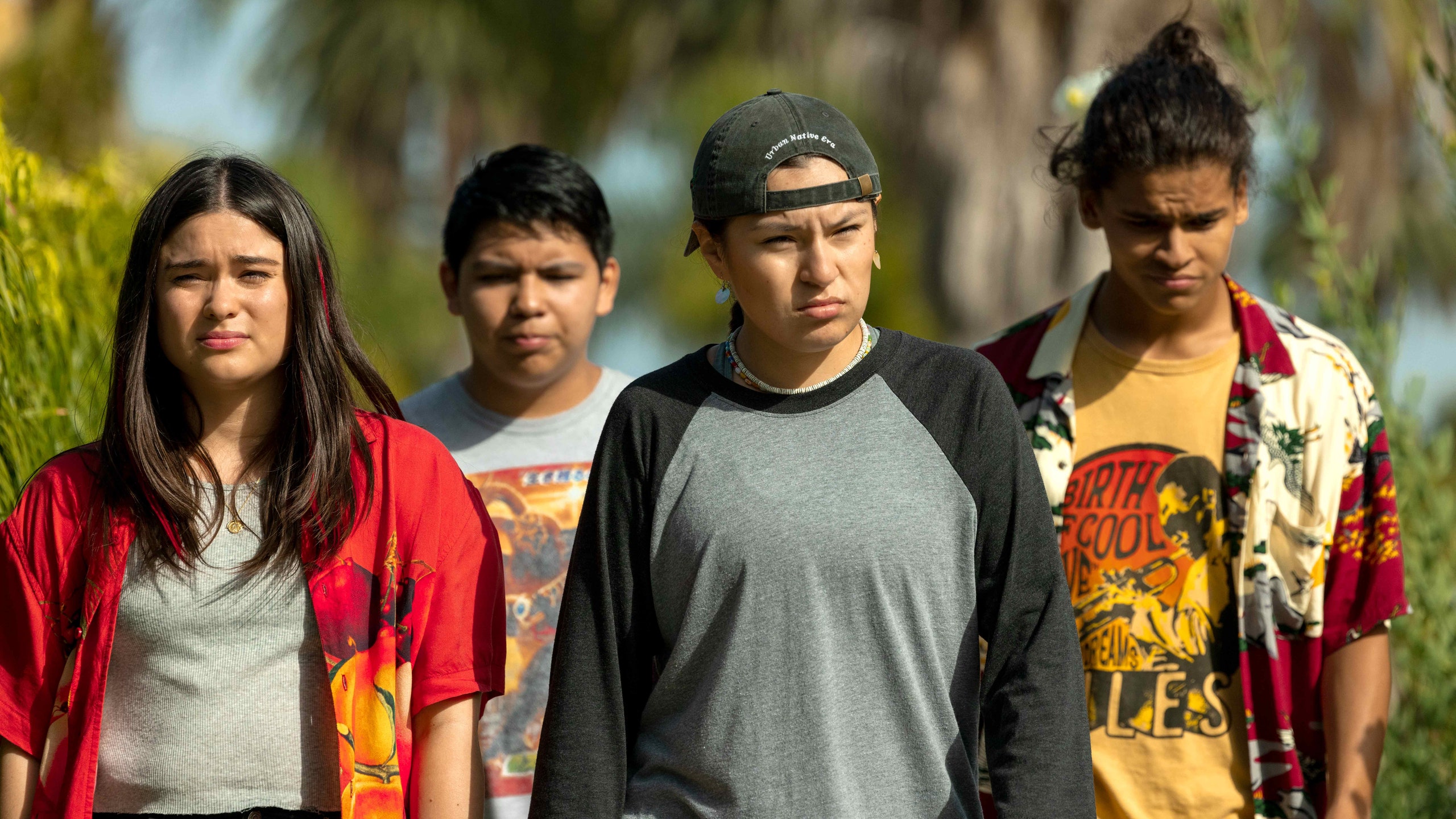
Reservation Dogs is a dramedy (drama+comedy) about four tight-knit Native teenagers who live on an Indian Reservation. Created by Sterlin Harjo and Taika Waititi, and filmed in the Muscogee Nation (otherwise known as Oklahoma), the entire show – cast and production team – is created by Native people. It’s the best thing I’ve watched in years.

I’m not the only one who thinks so – you can read about the show in every 2022 “Best Of” list, from Rolling Stone to the New Yorker. And I’m not a film critic, so you probably should go read some of those things, along with the interviews of the creators and the cast. But really, what you should do is find a friend with a Hulu or Disney+ subscription and watch the dang show, already.

Bear, Elora, Willie Jack and Cheese (yup, Cheese) have big plans to escape life on the Reservation, but the show manages to use that plot device as a way to tell stories about life on the Reservation that are so full of grief and hope, trauma and laughter that I actually pump my fist in the air when I see a new episode show up. The show starts with the kids stealing a chip truck. That’s not some fancy tech tool, it’s a big box truck filled with spicy chips called Flamin’ Flamers. The entire series starts off as a heist movie, complete with all the attendant action scenes and plot twists, but by the end of Season 2 we’re sitting with these kids inside the Indian Health Service, prison visiting hours, uncomfortable foster homes, and sacred ceremonies. There’s a spirit guide who manages to be a snarky send-up of indigenous stereotypes while ALSO occasionally offering actual sage advice. The local native policeman winds up wandering through the woods on a bad drug trip. In the Season 2 finale, the kids run into Jesus himself in an LA homeless camp.

I do not know how the creators of this show manage to cram so much of life into a 30 minute sitcom. I love the characters, I love their relationships, I love the humor. I am struck by the way that Harjo has managed to tell stories of harrowing realities that never abandon the anchoring bass line of communal care for one another. Cheese winds up in a foster home for a while and every hair on my arms was standing straight up waiting for one of the angry kids to beat him up, but instead Cheese insists on offering and receiving kinship and care. Enemies even become friends in this plot-line, but not before Willie Jack drops her on their head during a trust circle exercise. I keep being surprised by this show, which makes me love it all the more.

The other day, I wondered why we insist on making up vapid, cheesy, made-up realities to escape into or “entertain” ourselves with when real, everyday life is filled to bursting with drama, intrigue, conflict, reunion and reparation. Incredible stories are unfolding all around us, all the time; why not just pay more attention to what’s in front of our faces? Reservation Dogs feels like that: real life, where joy and pain are all mixed in together, tears and laughter follow on the other’s footsteps. It’s helpful, to be reminded of the ways that’s true, and hopeful to see how beautiful it can be.

cohousing

It has not escaped me that I’ve been writing a lot about young people in this series on hope. I don’t have kids of my own, but I do have a tender spot in my heart for young people figuring out how to navigate this weird world, for their earnest assumptions of justice and their ability to be delighted. It’s not surprising that my Hope list is filled with youth. But elders bring me hope, too!

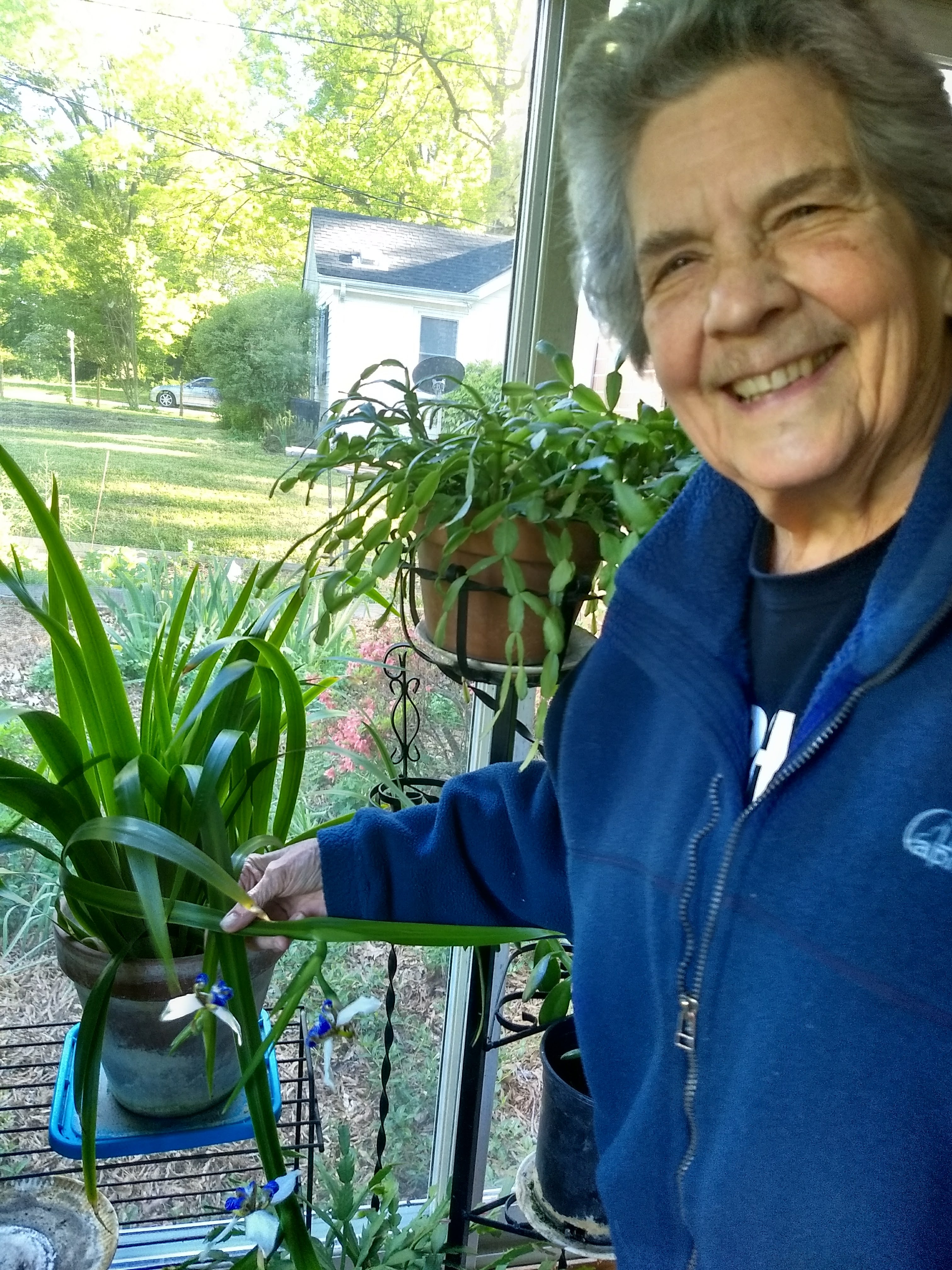
I’ve been friends with Lauree for a decade, starting when she and Kathie invited me to be a part of their writing group. I hadn’t moved to Durham yet, but Lauree hosted one of our writing group retreats in her house here, and it became one of those places that felt like home. I’ve moved over 20 times in the last 20 years, living lightly and transiently, so my sense of stability mostly came from other people’s places, friends who settled down sooner than I did, family who’ve lived in the same house nearly as long as I’ve been alive. Lauree’s house was small, cozy, and surrounded by her gardens. When I did eventually move to Durham, we had regular Sunday dinners together, sitting at her kitchen table surrounded by the farm baskets and Native weavings she’d hung on the walls. Lauree had FIG TREES in her yard, which seemed to me a great luxury. I didn’t spend as much time in her gardens as I could have, but I helped pot her saved heirloom tomato seeds, scanned the backyard grove for ripe pawpaws, filled my autumn kitchen with her butternut squash, and, every summer, joined the wasps to savor figs fresh from the tree.

Lauree is 88, now, and a lifetime of reading and gardening is catching up to her body. After succeeding at mostly avoiding the doctor all her life, she had cataract surgery and both knees replaced over the last few years. We share an independent streak (though I have no trouble admitting that hers is fiercer than mine!), and I wondered what Lauree would choose to do when the requirements of her cozy house and booming garden outpaced her energy and desire to take care of it all. I think she wondered, too. A few years ago, she heard about a new co-housing effort gathering steam right around the corner, and she went to an information session. It was a steep buy-in: the group was buying land and building a big new structure that would house 23 apartments, and members would have to pay up front. After a few months of difficult discernment, Lauree decided to join.

Co-housing is a really interesting concept. It’s not like my experience of community living back in my Brethren Volunteer Service days. I moved into a hundred year old house whose walls were literally crumbling. Nine or ten or eleven of us – it changed depending on the season – shared one car, cooked dinner for each other, argued about cleanliness and fought for use of the washing machine. The house was old and the electric wiring was weird, so if you wanted to toast your bagel in the morning when other people were trying to make their coffee or dry their hair, you had to yell, in your froggy, barely-awake voice, “TOASTER!” It was great. And it was horrendous.

Co-housing is different. There are various models, but it is essentially a way to have a private home AND shared spaces that foster community. Bull City Commons, the group that Lauree joined, started their cohousing effort from the ground up, so they recruited people who shared similar values, were willing to participate in a (very involved and time consuming, from what I hear!) model of self-governance called Sociocracy, and had excitement about communal living (without the need to scream TOASTER! whenever you used the toaster).

All at once, Lauree had a new house, new neighbors, new community, a new leadership role, and a new schedule. The months during their building project were filled with meetings and decisions. Construction was delayed and then delayed again, but in the spring of this year, Lauree and her coho buds all got to move into their new home together. It is beautiful. I mean, the building itself is really appealing, but the lifestyle is undeniably attractive, too. Every week, there’s Taco Tuesday, when they gather in the common room to eat tacos (and, apparently, whatever else anyone wants to share). Someone leads a yoga class several mornings a week. Someone else’s hairdresser friend shows up regularly to do cheap haircuts in the common room. There are regular movie nights, pumpkin carving, wreath making, cider pressing and so many other opportunities to connect and enjoy one another’s company that they post a monthly calendar in the elevator. Everyone has chores, and everyone serves on committees, and lots of people leave their apartment doors wide open. Once, when I was visiting Lauree, the neighbor dog wandered into her living room and joined our conversation. I love it. I think Lauree does, too.

I miss Lauree’s charming old house and her gigantic gardens, but I love where she has landed. It’s such a great place for her, and it is a bright, hopeful spot for me, too. I’ve had my share of roommates over the years, all of whom I still love, but I am no longer willing to be a roommate. I’m too independent and I value my solitude too much. But living as a single person in a world that assumes otherwise, I do sometimes long for a way to share life with other people that isn’t scheduled or programmed. I miss opportunities to chat about nothing, to eat a meal together without making complicated plans, to have a go-to person who could receive a package or take the dog out or pick me up at the auto shop while my car gets repaired. I have good friends who are more than willing to do all those things if I called and asked and arranged it, but it’s not a built-in part of the way I live. Cohousing is a way to build it in, while still maintaining privacy and independence. I am a little envious of Lauree’s new home, but mostly it feels hopeful to me that people are this invested and this creative and this willing to figure out ways of creating community that honors independence while simultaneously offering companionship. Hopeful.

it doesn’t have to be this way

For a while this winter, I was Muriel Knickerbocker, a wind suit wearing, mall-walking retiree who, along with her mystery book club, solved a string of murders in their tiny bayside town. I loved being Muriel.

Muriel was part of Murder Mavens, an RPG based on the television show Murder, She Wrote. RPG = Role Playing Game. Until the last couple of years, I did not know that RPGs could be FUN. I knew the acronym, but thought that world was only for the Dungeons and Dragons people who liked to cosplay druids and monks. I think my social circles have always been gamer-adjacent: I remember friends’ early post-college apartments set up to include gaming corners, and the boys of my seminary circle would pull all-nighters playing Axis and Allies. But I never got into gaming, myself.

My friend Carynne invited me to play a game online in the early part of the pandemic, as a way to be connected and find some fun in those weird, chaotic months. Our first game was called Good Society – think Jane Austen, matchmaking, failures of manners. It was fun, and engrossing. Carynne’s husband Garrett ran the game, and the four of us players mostly tried to make each other laugh. We named our little village Endwithton (because, I think, I said that the place should probably be one of those names that ends with “ton”…). I was Beatrice Fernside, a widowed old money heiress who lives for matchmaking.

We liked Good Society, but I never learned the rules. There were too many traits and rumors and points to keep track of, and I was really in it for the story. And the jokes. But after Good Society, Garrett and Carynne suggested Murder Mavens, and I was all in. Muriel and her buds solved murder after murder, flirted with the local sheriff, ruined a televised baking competition, and made enemies of the book club across town. For two hours every other Thursday, the real world melted away and all that mattered was whether or not we solved the made-up mystery and how ridiculous we could make the story.

We played our way through Murder Mavens, and after a few months’ break for a baby to be born and his parents to catch up on their sleep, we started a brand new game that Garrett is WRITING himself. Think collaborative post-apocalyptic N.K. Jemisin. Or just imagine me as a skilled naturopathic healer in flowy clothes named Antigone. Our first mission involved convincing teenage nomadic goat herders to help us break into a decommissioned auto city. It’s fantastic.

This collaborative gaming has been so FUN, in a season when fun seems to be in short supply. Every time we play, one of us says something to the effect of “I was so tired this evening and thought about bailing, but then we got into the story and I’m so glad I came!” The world as it is feels like it is always breathing down our necks, and the world as it might be has to fight to get attention. Playing these silly games has reminded me of the power of imagination – not just its utilitarian uses that we have to rely on to keep things running the way they are, but the JOY and DELIGHT in imagining other possible worlds together.

That’s not a revelation to anyone who reads science fiction or ever played make-believe. Mr. Rogers and Ursula Le Guin and Octavia Butler and N.K. Jemisin have been telling us all along that our imaginations are the key to our survival. I guess I just…forgot. Adults don’t get to play very much, you know? The practices of make believe have been monetized and optimized and twisted into advertisements. Having dedicated time and space to play, create, roam around in another world of our own creation reminded me that there are other possibilities for how we live together. It doesn’t have to be THIS way. And that is something like the very foundation of hope.

tiny church weddings

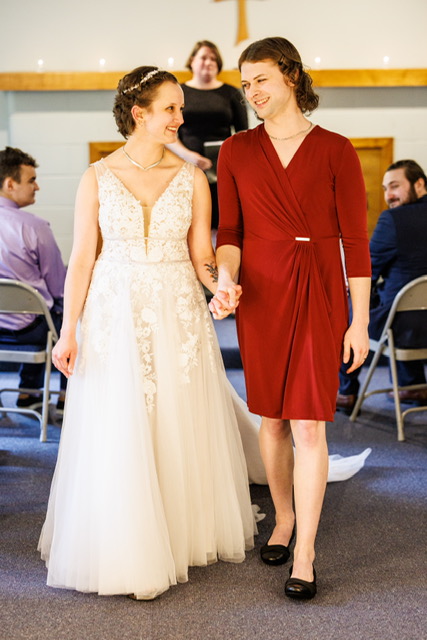
In the summer of 2020, a pastor friend from Pennsylvania sent me a note to say that one of her congregants, a recent college graduate, was planning to move to Durham with her partner. Would I, she asked, be willing to connect with them? I said yes, of course, and when I first talked with Kiera we realized that not only were they moving to Durham, hoping to connect with Peace Covenant, but they were moving into my own apartment complex. New neighbors!

It was 2020, though, which made everything about moving and settling into a new place complicated for Kiera and Helen. They both had jobs here, but making friends after college is always hard, and doing it in the midst of a global pandemic made it even harder. Still, they arrived, and we brought them housewarming cookies. At least once a week, Franny and I would run into Kiera, Helen, and their dog Prince as we all went out for our evening walks. Kiera started attending Zoom worship regularly, injecting our weekly reflection time with energy and grace.

Those pandemic months are all sludged together in my mind. I don’t know when the church asked Kiera to serve on our leadership council, but I do know that she excitedly agreed. I’m not sure when it was that Helen and Kiera got engaged at the Renaissance Festival, but I do remember the way they buried the lede in Joys & Concerns by starting out excited about how great the festival was and oh, also, by the way, they got engaged! It wasn’t long after the lede-burying announcement that they told me they would really like to get married AT Peace Covenant and have me officiate the ceremony.

I don’t know if you know this, but Peace Covenant is Tiny Church. I mean, we are small in number but we are also small in building. When the first group of folks who planted the congregation were discerning where and how to gather, the District provided funds and suggested a large, former Orthodox Church building downtown, but the congregation chose a tiny, cinderblock structure on the south side of town, instead. I have been grateful every day for that decision 25 years ago, because it means that our tiny congregation is not saddled, like so many other smaller groups, with the albatross of building maintenance, repair and expense. The building is perfect for our needs, and houses another congregation, two AA groups, and has a ton of potential. It is humble, cozy, simple and sacred. But it is not a space designed for large events. We hosted an ordination several years ago and the ecumenical clergy who participated were flabbergasted when I directed them to the single coatrack in the main room as the place to store their vestments, instead of a specially designed sacristy. Only one thing can really happen at a time in our building. One year, I forgot about the Chinese language school that met on Sunday evenings, and so we did our Love Feast prep to a soundtrack of Mandarin grammar lessons. You will not see Peace Covenant’s sanctuary showing up on a listicle of The Best Wedding Venues any time soon.

But Helen and Kiera were clear: this was where they wanted to get married. And they wanted to host the reception here, too. I told them all these things: it’s tiny! The kitchen is very small! We don’t allow alcohol on the premises! Have you seen the water spots on the ceiling tiles? Yes, yes, they said, we know. But this is our church. This is where we want to be married.

So, we started planning. They were aiming for a ceremony this fall. And then, just before I went on sabbatical for the month of March, grad school applications came back and the couple realized that they would be moving…to Ireland…this fall. We moved the wedding to April, squeezed in the rest of the pre-marital counseling sessions, scheduled a day for the congregation to spruce up the building, and I went on sabbatical.

The wedding was beautiful. Kiera and Helen were totally besotted. The building was FULL. The caterer squeezed between counters, tables edged up against walls. I ate dinner with Apple, Kiera’s surrogate grandma, and Walter, Helen’s gallant grandparent. There were twinkly lights on the walls and s’mores over a fire pit in the parking lot. It was one of the best things I’ve been a part of all year long.

Weddings are part of a pastor’s work, and I really do like officiating them. I’ve done my fair share of weddings, for friends and family and friends’ families (I married all three Rodriguez siblings over the course of a decade!). It’s an honor, every time – that’s the only cheesy way I can describe the gift of being invited into this sacred space with two people entering into covenant with one another. But if memory serves, this is the first time I’ve officiated a wedding for people who are active participants in my own congregation. And oh, was it sweet. Helen and Kiera moved here and became part of this community. They were my neighbors! Kiera – a young adult in a new place – was a committed and consistent part of our congregation’s community. And they chose our tiny little church and our tiny little building to be the space where they began this covenanted life together.

Our tiny congregation has a fantastic group of young adults like this right now, young people who show up and contribute and infuse us with joy and delight. College kids join worship over Zoom from their dorm rooms or the student center. Recent graduates patiently and gracefully explain gender expansive terms and realities to retirees. Grad students serve on our Coordinating Council and med students invite their friends to our potlucks. During our weekly worship time of sharing joys and concerns, we hear about weekend adventures, campus grief, and engagement announcements (Helen and Kiera are not the only ones!). For a while last summer, when the pandemic had finally lifted, there was a regular Peace Covenant Young Adult Dungeons and Dragons get together.

Young adults are transient. Kiera and Helen left for Ireland in August, and we miss them! Our other students are moving through their programs, and we know that life will ferry them farther away from us. But these young people are such a gift. They bring me so much hope, both in their willingness to be a part of something as out of the mainstream as a traditional Christian congregation and in their insistence that this tradition is worth challenging, expanding, and growing.

There are a million ways to be discouraged about the state of the Church these days – both the church at large and individual congregations. Culture wars, inflation, waning religious affiliation and shrinking energy levels are all real and present challenges for us to navigate. But beneath all the hand-wringing, there persists the power of community to surround one another in times of great pain and in times of great joy. Every time I encounter the doom and despair, the anxiety over institutional collapse, I want to say “Yeah, but can’t you see all the ways we still need one another? Haven’t you noticed all the ways people are still finding refuge and belonging here with us? Didn’t you notice those fairy lights still hanging from the ceiling, the way these walls are still reverberating with wedding joy, all these months later?”

tending space

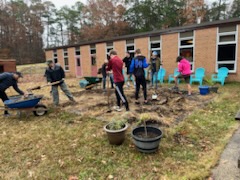
On Saturday morning, a few dozen people converged in the drizzling rain on the Parktown Food Hub garden. Our friend Devak, a high schooler who has been volunteering in the garden for the past three years with a fantastic group of kids, had asked if he could do his Eagle Scout project with us, and Saturday was the day. There is always something happening at the Hub, but this was a particularly fun, loud, energetic, productive few hours.

Devak and his crew dug up an overgrown patio space in preparation for a permanent stone paver situation to be laid. They built new benches, turned an old shipping container into a new raised bed, and edged one of our in-ground lasagna beds (no, a lasagna bed is not where you grow tomatoes and basil; it’s a technique for amending soil with layers of cardboard, sand, compost, leaves, whatever else you can make use of to create good growing conditions.). The space was filled with Devak’s family, friends, and Scouts galore. They got SO MUCH work done.

The Food Hub is a fledgling organization, but it is incredibly well-connected. Its origins are in a church-planting effort led by Pastor Sharon, who has spent several years as what the ELCA here calls a “mission developer.” Sharon knew she was called to South Durham, and she spent the first months of her call meeting one on one with as many people in the neighborhood as she could, asking what was great about South Durham and what South Durham needed. One of those meetings was with Aja, a leader in the PTA at the local elementary school. Aja and the PTA had been running a food pantry out of the school for a long time, but there were limitations: the school wasn’t open on weekends or holidays or in the summer. Space was at a premium. Need was growing, and it was time for the pantry to expand.

Sharon was part of a Methodist congregation around the corner from the elementary school, where her wife, Lisa, was head of the Trustees. The church used to have a preschool in its building, but the preschool was long gone and those classrooms were mostly unused. Sharon brought Aja to see the space. The church agreed to share the rooms. Lisa’s employer made a sizable grant as seed funding. Community came together to clear out old toys, remove preschool shelving, paint the walls and clean the floors and transform the two rooms into something new and needed.

That was three years ago. I helped paint the walls at the Food Hub in the summer of 2019. When COVID hit in early 2020, everything changed for everyone, but people still needed to eat. The congregations that met in the building shifted their gatherings entirely online, but the Food Hub’s work required regular in-person volunteers, and folks were relieved to have somewhere to go and something to do. Lisa transformed the old preschool playground into a garden filled with donated plants and repurposed tools, and I started volunteering regularly out there, ecstatic to be able to safely leave my house and do something fun and purposeful.

Last year, when I left my denominational job, I came on board at the Hub as the Garden Minister. Most Saturdays, I show up and plant or water or weed or harvest something. In the summer, I spent sweltering evening hours keeping our precious plants hydrated. I did not know it was possible to be quite so invested in the lives of VEGETABLES, but here I am, an amateur gardener finely attuned to precipitation levels and planting calendars. I also help coordinate volunteers, do a little administrative work, and generally enjoy the opportunity to be a part of something good, generative, growing and so clearly Spirit-led.

I don’t know how to express the hope present in the Food Hub very well, in part because it is still actively unfolding and I am all up in it. Thousands of neighbors get food from the Hub each month, thanks to the Food Bank and the farmers from the local South Durham Farmer’s Market and the Holy Infant Food Justice Garden down the road and donations from so many people and organizations. Hundreds of people volunteer or give each month. The Hub has partnerships with the Islamic school across the street, a group called Mindful Families of Durham, at least a dozen congregations, Boy Scouts, Girl Scouts, and the Neighborhood Association. A realtor friend offered her clients the choice between a Thanksgiving pie or a donation to the Hub last month, and most people chose the donation. A dance studio held a Trunk or Treat event where a local photographer offered a free photo to anyone who donated to their food drive for the Hub. Several times, large grants or donations have arrived totally out of the blue. There isn’t a hard line between people who get food and people who share food – a lot of us are both.

What’s hopeful about the Hub is not exactly that its existence helps people who need food get food, though that happens in increasing volume day in and day out – the Vision Board just voted to increase our monthly distribution capacity by almost 10% due to rising need. What I find hopeful at the Hub is the way that community begets community. Do you know what I mean? The whole operation runs on the assumption that there is enough abundance right here in our own community to make sure everyone – everyone – has what they need. Some of us need more food. Some of us need more connection. Some of us have extra resources, and some of us have extra time, and the Hub opens and tends a space where the exchange can take place.

And what I have witnessed is that this – opening and tending the space, nurturing connection and relationship – really is enough. More than enough. There is a boatload of actual labor involved, both manual labor carting boxes and sorting shelves and turning compost and administrative labor answering emails and navigating institutions and clearing calendars and buildings so that the work of connection has room to grow. But that labor is not grueling or anxious. It is not bent on institutional survival. It is not concerned with longevity or scarcity. The labor at the Hub is done in good faith and in good spirit, grounded in the assumption that it is worthwhile and meaningful and enjoyable, and that we do it together.

Opening the space makes room for people to show up with what they have to share, and BOY do people show up. Sometimes, they even bring dozens of other people with them and spend the morning digging out a patio in the pouring rain so that this work of opening and tending space for connection and community can soon be done outside in around a fire in the middle of our growing garden.

the oldest mountains in the world

Isn’t time a weird concept? Like, at some point, human beings decided that our commercial needs were more important than the sun’s own rhythm, more pressing than the earth’s very rotation, and put numbers on the hours, created a false “high noon,” and then convinced everyone around the globe to just…go with it. Instead of allowing our creaturely bodies to follow the ebb and flow of the days and the seasons, we imposed a rigid structure – that doesn’t even work very well – and then invented the clock and set it to our own human-created idea of time. We’re stuck in it, now, this made-up idea that 6am means anything, while the sun and the moon just go on, ignoring our precocious death-march, rising and setting according to planetary rotation and seasonal needs. I can’t think about this too long, or else my mind gets very, very messy.

We are very caught up in our own human-made ideas of time, though. Are you someone who arrives early, late or on-time? Do you have a particular kind of calendar or detailed planner that keeps you tethered to your life’s plan? How often do you scribble sunrise or sunset into that datebook? How often do we take time to consider the pattern and tempo of what’s going on in the ground or sky, instead of inside our cell phones and smart watches?

I’ve been thinking about this as the sun takes a break for winter, as our planet leans over and sends us into these months meant for hibernating, re-grouping, gathering ourselves in. I’ve been thinking about time. It started by wondering about all the people who have lived through global catastrophe before – floods and flus, urgency and upheaval. And then, I started thinking about the earth itself. Talk about upheaval.

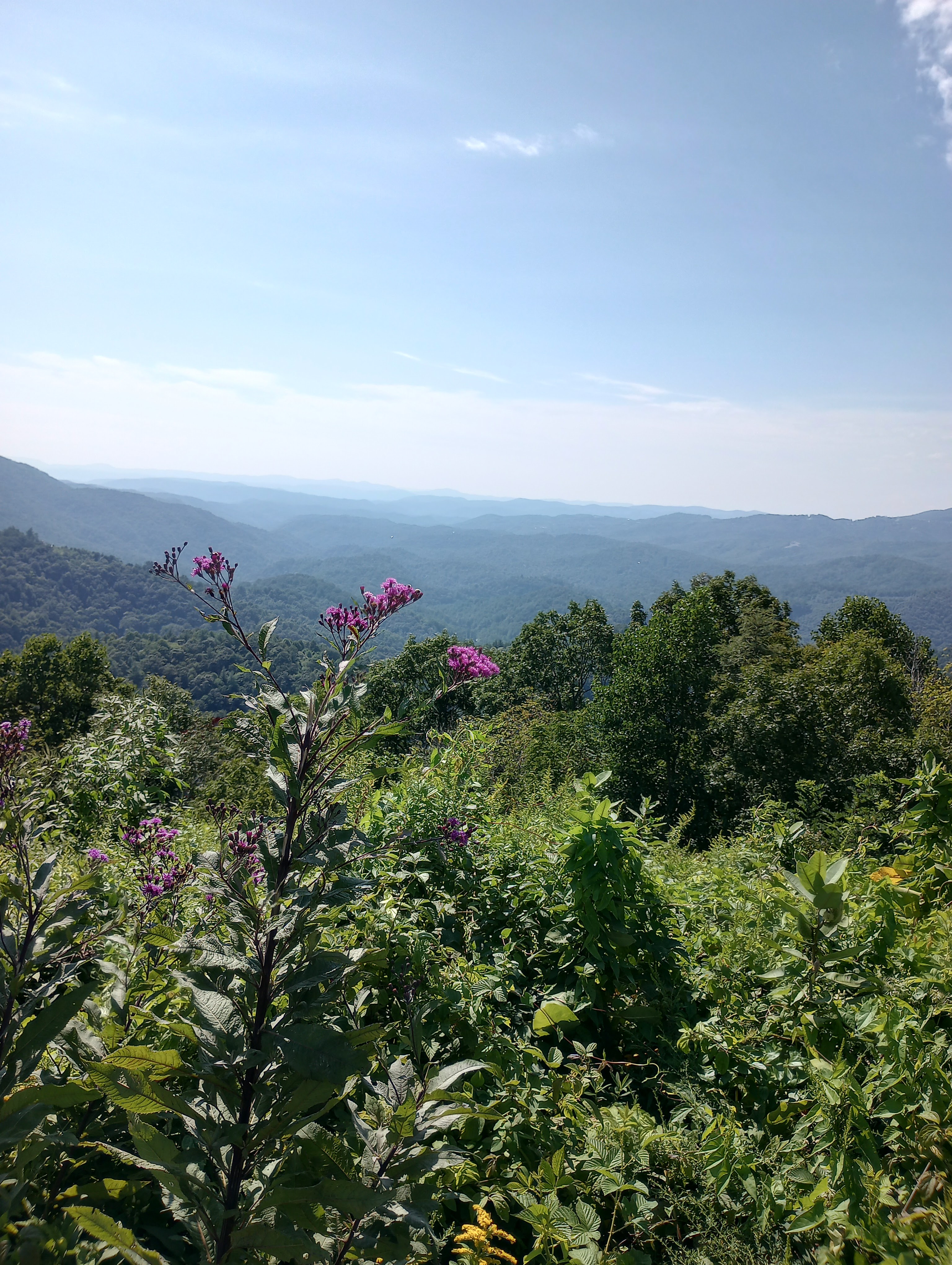
I grew up in the midst of the oldest mountains on earth. The Appalachians first formed over 480 MILLION YEARS ago. That number is so big that my brain can’t even grasp it. They grew for 200 million years, then Pangea broke up, the mountains unfolded, and it took another couple hundred million years before volcanoes erupted and plates banged together and the mountains I know were thrown up into the sky. 65 million years ago.

For millions of years, those mountains stood, subject to wind and rain and rivers that carved routes across and down and through them. Ancient plants grew. (Did you know that the Magnolia evolved BEFORE BEES? It grew to be pollinated by beetles, because God hadn’t created the bee just yet). Animals evolved, and thrived, and then went extinct. (did you know that Appalachia is the Salamander Capital of the World?) It wasn’t until 16,000 years ago that humans started hanging out in my mountains, native peoples like the Cherokee who were summarily killed and evicted when European colonizers arrived thousands of years later.

I find that geologic sense of time, in which humans barely register as a blip on the graph, to be hopeful. My mountains – the peaks that have cradled my heart and formed my faith – existed so far before me, so long before humanity, even, that I can’t begin to imagine all that they know and all that they hold. What power does my Google calendar, the tyrannical digital ruler of my days, have in the face of such longevity? My despair over day to day challenges pales in the light of tectonic ruination and volcanic rebuilding. There’s this line from Annie Dillard’s Pilgrim at Tinker Creek that is something like my life verse (and Annie Dillard has always been something like my life force, Pilgrim something like my life’s source):

“Mountains are giant, restful, absorbent. You can heave your spirit into a mountain and the mountain will keep it, folded, and not throw it back as some creeks will. The creeks are the world with all its stimulus and beauty; I live there. But the mountains are home.”

The mountains are home. I’ve always known that. When I finally launched myself off to college in the flatlands after a year of false starts, my Mom drove up on the Blue Ridge Parkway when the leaves started turning that fall and took panoramic photos with a real, film-based camera, had them developed and sent them to me in the mail. Those mountains lived on my cinderblock dorm wall as long as I could keep them from fading. But what home actually means has changed over these decades. The mountains are still where I want to be, where my soul is oriented, the true north of who I am.

These days the mountains are also something bigger, richer, more cosmic and geologic, not just my own individual home, but part of the underlying and reassuring reality that human existence is created and contingent, a blip on the timeline of the world, part of an existence that we did not construct and do not determine. We can fill our calendars til the cows come home, fiddle with Daylight Savings Time all we want, hem and haw and fuss and worry about fitting it all in, but none of it changes the stark reality that we are not in control, here, that there is another orogenic plan at work and we are tiny, powerless subjects suspended in its wake.

And given all the damage that humans are doing these days, all our self-important apocalyptic predictions and pleas, I find that hopeful. That the oldest mountains in the world aren’t buying our bullshit or suffering us fools. They’re just looking on from their Paleozoic perch, shaking their heads and clucking their tongues at our Anthropogenic hubris.

parables

Did you know that in Matthew and Luke – the two robust, narrative gospels about Jesus’ life – nearly half of all the things Jesus says are in the form of parables? Matthew clocks in at 43% and Luke ratchets that up to 52%. John doesn’t do parables at all and Mark, hellbent on getting from the stable to the tomb in 60 seconds or less, only includes 6. But Matthew and Luke – who expand on Mark’s skeleton frame to give us bigger, richer, juicier accounts of who Jesus is and why he matters – spend most of their dialogue time repeating Jesus’ weird little stories that we call parables.

My tiny congregation spent time this fall studying Jesus’ parables together. We had a New Testament expert join us to kick it off, and then we blazed our own trail through scripture, with the help of Jewish scholar Amy-Jill Levine. I’d read her book before, and spent time studying and preaching every one of the parables that we studied, but I was still blown away alongside my people as we worked to understand Jesus’ enigmatic teachings in new ways.

It turns out that Jesus had a repertoire of around 40 stories that he probably told over and over as he traveled across the Galilee, and none of these stories were dry legal lectures on scriptural interpretation or treatises on the sinfulness of the people who showed up in hordes to listen to him. Jesus would probably be appalled at most of the preaching we do and tolerate in churches today (but then, I’m pretty sure Jesus would be appalled at lots of things we do and tolerate in church today). Jesus told stories, and they were stories about the stuff of every day life. God does not show up in the parables as a named character at all. Well, there’s one disputed possible God-character in a parable set in the afterlife, but for all intents and purposes Jesus was not telling stories about gods and their expectations.

Instead, Jesus told stories set in kitchens and gardens and family homes, stories filled with sibling rivalries and labor disputes, courtroom dramas and kids who got lost. Dr. Richard Lischer, who wrote the Interpretation Commentary on the Parables (a big deal if you’re a preacher) and joined us for the first session of our study, told us that Jesus’ parables act as a bridge between secular and religious communities. But that does not mean that Jesus lured people in with a good story and then pulled a bait & switch to evangelize them or trick them into following him, joining his congregation or professing allegiance to any particular belief system: Jesus told the stories and then just…let them lie. Dr. Amy-Jill Levine says that he would tell a story and then expect his hearers to go and work it out on their own – maybe the best form of teaching.

I am fed up, burnt out and tired of most of what passes for church these days, but Jesus never bores me. I am never disappointed when I spend time seeking to understand who he was and what he taught. The parables – stories of tiny things with huge impact, hidden things holding great meaning, stories of what mercy and justice look like in PRACTICE instead of in memes – reminded me why I’m still devoted to this way of life.

I love teaching. I got to create my own curriculum for this study, custom-built for my beloved congregation, which is one of those tiny, mighty things with huge impact, a place where we try, together to practice mercy and justice in material ways. Our congregation, like most congregations, has gotten even tinier over the last year, and studying Jesus’ teachings about the power of small things to surprise and delight has been hopeful. Jesus compares the Kingdom of God to things like mustard seeds and yeast, turns our attention away from kings and politicians and power brokers to laborers, outsiders, widows and enemies. I suspect that we would all do well to shift our attention in this way, right here and right now – fewer fear mongering notifications on our cell phones and more time spent chatting with our neighbors, less time wallowing in the headlines and more time noticing what’s going on down the street, down the stairs, in our kitchens, in our gardens.

The kingdom of God is like a mustard seed. The kingdom of God is like yeast. The kingdom of God is like someone who leaves all they have to find the one lost thing, their one lost kid, and throws a party when she’s found. The kingdom of God is like your sworn enemy saving your life. The kingdom of God is like Universal Basic Income. The kingdom of God is like…this:

plowshares

Raise your hand if you’re SO OVER online conferences. Yeah, me too. The internet has been a lifeline over these pandemic years: I discovered the joy of online RPGs (another hope post for another day), pastored people from across the state and across an ocean, and attended lectures and concerts with people I never dreamed I’d get to interact with so intimately. But so far as I can tell, the online *conference* dynamic is just one giant boondoggle. I’ve attended a dozen or so, and not a single one has been satisfying or well-done. The joy of conferences is the surprised hello in the hallway, the late-night drinks and new connections, the casual running-into and meeting-up with other people, and I’m convinced that there is no good way to recreate that over screens. I’ve seen a bunch of attempts, and have scrunched up my face at them all. A meeting, a class, a game, a worship service: sure. The internet can handle that, and we can get creative in how we build in interaction and attentiveness to one another. A conference, though? Let’s just draw the line right there.

BUT. I attended one (meh) conference this fall where I heard this song performed “live.” I mean, the artist was there, in the venue, and played it in real time as I watched from my tiny laptop hundreds of miles away. And even though it involved all those fiber optics and pixels and tinny digital decibels, the song stopped me in my tracks. And then, last week, the same song was a recommended hymn in my Advent worship resource. Here it is: Spencer LaJoye’s “Plowshare Prayer.”

You can learn more about LaJoye’s inspiration and process for the song here.

I’ve spent a significant portion of the last couple of years hearing stories from young people who have been deeply hurt – harmed, ostracized, abused, cast out, disbelieved, ignored – by the church. I’m pretty sure some of these folks will never darken the doorstep of a traditional “church” for the rest of their lives, and I think that is a very, very wise and healthy decision on their part. Nearly once a week, I decide to join them, then change my mind, then decide again.

Here’s the hopeful part: these people, at least the ones I’ve been listening do, do not believe that the church is right in their abuse. They have not decided to do what the church asked of them, which is almost always to sit down and shut up. Instead, they have raised their voices, sought out support, insisted on a hearing and then insisted on reparations. They have removed themselves from situations of harm, but they have not quit advocating for an end to the harm altogether.

I’m not sure what else to say, except that these young people have saved me. They have transformed my prayer life, and shifted the way I think about boundaries and belonging. I am in awe of them, chastened and emboldened, both. Their refusal gives me hope.

I pray if a prayer has been used as a sword against you and your heart, against you and your word, I pray that this prayer is a plowshare, of sorts