for the love of falafel

All I wanted was decent falafel not too far from my house. When I moved down to this part of Durham a few years ago, I asked Yelp where to find falafel, and drove the couple of miles to the Mediterranean Grill & Grocery on Revere Road. It was lunchtime on a Friday, my day off. I pulled into the giant parking lot and marveled at how many other people apparently wanted this particular falafel on this particular day. But when I went in the door of the restaurant, electronic bells tingling as it closed behind me, there were no other customers. I ordered my falafel and took it outside to sit underneath an umbrella on a patio filled with flowers blooming in planters. As I took the first bite of that [unparalleled] falafel, soft chanting began to drift through the air. I looked up and realized, after tracking the shelves full of shoes outside the door to the adjoining space in the strip mall, that I was gobbling up my lunch on the lawn of a big masjid, filled with Muslims chanting Friday prayers in Arabic. I finished my falafel, covered in prayer, and left full of blessing, beauty and hummus.

I didn’t realize, that day, that I had stumbled into a neighborhood that would become really important to me. Parkwood is a planned community, first built in the 1950s to house workers moving in to staff IBM’s headquarters. The Grill and mosque occupy a long, low strip that also houses an Islamic school and – oddly enough – the Triangle Bridge Club. The adjacent ball fields are constantly filled with tiny baseball players and parents. Across the street is the Baha’i Center and next to that is Parkwood United Methodist Church, whose building is also home to the Parktown Food Hub.

Sometime after I discovered the World’s Most Delicious Falafel, I met Pastor Anita and Pastor Sharon. Anita was the pastor at the Methodist church, and Sharon was a Lutheran church planter learning about the neighborhood in order to partner with people already making a difference. Peace Covenant and Parkwood UMC began partnering – a joint Christmas Eve service, shared Bible Studies. The three of us and Rachel, another UMC minister, began meeting monthly as a Clergy Covenant Group, sharing stories of ministry and supporting one another through all kinds of life.

Sharon’s church planting eventually connected her to a woman named Aja, who had for a long time been running a food pantry out of the local elementary school. Aja, a natural connector, had tons of volunteers, food sources and connections to hungry kids, but the pantry needed a bigger space and room to grow. The connection led to the Parktown Food Hub, which has connected Methodists, Lutherans, Brethren, Muslims, atheists, Boy Scouts, mindful families, ghost hunters, seminary students, youth groups, Latinx congregations, social workers, public school teachers, and an unimaginably diverse group of people to gather together, share food, and build community for the last two years.

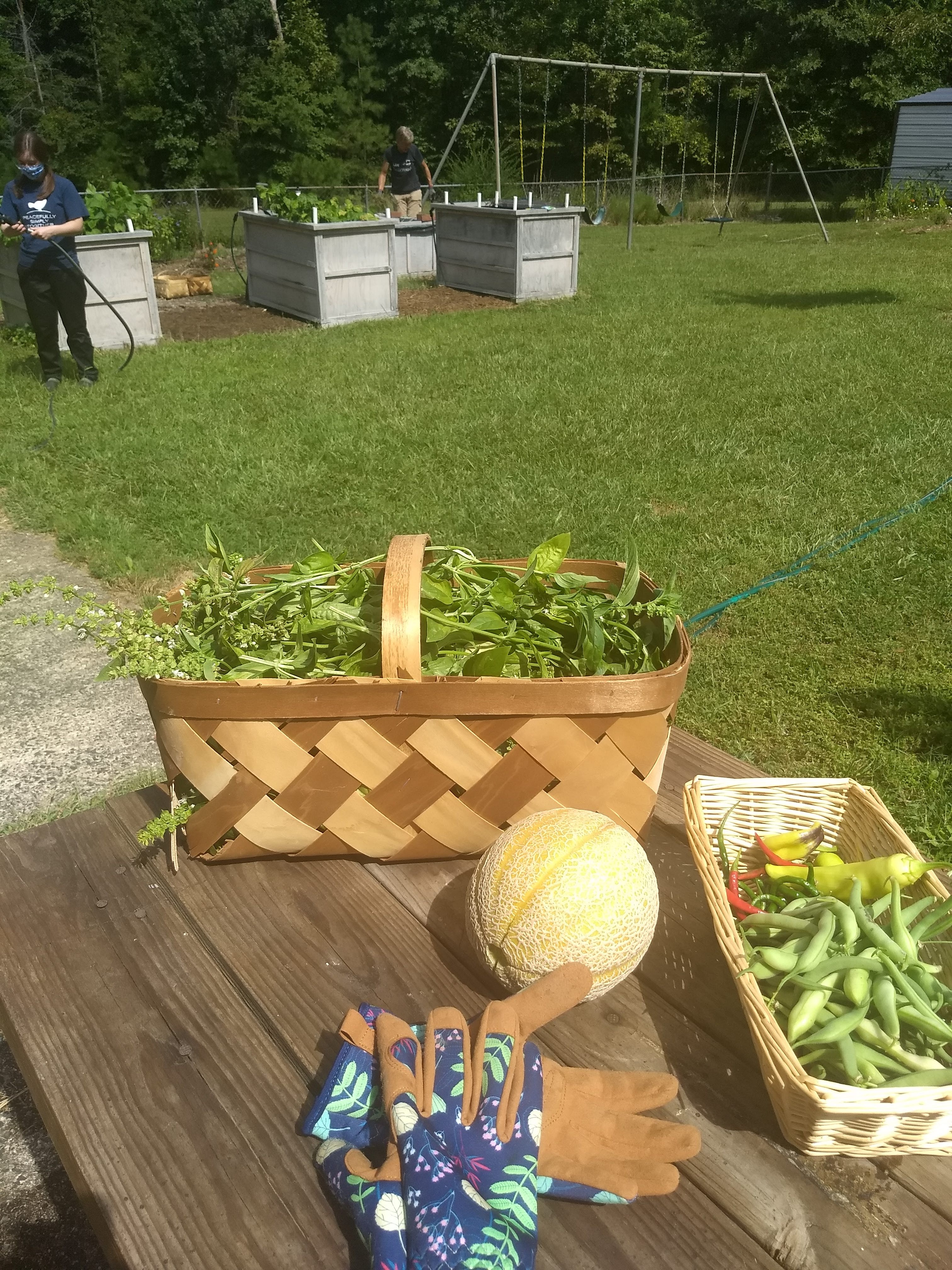
My congregation is connected to the Food Hub, volunteering and supporting the work through our annual budget. During the pandemic, I started volunteering in the garden out back, where Sharon’s wife Lisa – also the head of the trustees at Parkwood UMC – put her farm kid know-how to work and, with the help of a dedicated team, transformed an abandoned preschool playground area into a garden. The garden is created out of old pallets turned into raised beds, a playhouse built by a church member who realized the space needed some shade, donated seeds and stakes and soil, and compost – so much compost – comprised of the dredges, ends and scraps from the Food Hub distributions.

It is a gorgeous place. I don’t know how to describe the spirit of it without sounding incredibly cheesy. I can tell you that Saturday mornings in the garden were a big part of keeping me alive and well during the loneliest pandemic months. I can tell you that people show up and seem to just…fit in. I can tell you that Pastor Sharon operates on an assumption of abundance – abundance of food, for sure, but abundance of gifts, abundance of love, abundance of belonging. And God seems to like that M.O. The place has grown in leaps and bounds. When a need emerges, so does a solution. My sense of the ministry at the Hub is that the people there are surfing the waves of grace, holding on to God’s wily Spirit and following where she’s leading.

There is no grasping at what once was, no holding on for dear life to, well, anything. It is a place of open hands and generous spirits.

On Thursday, my last day working for the Church of the Brethren, some dear church folks took me out to dinner on the flowering patio of the Meditteranean Grill & Grocery. I ate falafel. We celebrated with baklava.

Today, I began a new position as Garden Minister at the Parktown Food Hub, which is a slightly misleading (though SUPER awesome) title. I know very little about growing a garden. I have soaked up some things through osmosis, from my Grandpa Bobby and my friend Lauree and volunteering here over the last couple of years. But the title really means “the minister who happens to be in the garden,” at least for now. The idea is to expand the Hub’s capacity to connect and nurture community, both inside and out. We’re starting with monthly garden potlucks – last week at our first one, there were figs and pears and lavender lemonade, an accordion and a *baptism.*

This morning, as we worked to clear out the beds to make room for fall planting, the Baha’i choir began their outdoor practice. They sang, we worked, and the entire morning there on this corner where I stumbled into holy falafel felt nothing less than blessed. And I am deeply, deeply grateful to be a part of it.
radical transformation

Peace Covenant CoB

August 8, 2021

John 3:1-10

I think a lot about CP Ellis. In the 1960s, CP was the Exalted Cyclops of the local Durham branch of the Ku Klux Klan. You might know part of his life’s story from the book or movie, “The Best of Enemies.” CP got recruited, along with Black community activist, Ann Atwater, to lead the cooperative effort to de-segregate Durham’s public schools. Leaders organized a “charrette,” a series of nightly community conversations, where people from all across spectrum were invited to participate in the decision-making for integration.

CP and Ann ended up becoming friends through the course of their work together, and both of them underwent serious, powerful, radical transformation in the process of learning to love one another across immense distance, difference and prejudice. Telling the story like that makes it sound like a heart-warming, feel-good story of linear change. But radical transformation rarely happens in an instant, and it definitely didn’t happen that way for CP Ellis.

In his book, “The Best of Enemies,” Osha Gray Davidson says:

“The single unifying element in the history of transformations in the West, from Saul’s conversion on the road to Damascus to Kafka’s cockroach, is the instantaneousness of the process – if the word ‘process’ can be used at all to describe the psychological equivalent of a lightning strike…This was not CP’s experience…”

CP’s work on the charrette and with Ann changed his heart, but it also resulted in being ostracized and cast out of his community. It wasn’t just the Klan that called his home phone late at night shouting insults and threatening his life; it was a huge swath of the white working class community of Durham, along with plenty of middle and upper class white people, too. That was a huge loss. Davidson writes: “Just because he had discovered a commonality of experience between himself and Ann Atwater didn’t mean that he would immediately leave the Klan and sign up with the NAACP…Perhaps the best way of putting it is to say that a door previously unknown to CP had been opened to him. But he had not walked through it. And he did not want to. For the vision he saw through that doorway was not of some peaceable kingdom where lions and lambs dozed together in sunlit meadows, but of a hellish landscape befouled by miscegenation.”

CP’s transformation wasn’t quick or easy, and it was not without real pain, grief, struggle and loss. In the aftermath of the work on the charrette, he lost all of his friends. He lost his community. He did not fit in back in his white, working class, East Durham neighborhood, and he did not fit in with Ann’s community, either. He started drinking even more heavily than he had before, and even attempted to kill himself two days before Christmas. He checked himself into a psychiatric ward, where the white doctor, who could not fathom the world-shifting transformation CP was undergoing, told him his problem was that he smoked too much and sent him home.

Finally, CP found a new, young, sympathetic therapist in Chapel Hill who, after hearing his story, said to him “Look, you haven’t committed any crime. Why don’t you just forgive yourself and get on with your life?” As he drove home from that session, CP was overcome. He pulled over on the side of the road and realized that the therapist was right. “What had he done that was so awful? He had changed. That was all. Was change a crime? Did it deserve a death sentence?…He put his head down on the steering wheel and cried, his tears a mixture of anger, forgiveness, anguish and exultation.”

But even that isn’t the end of CP’s story. He spent his life working for justice, yes, but it cost him friends, his marriage, and his community. His transformation was painful and it was costly.

I think about CP a lot, because I think his story is a much more accurate portrayal of what radical transformation looks like than many of the stories that we hear and tell. Radical transformation is not painless. It is not without loss. It requires sacrifice, dying to self, and giving up so much – from certainty to safety to relationship. It is a lot to ask of a person.

And it is exactly what Jesus asks of us. Nicodemus was a lot like CP: safely installed in the upper tiers of society, he enjoyed power, wealth and respect. His curiosity about this Jesus character threatened all that privilege – it’s why he snuck out under the cover of darkness to check Jesus out. When he heard Jesus say that he must be born entirely again – give up all that privilege and power and place in society that kept him so comfortable and safe – we don’t hear another peep out of him until he shows up after Jesus has been crucified.

//

This week, we begin a series focused on the new “compelling vision” statement from the Church of the Brethren. The statement was officially adopted at this summer’s Annual Conference and is the result of several years of conversation, study, focus groups and prayer. Here’s the whole thing:

Together, as the Church of the Brethren, we will passionately live and share the radical transformation and holistic peace of Jesus Christ through relationship-based neighborhood engagement. To move us forward, we will develop a culture of calling and equipping disciples who are innovative, adaptable, and fearless.

I have a lot of reservations about the state of our church these days – and American Christianity, in general. Denominations aren’t long for this world, and institutional church structures are crumbling every day. But none of that means that the work of Jesus’ disciples isn’t still essential and immediate, and none of it means that God isn’t still present within and among us, working radical transformation in us even now. I like a lot about this statement. I think Peace Covenant is already well on our way to living out the vision presented here. I’m excited to dig deeper into the invitations it presents to us.

The statement starts out strong and doesn’t let up: together, as the Church of the Brethren, we will passionately live and share the radical transformation of Jesus Christ. Not just anticipate or prepare for or believe in or talk about…but passionately live and share radical transformation.

At first glance, that might sound easy breezy: we know Jesus, and we understand that life with Jesus changes us. We want everybody to have that! But living radical transformation – if we pay attention to the people in scripture and in life who have done that, lived through radical transformation – well, living radical transformation might just prove to be painful. Like Nicodemus and CP Ellis, when we see what’s on offer, we might turn our backs and opt out.

This week, on vacation in the mountains, I encountered SO MANY butterflies – orange and yellow and blue and green, flitting all over the valleys and on the mountaintops. Everybody knows the story of the radical transformation from caterpillar to butterfly. Like this:

It’s so cool! A worm curls up into a cocoon and emerges, days later, as a gorgeous, winged, flying thing! Amazing! But did you catch how that video explained the process? The caterpillar eats and eats and eats, then hangs upside down, curls into a pupa shape, and then DIGESTS ITSELF by SPLITTING ITS OWN SKIN OPEN to form a cocoon. A caterpillar’s transformation is not smooth or simple or easy: the creature digests itself. Inside that cocoon, it turns into a literal pile of goo. It isn’t kneaded or gently pushed into a slightly new shape; it is totally re-made, radically transformed. It takes digesting its own body and sitting in a liminal space as a literal pile of goo in order for the transformation to happen.

Living and sharing the radical transformation of Jesus Christ – which is where this new vision statement BEGINS – is intense. We are not playing around. We are coming right out of the starting gate saying that we fully expect to be spending some time as piles of goo while God works on our hearts and our minds, transforming them into something that we cannot even imagine. We START by saying that we are people who anticipate losing our power, our privilege, our safety, our security, even some of our relationships for the sake of divine transformation.

That’s how this vision statement BEGINS. Talk about setting a high bar.

But that is what our tradition has always proclaimed: that living lives faithful to Jesus’ call will always involve unexpected sacrifice. Alexander Mack, the first one to articulate the Brethren understanding of faith, wrote a hymn called “Count Well the Cost.” They lyrics go like this:

“Count well the cost,” Christ Jesus says,
“when you lay the foundation.”
Are you resolved, though all seem lost,
to risk your reputation,
your self, your wealth, for Christ the Lord,
as you now give your solemn word?

Are you resolved, though all seem lost, to risk your reputation, your self, your wealth for Christ?

Do we trust that Christ is worth it? Do we believe that beyond all that we could lose, there is another, more beautiful, more worthy way of living? What if that radical transformation involves losing our community? What if it drives us to want to die? What if we end up in a psych ward where no one can begin to understand what’s happening to us? What if we lose important relationships? What if we fall into poverty? What if we can’t do our jobs in good conscience any more? What if radical transformation means we lose all of what we thought was important?

This is where we START, in this vision for church together. This is the BEGINNING. Hoo boy. Hold on: we’re in for a wild ride.

integrity

I’ve had several disheartening conversations lately with vibrant, creative people who have been powerfully attracted to my religious tradition: convicted by our insistence on the whole of Jesus’ life and not just his death, intrigued by our origins as a movement resisting religious tyranny, sold on our desire to be people of Christ’s peace and invited in by our practices of communal discernment.

Each one of these people that I’ve talked with has been welcomed, promised a place in the body, and committed – fully – to life with us. They have made sacrifices, incurred debt, left other communities and places of safety. In our tradition, we talk about “counting well the cost” of following Jesus, and these beloveds have done exactly that. They have had their hearts changed, considered fully what that might mean, and made conscious decisions to follow Jesus *with us.*

And each one of these people has been subsequently insulted, betrayed, broken down or cast out, because the Church of the Brethren lacks integrity. Our actions do not match our words. Our systems contradict our convictions. We do not keep our promises.

I am part of this betrayal. I have enthusiastically encouraged some of these folks, talked up the good parts of our tradition and talked around the massive cracks in our foundations. I have shepherded people through discernment and credentialing processes, managed intern programs that promise ministry to be rich, full and supported. I’m not pointing fingers “out there” at “someone else,” I’m making a personal confession that might also become a communal one.

Queer people welcomed in enthusiastically to a particular small group who are promised fidelity and safety are just as quickly abandoned in larger conversations when their identity is assaulted and their worth is questioned.

Leaders of color are held up as token voices, encouraged to take on more and more responsibility and then heart-rendingly betrayed when people they were called to lead heap racist invective on their heads.

Young pastors whose gifts were called out and nourished, who were led into processes and contexts that we promised would lead to flourishing, collaborative ministries are left lonely and isolated when congregations refuse to acknowledge their humanity and the shifting contexts of congregational life.

I am tired of being a cheerleader for a broken system that continually breaks people. I am tired of yelling “it’s fine! there’s so much room for growth!” while the machinations and willful ignorance continue uninterrupted behind the scenes.

Our congregation has been studying Jeremiah this summer, and his ministry is instructive. God gets so mad at the religious leaders in Jerusalem who ignored the wounds of the people, treated them “carelessly” and forged ahead, saying “peace! peace!” where there was no peace.

I’d so much rather tell the truth: that we are in an inescapable season of destruction and decline; that this is the way of all human institutions; that anything built on a foundation of human power or human shame will be taken apart, brick by brick so that God, the divine potter, can re-form us, re-shape us, mold us and make us into something new, something that seems good not to us, but to Her.

The word that came to Jeremiah from the Lord: “Come, go down to the potter’s house, and there I will let you hear my words.” So I went down to the potter’s house, and there he was working at his wheel. The vessel he was making of clay was spoiled in the potter’s hand, and he reworked it into another vessel, as seemed good to him.

Jeremiah 18

not ready to snap back

Yesterday, I went for coffee with a woman from my church. Before the pandemic, we went out to lunch regularly – she’s always on top of the local food scene and knows which restaurant to try. We’ve missed that. So we went for coffee yesterday, at Bean Traders – my favorite local shop where I have held “coffee hours” weekly for the last five years. After a year of surviving take-out only service, they finally put a few picnic tables out on the sidewalk, and we drank our coffee and ate our pie AT THE COFFEE SHOP.

I have missed coffee shops so much. SO MUCH. It was glorious to sit, sip, and chat while the chatter of other coffee drinkers floated around us.

But it was also 4pm. And, over the course of the last year, my caffeine consumption has plummeted. I used to drink the occasional afternoon cup, maybe once a week. And two cups in the morning was my standard. I also drank far more soft drinks than I do now. But these days, I am on a solid 1.5 cup coffee regimen, carefully crafted in my at home french press each morning while the dog patiently waits for me to fill her food bowl.

And so, that 4pm JOLT of coffee shop brew totally shocked my system. At 10pm, when I am usually sliding into dreamland, I was wide awake, buying books online. At 1:30am, the dog had a reverse sneezing fit and woke me up. She fell back asleep quick, but I tossed and turned and prayed about all manner of life minutiae until well after 3. I am tired this morning, and I even feel a tiny bit *hungover* from that caffeine trauma to my system.

Way back in March of last year, when everything went sideways, my logical and forward-thinking congregational leadership decided that we would gather for worship online until there were fewer than ten active cases of COVID-19 in our county. Plenty of people scoffed at us for being unreasonable, even people in positions of authority over us. But our leadership was clear: we will not allow our worship gatherings to hurt our congregation or our community.

A couple of months ago, we revised our original benchmark, understanding that maybe fewer than ten cases would never happen. We decided to keep meeting online until at least June, and to re-evaluate over the summer.

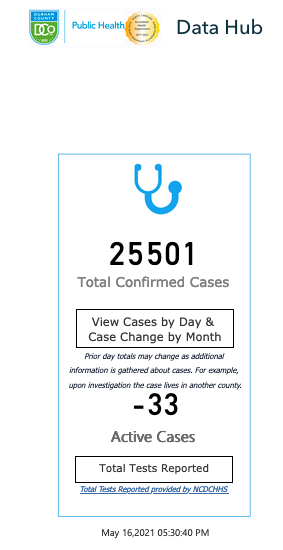
But for the last year, I have monitored the county’s active infection numbers every morning. They were in the dozens, then the hundreds, then, for a while this winter, surged into the thousands. Things are trending really well here, and over the last couple of weeks the number of active cases has plummeted into the double digits instead of the quadruple. On Friday, the number was 23 active cases in the county. Yesterday morning, the stat was -33. Yes, *negative* thirty-three cases.

That negative number means, of course, that more people were released from the period of active infection than tested positive in the last day’s tally. And we know that actual cases are between 5-10 times higher than the reported number, depending on local rates of testing. People in Durham County are still contracting COVID-19, but the numbers are way, way down.

Which means, right, that we should be jumping for joy, swarming back into our building, following the science and snapping back to normal. Right? Right?

Some people in my congregation are SO READY to do all that. Others are…not. We’ve got a survey in the field right now to gauge just how many are ready to return to in-person gathering. We will, as we decided, re-evaluate our practices in light of the science and our collective comfort level.

But I’ll tell you what: I am NOT ready to snap back. Just like the caffeine wreaking havoc on my body after a year of severely restricting my relationship to it, this push to jump back into previous patterns is tearing me up.

Part of that is my natural inclination to move slow and resist change. I know that, and I know that there are lots of other, perfectly valid and understandable ways to encounter and navigate the world.

But another part of it is this: for over a year, we have been negotiating the possibility that we might inadvertently infect, harm or even kill others with our BREATH. Again, not everyone reacted to that possibility the same way, but my reaction was straight up terror. I was not afraid for myself, for the most part, but utterly terrified that I would be the vector that infected and caused irreparable harm to others. Just by breathing in proximity to them.

That kind of terror doesn’t just stop existing with the flip of a switch, or an announcement from the CDC, or the supremely encouraging negative statistic on the chart I’ve checked every day for the last year. That kind of terror will take weeks, or months, or – most likely – years to leech its way out of our systems.

I don’t feel frozen – which is one kind of trauma response. I can feel my internal weights and measures shifting as the scientific realities settle into my vaccinated sinews. I can feel my hackles slowly, slowly, sloooooowly coming down. I am trying to allow space for the terror to make itself known in safer ways than before – to say, out loud, that for over a year I have been terrified of killing someone just by breathing on them, to let that horrific truth exist, unvarnished, in my awareness.

And also: the pandemic is still raging. Vaccines are not available globally. Variants are still killing 13,000 people every day. Durham County’s stats might be in the negative this morning, but this is an international community, and people in Durham are losing loved ones in India, Brazil, and all over Europe. In the US, our vaccine distribution has not been equitable, and it is still the case that privileged white people – who were already less likely to contract or die from COVID – are more likely to have had access to the vaccine.

“Follow the science” has become a refrain for how to act in a pandemic. But humans aren’t always logically inclined. Terror and trauma don’t follow scientific trends. So, I am trying to give myself some time and space, to allow my very mushy brain to sort itself out a bit in this push to move from survival to full-speed-ahead. I hope you will do the same.

shake your graveclothes off

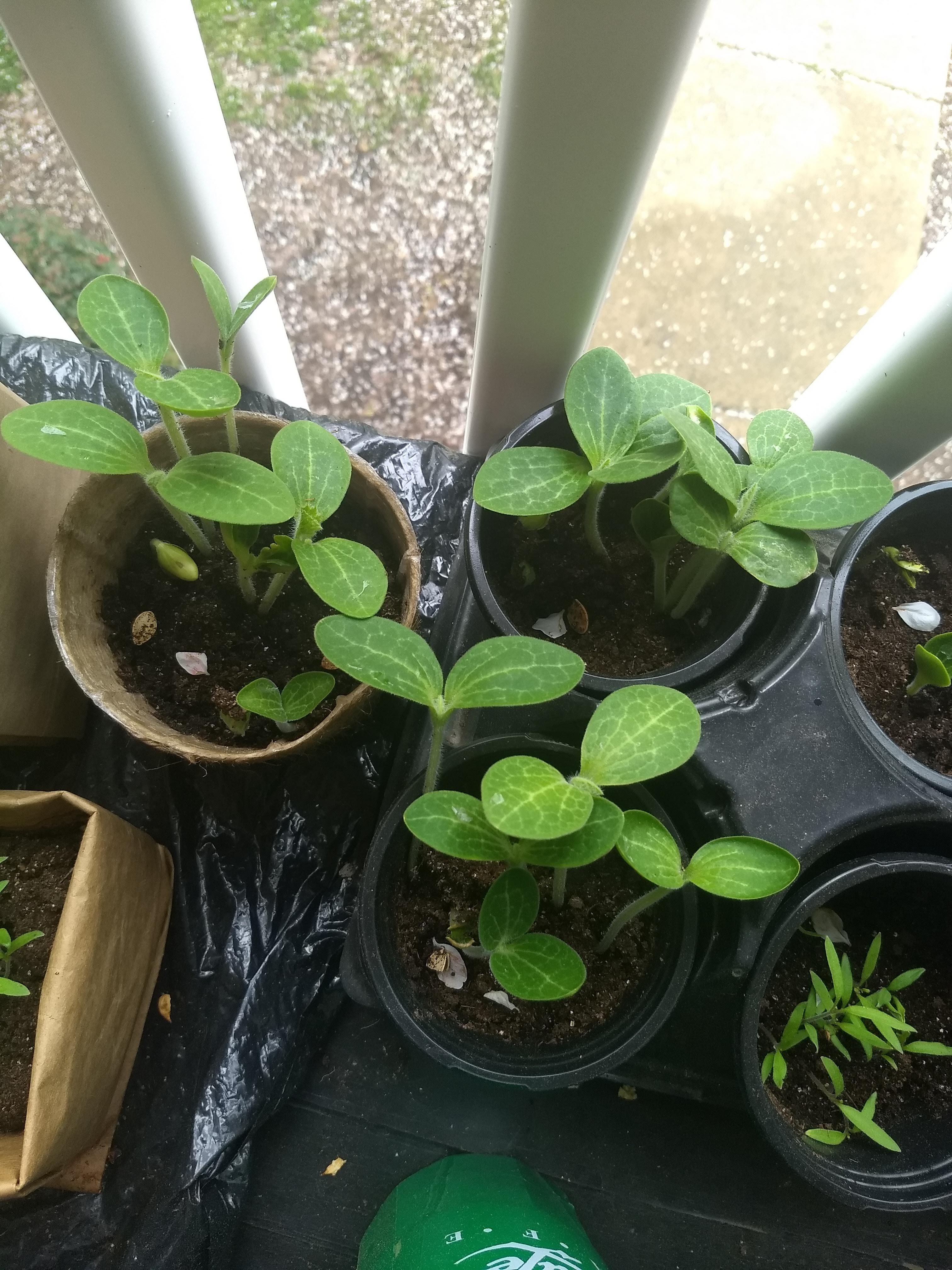
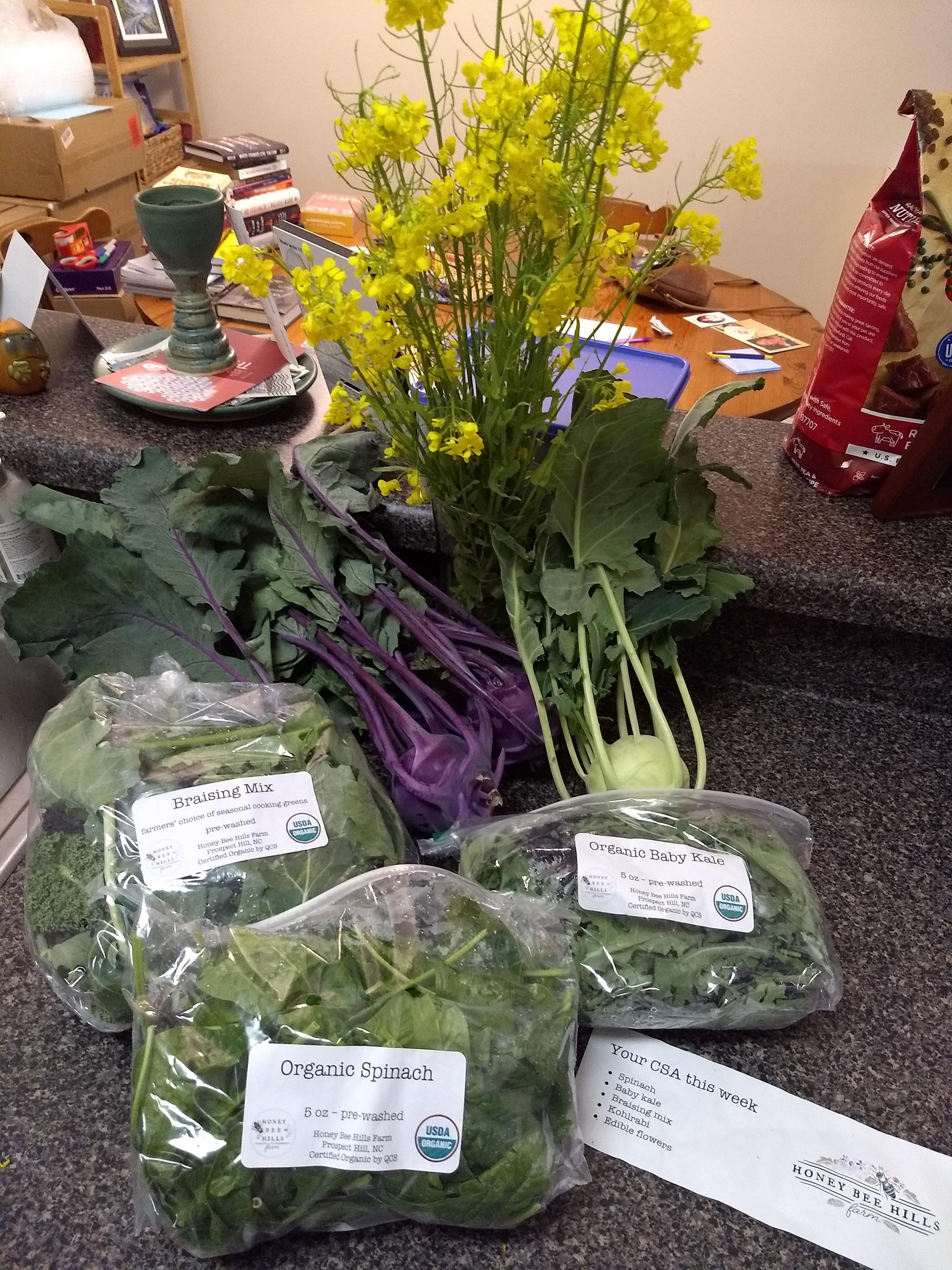
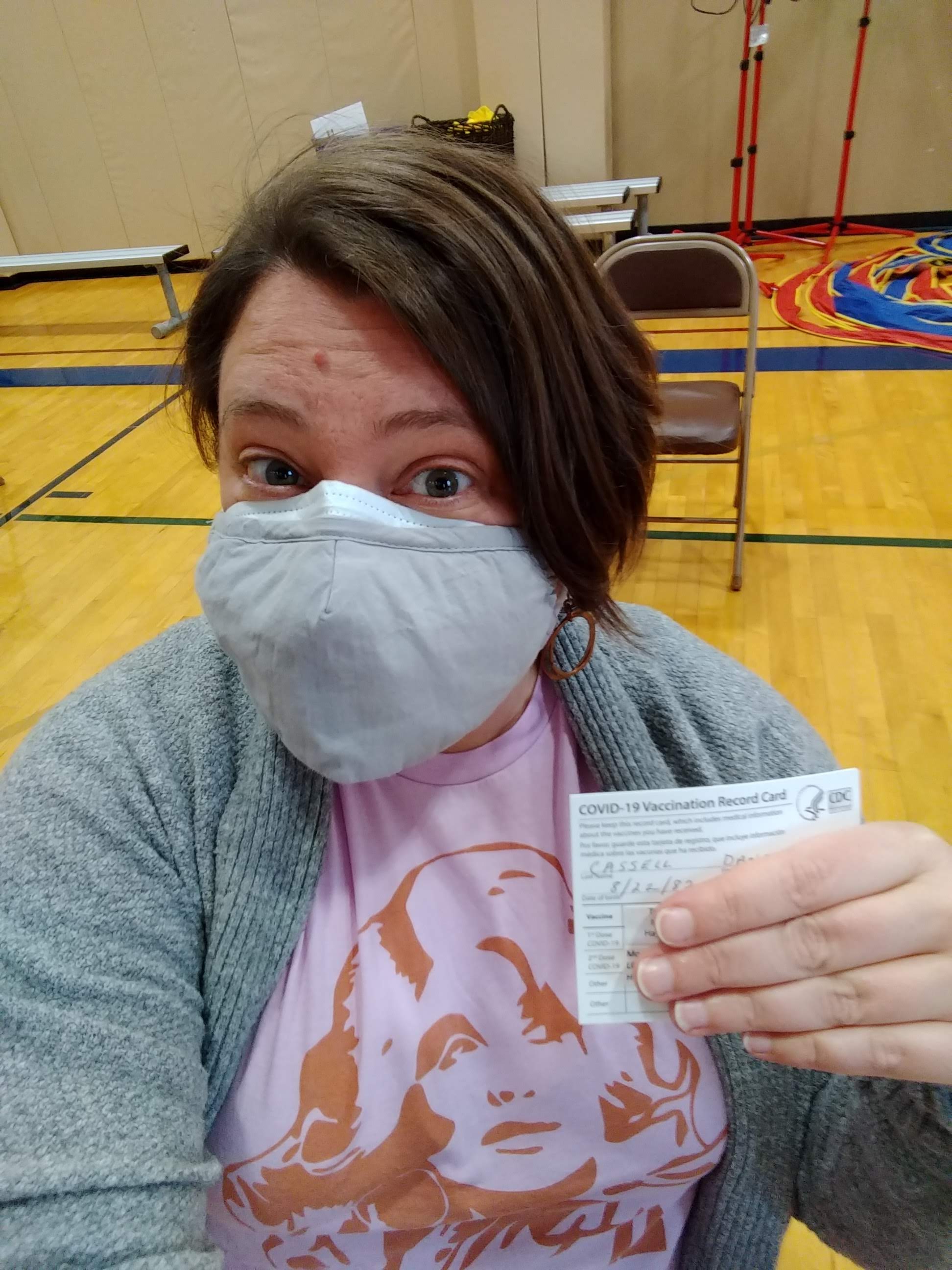
Yesterday, on Holy Saturday, I picked up the first week’s installment of my CSA share from a local farm. I dropped off squash babies that grew from seed on my patio at the community garden. I ate a hearty, home-cooked breakfast with my congregation in our church parking lot (but was so happy to be eating and chatting together that I failed to take a picture). And I got the second dose of the Moderna COVID-19 vaccine.

The tide is turning, the season is changing, Lent is finished, and a new dawn has arrived. Christ is risen! The forces of death are defeated now and forever. I can feel it. Can you?

Thanks, y’all, for walking with me through this Lenten season here in this space. Writing has always been one of the practices that keeps me sane, and doing it here, with you, has been essential to my sanity in this season. Thank you for clicking the links, reading your overflowing inboxes, commenting here and there and even, sometimes, in person. It has mattered to me, and I am grateful for you. I won’t write here every day, now that Lent is over, but I will still write here.

I’ll leave you with an Easter hymn.

a day of mourning

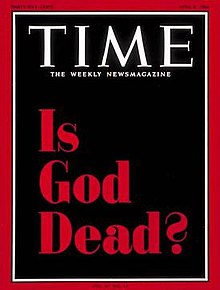
Holy Saturday is a weird, in-between day. For the last few years, I’ve changed my facebook profile picture to this 1966 Time Magazine cover on this day:

The magazine was doing a special issue about a particular strand of Christian theology that questioned whether or not God’s lifespan had actually ended. These were Christian theologians, and Thomas Altizer, in particular, argued that God’s existence ended at the crucifixion, when Jesus’ death sent God’s existence spinning through all of Creation. Of course, none of that nuance is evident in the striking magazine cover.

Just like none of the nuance of the coming resurrection accounts would have been evident to Jesus’ friends and disciples living through this day after his crucifixion. No one knew what was happening. God was, in fact, dead. When I put that image on facebook, enthusiastic believers always comment: “NO!” But in the context of this in-between day, that’s not exactly accurate.

We walk through Holy Week – waving palms and washing feet and listening to nails driven into Jesus’ own body – to remember the story and inscribe it in our hearts. And if we are willing to walk through all those other days in preparation for the hope we know is coming, then we’d better be willing to walk through this one, too.

Today, God is dead. Jesus has been murdered by the state and buried in a borrowed tomb.

This day usually feels torturous for me. I am usually busy with last minute Easter worship preparations, filled with anxiety and anticipation, and covered in grief, both immediate and existential. This morning, I’m remembering Melissa, who died in January, and Bobby, who died last year. I am thinking about George Floyd, whose murder by the state is being dredged up in graphic detail at the trial of his murderer this week. I am thinking about Breonna Taylor, killed by the state while she was sleeping in her own bed. I am thinking about Adam Toledo, a 13 year old kid killed by Chicago police this week. I am thinking about the hundreds of thousands of people killed by COVID, which is to say killed by our collective callousness and indifference.

God is dead, today. If there were ever a day for grief to be welcome, invited, and appropriate, this is it. I listened to Serene Jones on the On Being podcast yesterday, and she says that there is a shift when our raw grief turns into mourning; that when we are able to name and mourn our losses and our trauma, we are able to hold them in their proper place and begin to move forward into a future that incorporates but is not wholly determined by the finality of those losses.

I don’t know what all you are grieving today, or if you are stuck in the paralysis of grief or moving forward into the incorporation of that pain into the transformation of the future. But I do know that today – of all days – is a day to name that loss and pain and grief, and speak it out loud, whether in a whisper or in a keening wail.

I’ll join you.

1,000 meals

I have eaten at least 1,000 meals alone over the last year.

I’ve had virtual dinner dates and outdoor church cookouts and several weeks’ worth of eating with my parents – which required careful quarantine and testing and was nonetheless accompanied by a low-level hum of dread that I still might manage to infect them with a deadly virus.

But most of my meals have been here in my tiny apartment, at my kitchen table, alone.

I’m usually just fine with solo dining, and most of those meals weren’t filled with agony or despair, per se. I like cooking and I like eating and breakfast always includes a devotional reading and lunch usually means an episode of some silly sitcom. But here, on Good Friday, after one thousand lonely meals, I am feeling the weight of isolation.

Yesterday was the third Love Feast in a row that we’ve missed because of COVID, and that weight descended swift and strong. It’s not just the eating, you know, it is all the rest of this lonely life. I live alone, I work from home, I am a solo pastor and the manager of a program without any other staff specifically attached to it. I have done all the healthy things: regular exercise, standing therapy appointments, connecting with friends and family in intentional ways, volunteering, chatting with my neighbors, etc., etc., etc. The pandemic exacerbated the pain of isolation that is already present in so much of our American life. I am privileged and well-loved and knit into several different communities, and it is still true that there is no other human on earth who knows or cares or participates in the mundane daily details of my life. No one else knows or cares what I ate for breakfast. And most of the time, that is just fine. And some of the time, like after 1,000 meals eaten alone, it starts to eat away at sanity and well-being.

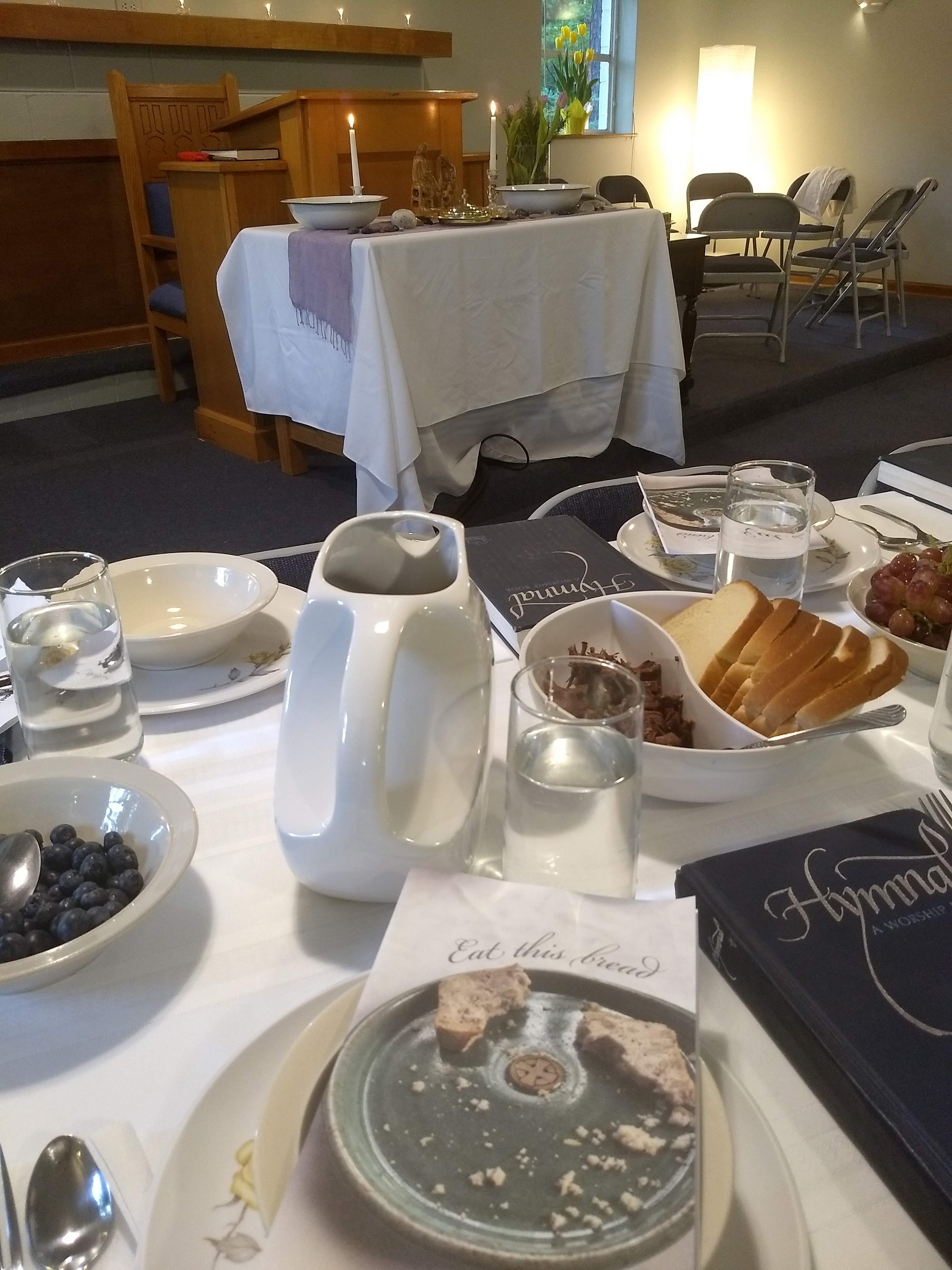
Love Feast reminds us all that we are meant to eat together, and to show up for the mundane daily details of one another’s life, like washing dirty feet. It is the ritual celebration of what is always true: we belong to each other. So yesterday, feeling the weight of this loss, I swapped out my usual silly sitcom for the Dunker Punks Virtual Love Feast over lunch, and my frozen pizza & bubbly water became bread, sop, and communion.

I was still by myself. No one washed my feet. I did not get to break communion bread across a table or sing in four-part harmony. Until you read this blog post, no other human being on earth knew that my Love Feast lunch consisted of frozen pizza and sparkling water (carrots and peppers and a handful of jelly beans, too, for the sake of full disclosure). But watching all these people – so many of whom I know and love – share their love for this ritual that has made me who I am reminded me in a bone-deep way that I am not alone, that this thing that I am missing so fiercely is also fiercely beloved by so many others. This video includes colleagues, former ministry interns, a pastor who was licensed by my congregation, a podcast contributor whose story I got to host, a member of a congregation whose church basement I slept in during a summer mission trip, people from my hometown speaking in accents that remind me of home, and so many other beloved siblings who belong to each other, to whom I belong.

It reminded me that this ritual is so important to us that we will gather in front of sterile, flourescent computer screens the world over just for a fleeting glimpse of its power. It reminded me that even though I get so angry and frustrated at the church and its institutions, the heart of the matter is the people, and our commitment to one another.

I cried through most of that video. My frozen pizza got soggy. I could barely manage to speak the words of institution for the pepperoni bread and the Bubly cup through my choked-up throat. I am crying again, now, as I try to write about why it means so much to me, what it is that I am missing, how powerful and holy it is to be connected to one another through God’s own command and wily Spirit.

I will miss Love Feast fiercely until the pandemic subsides and we’re able to practice it again – that isn’t going to change. But I am deeply grateful, during this Holy Week, for people who can see just far enough beyond the isolation and the longing to create something beautiful and remind us why we do what we do in the first place.

“Do you know what I have done to you? You call me Teacher and Lord—and you are right, for that is what I am. So if I, your Lord and Teacher, have washed your feet, you also ought to wash one another’s feet. For I have set you an example, that you also should do as I have done to you.”

in the midst of death, we are in life

I got up before the sun this morning, in order to film some Easter sunrise service footage. As I drove over to the Methodist church to meet Pastor Anita, I kept thinking about how the gospel writers are really insistent about telling us that on the first day of the week, the women came to Jesus’ tomb “while it was still dark.”

Matthew and Mark say that the women were up so early because they were bringing spices to anoint Jesus’ body, but John – who always tells the story slant – doesn’t give Mary any particular reason for wandering to the tomb in the wee hours of the morning. She’s just…there. While it was still dark.

I’ve had the pleasure of hearing from some really fantastic young people who are part of my denomination these last few weeks. Gabe shared his story of being welcomed and invited in to the Church of the Brethren in a recent Dunker Punks Podcast episode. He talks about how much he loves his congregation, how clear his decision to be baptized into the tradition was, and how, as a transgender man, some people have attempted to prevent him from serving this church he loves. He felt called to share his story broadly and encourage others to claim their space in the church.

Yesterday, I got to chat with a former Ministry Summer Service intern for her college senior project. Briel is a young Black woman who loves her congregation and also made an intentional, conscious decision to be a part of the Church of the Brethren because of the welcome and care she found. She’s spent time with several different congregations and camps, and has a sense of the diversity of our denomination. She told me that she thinks that even though the CoB is still way far behind and super white, we are doing more than some other denominations in anti-racism work. She feels called to keep pushing and encouraging and asking hard questions so that we can continue following Jesus in this way.

It is very easy to look at what’s happening on the surface of the church at large – historical rates of disaffiliation, gruesome clergy sex scandals, division along political preference – and despair. I do that plenty often. But resurrection happens while it is still dark. New life emerges from the edges. It takes some effort to pry our attention away from the loud, angry voices that demand our loyalty and choose, instead, to wake up before the sun and search out Jesus’ presence while things still feel dim and depressing.

This morning, I could write a list of at least two dozen places where new life is emerging, all within the confines of a denomination that is also, simultaneously, dying to itself. The Book of Common Prayer includes this line in the funeral liturgy: “in the midst of life, we are in death,” which is meant to remind us that death is not so far away for any of us. But isn’t it also true that “in the midst of death, we are in life”? Isn’t it a key feature of the story of Easter that the impossible happened while it was still dark? Didn’t Jesus’ resurrection take place in a TOMB?

tears in the facade

I’m taking a course this spring on anti-racist spiritual leadership and am grateful for space to learn and process.

Yesterday, the class met and talked about intersections of gender and race, and the ways that those constructed systems are always present and active in our lives and interactions. We read bell hooks on patriarchy and reflected on the ways that our gender socialization contributes to the ways we participate in white supremacy.

I was formed as a white woman in the South, and let me tell you: unraveling all of what that means and implies and implicates is not easy, and it is not always fun. “Raised a white girl in the South” probably conjures immediate images for you, especially if you were not raised in the South. But I’m willing to bet that your assumptions are not exactly true: I was raised by people who emerged from white working class Appalachia, not the white plantations of the deep south, and that makes a difference in understandings of race, class AND gender. My white church decided against a second chance at white flight when the neighborhood demographics changed, so even though I absorbed the ever-present understanding that my white girl body was not safe in Black spaces, there was this weird, contradictory reality that was always also true: church was one of the safest possible places, and it sat squarely in the middle of Black space.

Those distinctions and specificities function, for me, as crevices in the facade of whiteness to be ripped wide open. Yes, I’m a white lady from the south, but the idea of delicate, simpering, limp-handed womanhood didn’t enter into my experience until I left home and spent time in the not-Appalachian parts of Virginia. Yes, I was formed into white supremacy in one of the most racially segregated cities in the country, but the fact that my church existed and persisted in the part of the city where good white girls weren’t supposed to be cracked that fiction from the beginning.

I’m still trying to get words around these realities, and it is the middle of Holy Week, and I haven’t yet finished my coffee. Probably this post would be better kept in my personal journal instead of out here on the internet. But what I’m trying to get to is that race and gender are constructions – they are not innate. How I exist as a woman is not divinely determined by some set of God-given instructions for how to Act Like a Lady. And what it means to be white is not written into my DNA, predestining me to be hateful, oblivious and power-hungry. We ingest the assumptions of the culture and the structures that govern our lives. But those assumptions are just that: assumptions. They are not invulnerable, they are not immovable, and they are not eternal.

Jesus tells Pilate, in the wake of his arrest, that his kingdom is not of this world. If it were, Jesus says, his followers would, right that very moment, be taking up arms and attacking the government’s headquarters to demand his release. Jesus refuses to participate in the systems and structures of this world that demand violence and complicity, and we get to do that, too, in ways both big and small. Find the tear in the fabric of the fiction about who you are *supposed* to be, according to this world, and rip it open. Expose the lies, and live more fully in God’s delight.

hope is a discipline

I owe a lot to Twitter, believe it or not. I joined Twitter reluctantly 12 years ago when I was recovering from surgery and in need of distraction. My friends made fun of me – what kind of stupid stuff was I getting myself into? Twitter has changed and grown since then, and some of it is gross and ugly. But one thing has remained the same: Twitter opens doors for me to listen to important conversations and learn about them before wading on in like a fool.

On Twitter, I can follow and learn from people who do all kinds of fascinating work, like Gerald the English gardener and a local lawyer who unravels ridiculously twisted legal scandals and MacArthur Geniuses (also local, and I heard her speak in person before the dang panini descended. Seriously, I live in Nirvana, here). It’s like slipping into the back of a lecture hall or festival of curiosities and filling up to my heart’s content. Of course, I follow a ton of preachers and church leaders, which is both professionally helpful and often very, very dull. The good stuff is learning from people who do wildly different things than I do, and are willing to share their wisdom with the world.

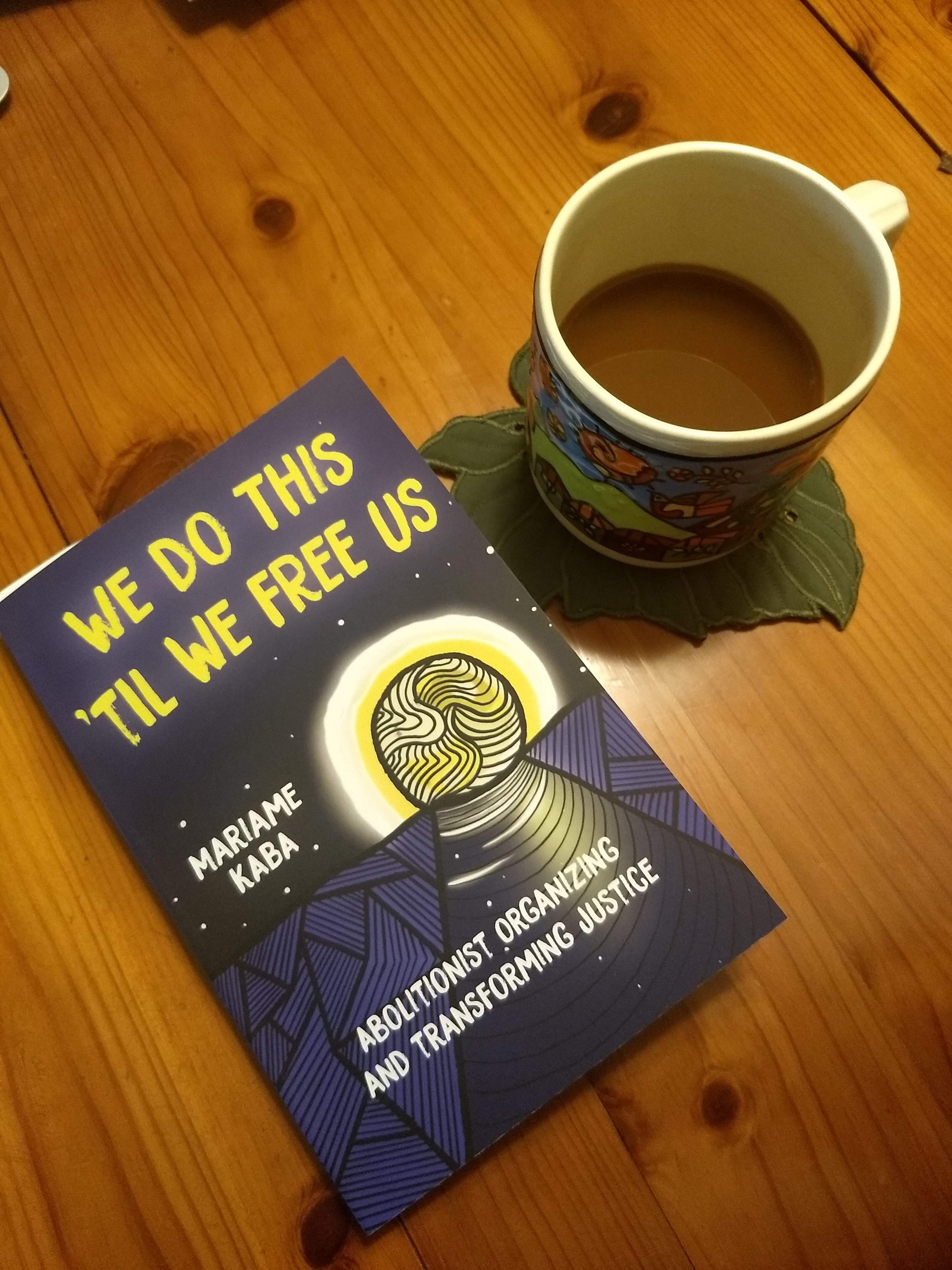
One corner of Twitter that I stumbled into somehow a few years ago is Abolitionist Twitter. Did you know that abolition wasn’t just a 19th century movement but actually alive and well in the United States? The modern movement is called “PIC Abolition,” which stands for “prison industrial complex.” I am not an expert. I barely even know what I’m learning about, but I am learning. My favorite person to follow on Abolitionist Twitter is Mariame Kaba. She has some strict privacy controls on her account, and I don’t fully understand how I managed to be randomly accepted as a follower, but I’m really, really grateful for her presence and insight.

Kaba has been doing this work for decades, and she’s committed to it. She also knows how to use Twitter for good. She is funny. She resists drama. She intentionally supports young people. She shares about her organizing projects and makes fun of herself in charming ways. I bought her book, and am reading it now.

In the first essay of the collection, called “So You’re Thinking about Becoming an Abolitionist,” Kaba manages to pack a ton of beauty into just a few lines. The essay is only four pages, and you can read it here.

Let’s begin our abolitionist journey not with the question ‘What do we have now, and how can we make it better?’ Instead, let’s ask, ‘What can we imagine for ourselves and the world?’ If we do that, then boundless possibilities of a more just world await us.

When we set about trying to transform society, we must remember that we ourselves will also need to transform.

I know that there is a whole world of abolitionists doing work out there – some I even know and love. I understand that I am following tiny threads of a massive movement, that I am just dipping my toes in a wide ocean. I’m mostly sitting in my house and reading, and haven’t yet managed to put this learning into action. But I confess that what I am reading and learning feels like gospel work to me, far more than anything that is emerging from the church structures to which I am required to pay attention.

I should say that the abolition movement includes people of varying faith commitments and many who have none. It is not a “Christian” community. But the work – freeing captives, setting the oppressed free, confessing the ways our own hearts are tangled up in the mess of it all – and the ways it gets explained as a holistic vision of another way…well, it feels like Jesus to me.

Kaba has a refrain that folks have painted, cross-stitched and worn on their shirt: “Hope is a discipline.” In a world where the structures that taught me to hope and work for a world that was already but not yet here are crumbling, I am grateful to find the Spirit soaring and making herself known in other, unexpected places. I am grateful for the reminders that transformation is both personal and structural. I am glad for examples of how to live life holding tightly to conviction and lightly to ego. In the midst of this Holy Week, as we remember Jesus’ unjust arrest and sham of a trial and tragic death at the hands of the state, I’m deeply moved by the witness of folks who name these persistent evils in their present-day form and remind us that we are called to live in other, more merciful, mutual and just ways.