the cheap seats

Through the magic of Zoom, I got to be part of some courtroom joy this week. Friends were going through a process of legal adoption, and they got to invite their community to participate in the final court session. I signed on and dozens of tiny faces in tiny boxes popped up from around the world. The proceedings proceeded and the judge issued a formal decree of adoption. It was beautiful and bizarre, and a deep joy to get to participate.

I haven’t spent a ton of time in courtrooms, but ministry has taken me there more than once. Years ago, a family asked me to attend a hearing for their loved one, who’d been charged with assault. The entire situation was complicated and confusing, and it was abundantly clear that the precious person who’d been charged with a crime needed care and not incarceration. I showed up at the courthouse where I met four family members and their lawyer, and we filed silently into the pew. Bench. Pew?

In that particular court, the folks appearing to have their cases heard were not present in person. They are across the street in the city jail, and appeared over CCTV. Several cases were heard before the one I’d come to support, and when the judge called their name, the lawyer motioned all of us to stand. In the tiny courtroom, our move made a pretty sizable commotion, and the judge looked up from his desk and stared, questioningly, at our crowd. “Your honor,” the lawyer explained, “these are the defendant’s parents, spouse, and pastor. They’re here to support the defendant’s immediate release into their care.”

That morning, at least, no other defendant had anyone show up for them other than their lawyer. Our bench (pew?) full of community was an anomaly, and it convinced the judge that the person whose fate he was deciding had a place to go and people to hold and care for them. It worked, that time.

Courtrooms look a lot like traditional church sanctuaries, don’t they? A room filled with benches (pews), all facing the front where a big wooden podium holds the most important person in the space. Seats for a few others up front, called upon when their input is required. But the person behind the pulpit (podium) presides. In liturgical traditions, the verb is even the same: a judge presides over courtroom proceedings; a pastor presides over the eucharist.

The pulpit at Christ Church, a colonial-era Anglican church in Lancaster County, Virginia. Built by the grandfather of Robert Carter III, who left the Anglican Church to join the Baptists because of his “radical” anti-slavery beliefs.

If you read the biblical narratives of Jesus’ own trial, you learn that he himself ended up in a couple of courtrooms. First, the religious leaders summoned him, denounced him and pronounced their judgement, then they sent him to the Roman governor, who added his stamp of approval to the death sentence. When we read this text in our bible study this week, I was struck by the courtroom image. Jesus in the courtroom.

In a lot of Christian theology, God is the judge – the good judge, the just judge, the one with integrity, to be sure, but definitely The Judge. God is the Presider. God sits up front, behind the big wooden podium, er, pulpit. God is the Most Important Person in the Room. God issues death sentences.

But in the gospels, God isn’t the judge. Jesus – the second person of the Trinity, not just God’s son but the clearest image of God we get, God’s own self – is the defendant. Jesus isn’t in the judge’s chambers. Jesus isn’t in the judge’s robes. Jesus doesn’t sit on the death panel or inhabit the Roman governor’s place of power. Jesus is dragged into court by a lynch mob, and the religious leaders sit in judgement upon God’s own life.

I know some lawyers, and I even knew the judge that day I spent on the courtroom pew. The ones I know are good, decent, fair-minded and strive to do their work with integrity. But despite the way we arrange our spaces, despite the way a sanctuary looks or a courtroom is designed, the people up at the front are not the most important people in the room. When God showed up in a courtroom, he was in the defendant’s chair.

My congregation re-arranged our sanctuary when we returned to the building during Covid. Our chairs are in a circle, the altar table is in the center, and I don’t preach from the pulpit anymore. I don’t know that I’ll ever be able to preach from a pulpit again, even though I GET the thrill of it, the ego boost of it, the importance that comes from climbing up higher than everyone else, proclaiming and presiding over people’s lives. I get it. I like it. It’s just…that’s not where God is, you know?

calling an audible

I had a whole Lenten series planned around a particular curriculum – both for my congregation’s weekly Bible study and for these Lenten reflections on my blog, but my blog writing has been kind of a slog, and when I sat down to prepare for last night’s study, the curriculum was just…bad. The previews looked good, I had been excited about the topic and the questions we’d get to explore, but it just wasn’t working, in either context.

So, I changed things up. Instead of esoteric conversations about the existential meaning of pain, my congregation is spending the season reflecting on the Stations of the Cross.

Stations of the Cross is a spiritual practice that follows Jesus’ last few days on earth, from his trial to his death. Early followers of Jesus would make an actual, physical and geographical pilgrimage, walking where he walked up Mount Calvary, where he was crucified. Later, Christians made that practice portable by installing 14 stations – usually with imagery and prayer prompts – all over the world.

Reflecting on Jesus’ suffering has not ever been a prominent part of my faith practice, and even now I’m sort of surprised by how eager I am to enter into this study and reflection. But the new curriculum is actually good and thoughtful, and I also had a meaningful encounter with the Stations on sabbatical last year that changed my perception of them.

St. Francis Springs Prayer Center has a prayer walk with the Stations installed along a hillside and beside a gurgling creek. I walked that trail and prayed the stations several times when I spent time there during the first week of my sabbatical last March. Their stations included the traditional images, but the prayer prompts each tied Jesus’ suffering to the immediate suffering in today’s world.

“III. Jesus Falls for the First Time – We remember those who have fallen ill due to the absence of health care as a human right.”

Praying the Stations of the Cross is meant to be a contemplative practice, and walking the trail at St. Francis Springs last year definitely was that for me. I spent three days there in silence and solitude, walking and napping and relishing the gift of having someone else cook and serve me every meal. This Lenten season is very different in my life. Instead of a month-long sabbatical, I’m juggling three jobs, traveling much more, and floundering a little to find my footing both personally and vocationally. I appreciate the invitation to combine personal contemplation with global justice, and (no surprise), I’ve got some things to say about it.

So, if you’re up for me calling an audible here in the middle of the season, stick around. February is over (thank the Lord), and I’ve got some new direction. I’d love for you to join me.

who runs the world?

A few months ago, someone invited me to be on a panel. They had two men, they told me, and wanted to make sure they included diverse voices. I declined, but suggested another (phenomenal) woman. They didn’t invite this other woman, and the panel ended up including three white men.

Which is a tiny little blip on the world’s monitor of gender justice, right?

A few years ago, I was part of a planning committee for a regional event. I suggested we invite a (phenomenal) woman to be a keynote speaker. “Well,” others said, “she just doesn’t really connect with our people here.” We didn’t invite her, even though I – the one who had suggested her – was born and raised and working as part of the aforementioned “our people” “here.”

Another tiny blip.

Have you ever noticed that the memes about pastors on the internet always use “he” and “him” pronouns?

Blip. Blip. Blip.

Did you know that the Church of the Brethren denominational staff is led almost exclusively by men? Did you know that only 23% of CoB congregations have a female pastor?

Have you heard that girls who grow up in a congregation with a female pastor – not even one they’re close to, not even one who cares directly for them or their family – end up with higher self-esteem, more education, and better earnings?

No wonder they work so hard to keep us out of visible leadership positions. What would happen if more girls grew up respecting themselves and insisting that others do the same?

(I’ve mostly given up on trying to change this particular institutional system, but if you are still invested in that kind of thing, you could, I don’t know, invite a woman to preach, host a woman to lead your congregational retreat, refuse to participate in events and organizations that refuse to honor women’s leadership. You know, for a start.)

more vulnerable

I hate hospitals, but I’ve learned to appreciate what happens in them. Most people spend some time in a hospital room over the course of their life. Some of us end up there more than others, of course, and the probable percentage grows as we age. But I’ve learned, in these years as a pastor, not to assume anything about who needs healing, and how.

When I started out as a youth pastor, my job description included “pastoral care for youth,” and since my seminary education had led me to believe that “pastoral care” mostly involved visiting old people in the hospital and offering subdued sympathy for grieving people, I was baffled as to what pastoral care for YOUTH might entail. I learned pretty quickly, though, that teenagers’ bodies and souls are just as prone to pain and just as much in need of healing as anyone else. Bones break, parents get sick and die, anxiety and depression run rampant.

I found myself in hospital rooms, funeral homes, doctors’ offices and mental health facilities regularly in that job. And when I got to my current church, tasked with pastoral care for all ages, not much changed. My congregation is tiny – not small, tiny – and I still make several hospital visits each year. We live in a place with world class hospital systems, and I think I’ve been in them all over the last 7 years. One precious older woman, whose health required her to visit several different hospitals toward the end of her life, took up the habit of ranking the attractiveness of the doctors at each facility. I loved visiting her, hearing how the latest crop of MDs ranked.

There are rhythms and etiquettes to visiting someone in the hospital. People are vulnerable as patients, and part of my job is to honor that vulnerability. They’re usually naked under the thin hospital gown. Sometimes they’re tethered to a bed by cords and tubes, sometimes they’re just too weak to sit up by themselves. Most of the time, some kind of drug or another is altering their ability to process or make decisions. Usually, if you’re in the hospital for some kind of treatment, you are not in your strongest frame of mind to begin with. Pain messes with us, and the processes of healing do, too.

A medical student visited worship last week, and told me that her professors are trying to teach them motivational interviewing, how to really *listen* to their patients. I’ve encountered doctors who are great at listening and doctors who are really, really bad at it. And, I know that a doctor’s job – like a nurse’s or a medical technician’s – has long checklists and limited time. Listening is hard to do when your job description entails finding and fixing a problem – finding and fixing dozens of problems for dozens of people every single day. Honoring vulnerability is hard to do when everyone is expecting you to figure out a way to stop this person from being forced to be vulnerable.

My job, on the other hand, has no time constraints other than my lunch plans. I will probably not get called away to another emergency, since this visit with this person IS the day’s urgent matter. I know that not all pastors have that luxury, but my job – part-time pastor of a tiny church – does. Which is an incalculable blessing. Some people, of course, are too uncomfortable in body or brain to want a long visit with their pastor. But other people relish it. I do, too. Dedicated one-on-one time with someone is rare, and even a meeting over coffee or lunch doesn’t provide the kind of intimacy and vulnerability of a hospital. People are willing to go deep, to be honest, to offer up truths about themselves and the world that just don’t see the light of day during a crowded restaurant lunch hour. I know it’s true, because I have received confessions and heard stories and shared prayers against the backdrop of beeping monitors and rumbling oxygen machines that I never would have dreamed of in the outside world.

Which is what I mean when I say that I’ve learned to appreciate what happens in hospitals: not the physical healing and awe-inducing miracles of modern medicine, though that is certainly worth pondering – and I have. What I mean is the way that being in a hospital, facing the limitations of our bodies and brains forces us to be honest with ourselves and with one another. I have been surprised, infuriated, delighted and crushed inside hospitals, and very little of that has had to do with diagnoses or treatment plans. Maybe it’s callous to say that visiting people in the hospital helps me be a better pastor; but that is true. It’s also true that spending time with people in pain has made me more of a person: softer, gentler, more curious, more convinced of each one’s intrinsic value and belovedness.

have tumor. can’t talk.

February always undoes me. Some years, I remember that, and anticipate the undoing but in the end, it doesn’t matter. I still unravel. February is hard for a lot of reasons, but it’s mostly hard because the body keeps the score. Trauma re-wires the brain and the body, and our physical selves *remember* in ways our conscious brains can’t always access.

In February of 2009, I went to the doctor for what I thought was an infection and found out I had a good-sized tumor on my right ovary that needed to be removed immediately. I was living in Illinois, and when the eskimo-boot-wearing doctor at urgent care told me the news, I texted my Mom to update her on the situation: “Have tumor. Can’t talk.” Pro tip: do not do this.

My conscious brain doesn’t remember a whole lot about the rest of that day, except that an entire network of people who loved me mobilized immediately. Kim Bickler, a co-worker, drove me to the next doctor, who opened up an emergency appointment for me. My housemates cooked me dinner. My friend John, who was living in St. Louis, threw his kitten in the car and drove across Illinois to my house. My mom found a surgeon in Virginia, and my dad booked me a plane ticket home. Mary Jo, my boss, sent an urgent email to the dozens of clergy women who’d been at the retreat I just coordinated, asking for prayer.

I know that I didn’t sleep that night, because my gmail archive still holds a 3:30am email sent to my family in Virginia, explaining the situation. And God bless Gmail, because it has also preserved this next-morning reply from my Grandpa Bobby:

Hey Dana Beth:  If I had known you were sending this email at 330am this morning I would have jumped right out of bed to get the update.  I pray that you can get the infection and fever cleared up real fast and make your decision about coming home to get the problem taken care of.  I know that you already know we will all be praying for you and thinking about you and doing anything you would like for us to do for you at anytime.  PS.  I would probably have gotten JOJO out of bed at 330 also.  Keep us posted often.  TRY to get some sleep and rest if you can.  bobby.

“If I had known, I would have jumped right out of bed to get the update.”

That made me weep when I read it earlier this month, because Bobby died in 2020 (in January, which is close enough to February to forever be part of the perpetual undoing), and because I know, deep in both my bones and my brain, that my grandpa really did love me in the way that he would jump out of bed at 3:30am if it meant he’d hear from me. He really would have woken JoJo up, too (though she would have been a lot more cranky about it).

I know that it was true because when I finally landed in Virginia, had a fitful night of sleep and got to the hospital at the crack of dawn for pre-surgery prep, both of my grandparents were already there in the waiting room, ready to sit through the hours’ worth of surgery with my parents. I am weeping, again, remembering it.

I found that old note from Bobby because I was digging through my email, trying to confirm that it was, in fact, my right ovary that had been removed 14 years ago. My left ovary has been aching all month, a thing that happens in February. Even though I knew my left ovary was still there, even though I can FEEL the emptiness in my right side, even though the ache is palpable and material, I needed some written confirmation that a surgeon did, in fact, remove my right ovary fourteen years ago. I don’t really trust my body’s memory very well, a slight that I am learning to correct.

Because my body knows its shit. It knows that losing an ovary was traumatic, in ways both physical and emotional. It knows that being loved through trauma is an incalculable gift. My body knows that I need to remember, to grieve and give thanks. My body knows, even when I don’t, that there are still lessons to learn and actions to take from that time. My body knows why February always undoes me, and why that’s important to acknowledge. My body is a site of pain and loss, and my body also works hard to remind me that even in pain and loss, possibility comes as a standard feature.

The Saga of the Cancerous Butt Wart

If you came here for some Precious Moments-style Lenten devotions this morning, I’m sorry. This is the story of my dog’s cancerous butt wart.

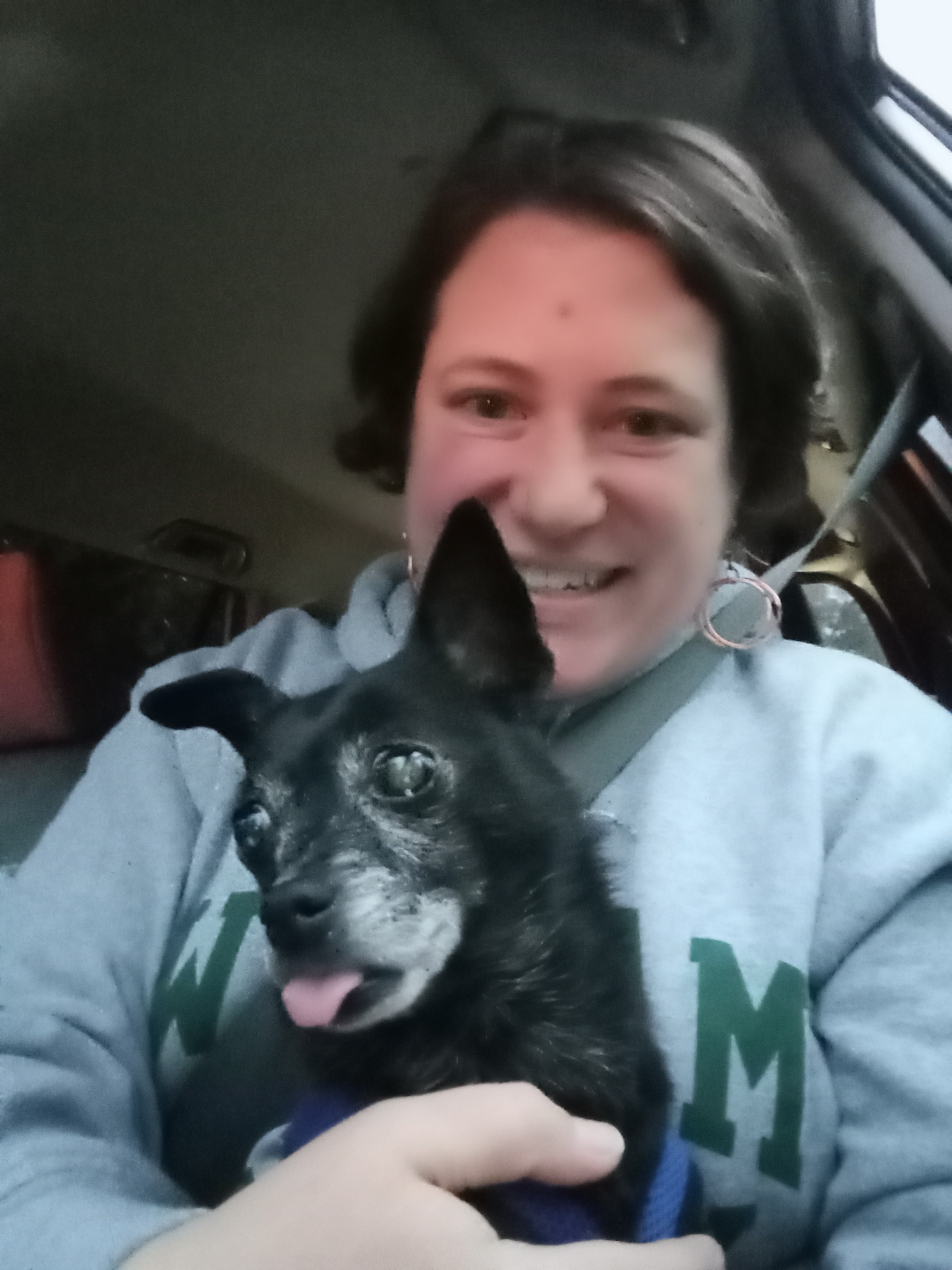
Our household spent most of January preparing for and dealing with the aftermath of the tiny dog’s surgery to remove a mast cell tumor on her rear end, otherwise known as The Cancerous Butt Wart. It was, technically, an uncomplicated surgery that went very smoothly and had the best possible outcome. The tumor was removed with good, clean margins and has a less than 5% chance of recurring. The 11 year old chihuahua is a spry old thing and healed well, all things considered.

But it was a hellacious week, nonetheless. I don’t know how much time you’ve spent contemplating the surface area of a chihuahua’s hindquarters, but suffice it to say: it’s small. Tiny. And there’s a lot going on back there, too. We’re talking essential organs, necessary orifices, etc., etc., etc. Fran’s cancerous butt wart was smack dab in the middle of it all, equidistant from one essential orifice and another. I was…concerned. When we discovered the tumor back in December, the vet had to use a fine-needle aspiration to confirm that it was cancerous, and the aspiration did not go well. They finally took Fran out of my arms and into the recesses of the vet clinic and brought her back to me, still bleeding and sad. “Well,” the vet told Franny, “you tell all the women you see over the holidays where we stuck that needle today and they will *definitely* be giving you extra treats!”

The surgery itself went smoothly, and I picked up a totally drugged out dog at 5pm on a Thursday.

She spent the entire evening whining pitifully as she came out of anesthesia and realized that she was, in fact, alive and that, hey, my butt HURTS. She wouldn’t let me touch her, which hurt me almost as much as I imagined the gargantuan incision on her tush hurt her. I was beside myself with worry: she wasn’t shaking or panting and didn’t seem to be in loads of *pain,* exactly, but she was NOT acting like the dog I knew and she wouldn’t let me do anything to help her. Neither of us slept.

The next morning, my anxiety found a new outlet. I started obsessing over whether or not the tiny creature would be able to poop with that gigantic wound slashing across her butt. And then, if she DID poop, wouldn’t that be kind of…unhygienic? Because the incision was so freaking huge and because it ran the length of her rear end, there was no way to bandage or cover it. And stuff was…happening back there. The dog squats on the GROUND in order to relieve herself. I called the vet to make sure I wasn’t supposed to be rubbing some kind of cream or salve on the dog’s ass. “Nope,” they assured me, “it will heal on its own.”

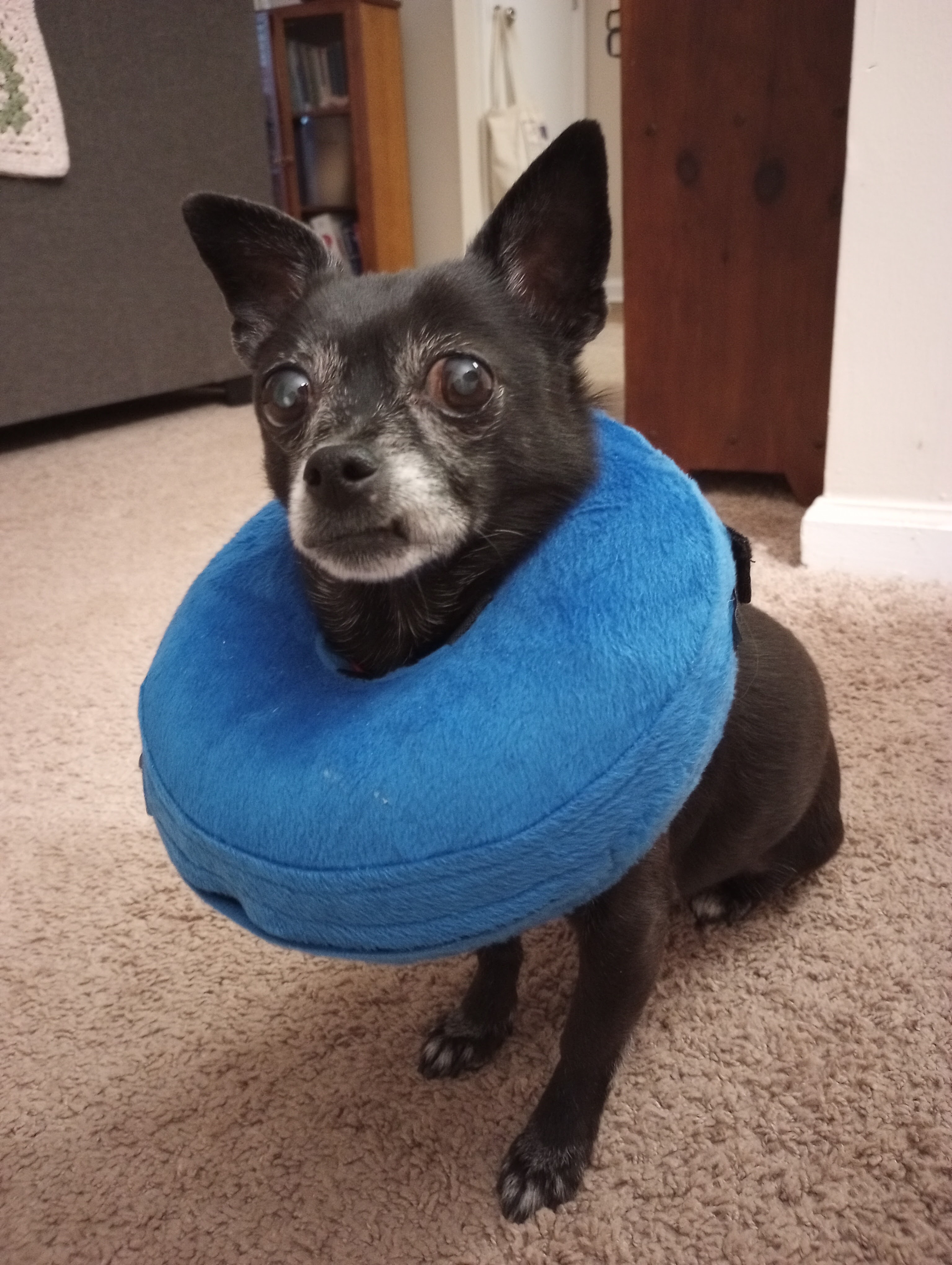
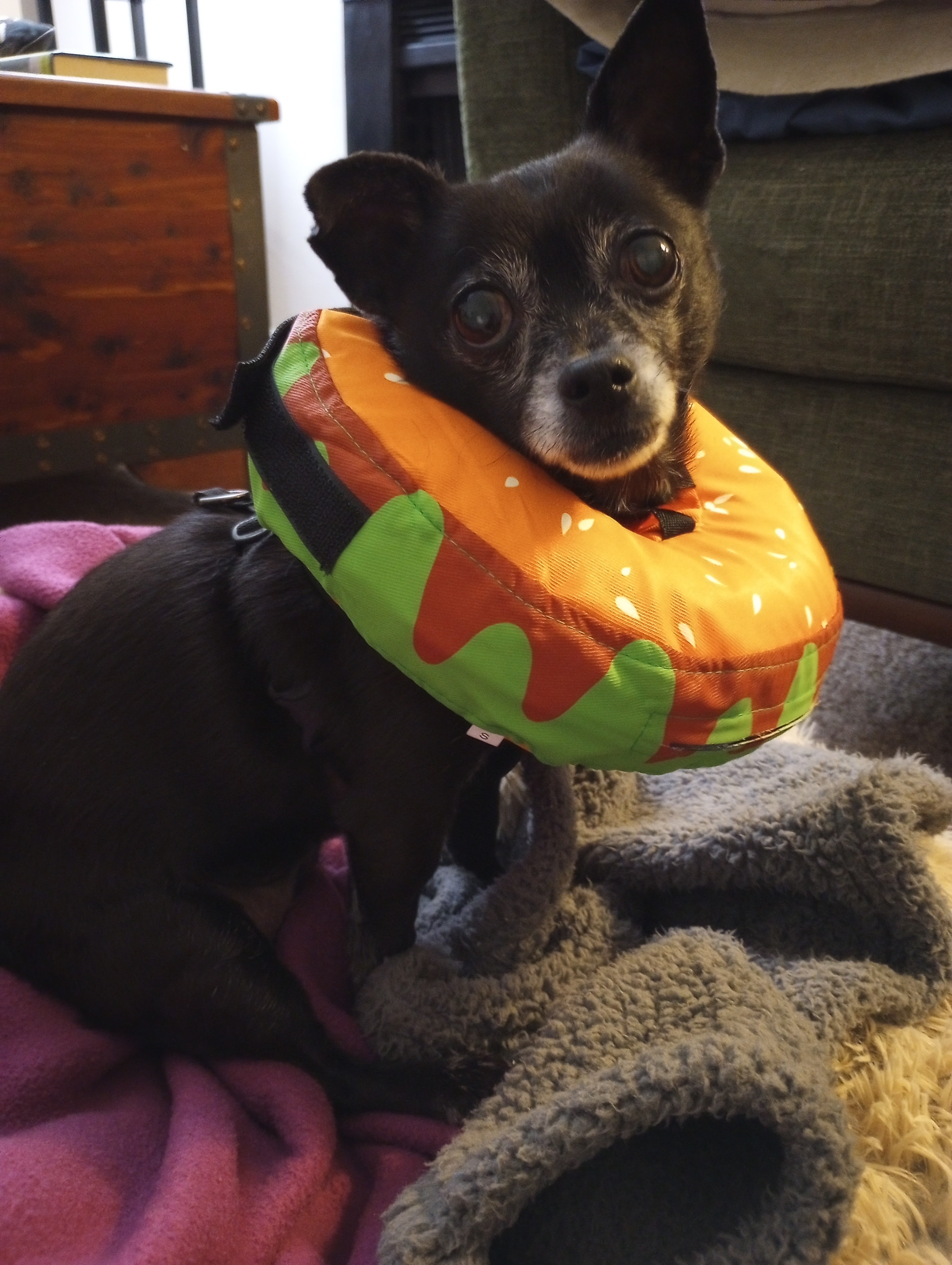
So, we muddled through. I had to barricade the couch and close off the bedroom – no jumping allowed for 10 days. We slept together on the living room floor. Poor, pitiful Fran tolerated the donut that kept her from licking and biting at her stitches, but once her gigantic butt wound started to heal, it started to ITCH, and there was absolutely nothing I could do to keep her from scooting herself across the carpet. We kept not sleeping.

I was required to “check” the incision twice a day. I don’t know if you have ever tried to get a visual of an angry chihuahua’s backside, but it isn’t exactly a piece of cake. Her tail covers the whole thing, and the lighting in our apartment leaves a lot to be desired. Which meant that I spent far too much time that week out on the neighborhood sidewalk leaning over, peering at my dog’s butt. A couple of times, the vet requested photo documentation, so not only was I the weirdo gaping at a chihuahua’s ass, I was also PHOTOGRAPHING IT, over and over again. Creepy.

On day 6, we went back to the vet to have them trim the stitches. That night, with the vet’s permission, I gave Fran some benadryl to knock her out and get us both some shut-eye. Except, instead of knocking her out, those 10 mg of benadryl made her LOSE HER EVER-LOVING MIND. She bounded off walls, tore out stitches, careened into crate doors. I finally had to scoop the creature up in a headlock and sit in a rocking chair for 90 solid minutes to get her to calm down. The vet took out the remaining stitches the next day because I was DONE.

And, apparently, so was Franny. Once the stitches came out, a full week after they’d gone in, she was…fine. We slept through the night. She ignored the gigantic incision wound still covering her rear end and just…got better. This morning, she leapt out of bed, tail wagging, ready for a morning walk before I was.

I hope that Fran stays healthy the rest of her life, because I’m not sure I can live through another week like that. And I also know that creaturely bodies don’t age in reverse. Franny won’t get younger or healthier; eventually, her body will develop something less benign than a cancerous butt wart and she will die. Yesterday, the dog was with me when I had ashes imposed on my forehead, and Pastor Sharon blessed Fran, too. We’re both beings made from dust and to dust we will both return.

I don’t mind that part, exactly. Returning to dust has a holy beauty to it. It’s the part just before that that scares me. It’s the suffering and pain that require care, the knowledge that I am the only being in the world responsible for this tiny, spry creature who loves so fully, that whenever she is in pain again all the soothing and caring and decision-making will fall to me. That’s the stuff that terrifies me. I will do it, because I love the dog more than I knew I could, but I don’t know how.

pain & possibility

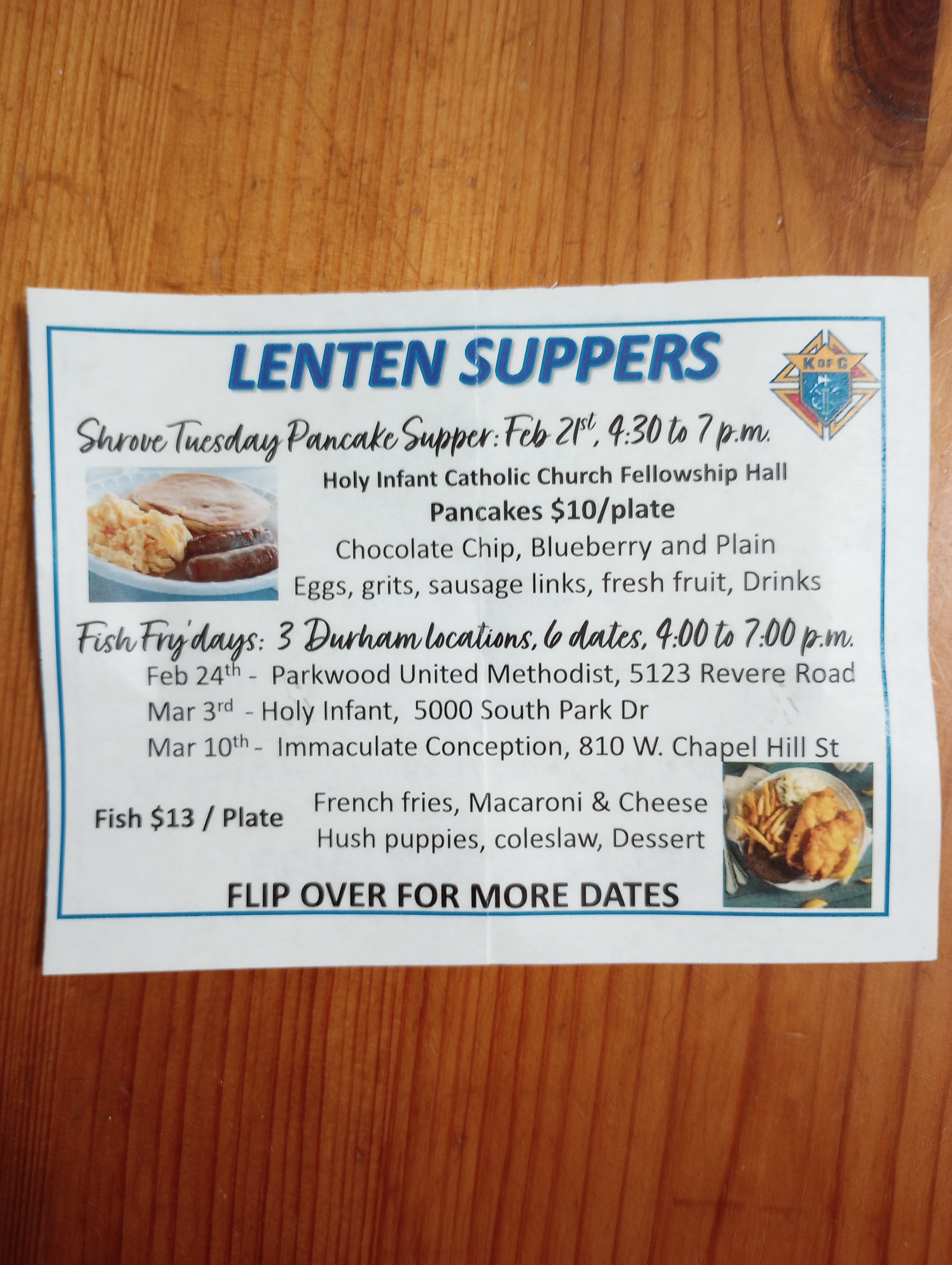
Last night, as we ate our Fat Tuesday pancakes at the Catholic church around the corner, a friend asked me if I gave things up for Lent. I don’t. I mostly just enjoy the fruits of other people’s fasting: the Knights of Columbus do pancakes on Fat Tuesday and THEN they cook up the *best* fried fish (and homemade coleslaw, mac&cheese, hushpuppies & french fries with a particularly lovely dill-heavy tartar sauce on the side) and sell $13 plates every Friday during the season. If you’re in Durham, you can enjoy the fruits of other people’s fasting, too:

I don’t fast during Lent. But my friend’s question made me remember that sometimes, I do add things on during Lent instead of taking them away. Some years, I commit to a daily writing practice. And, last night, I suddenly wanted to do that again.

Lent is long: 40 days’ worth of preparation and reflection. We’ll see how this commitment goes, whether or not I can keep up with the grueling pace of daily writing. My daily Advent writing was really good and really hard, and that was writing about HOPEFUL things. I’m teaching a class for my church this season called “From Pain to Possibility,” (it’s Tuesday evenings at 7pm EST on Zoom, and you – yeah, you – are welcome to join us. My people are friendly and thoughtful and love getting to know new people). I think I want to write about those things: pain and possibility. It might prove a bit harder than writing about hope. But I’ve already found some trustworthy guides, and I already have some painful stories full of possibility that I want to tell. I would also love to hear your stories about how pain and possibility co-exist, if you’re willing to share them.

On Ash Wednesday, lots of Christians read Psalm 51, which is a penitential psalm, a prayer asking God to forgive sins. That reading can get used in some kind of gross ways – even the very idea of “sin” gets used in gross and hateful ways – but there are lines in this psalm that I love:

Let me hear joy and gladness; let the bones that you have crushed rejoice.

Create in me a clean heart, O God, and put a new and right spirit within me.

Restore to me the joy of your salvation, and sustain in me a willing spirit.

Crushed bones can rejoice. Spirits can be sustained. Joy can be restored. That’s what I want to think and write about together in this season. I hope you’ll join me.

a light

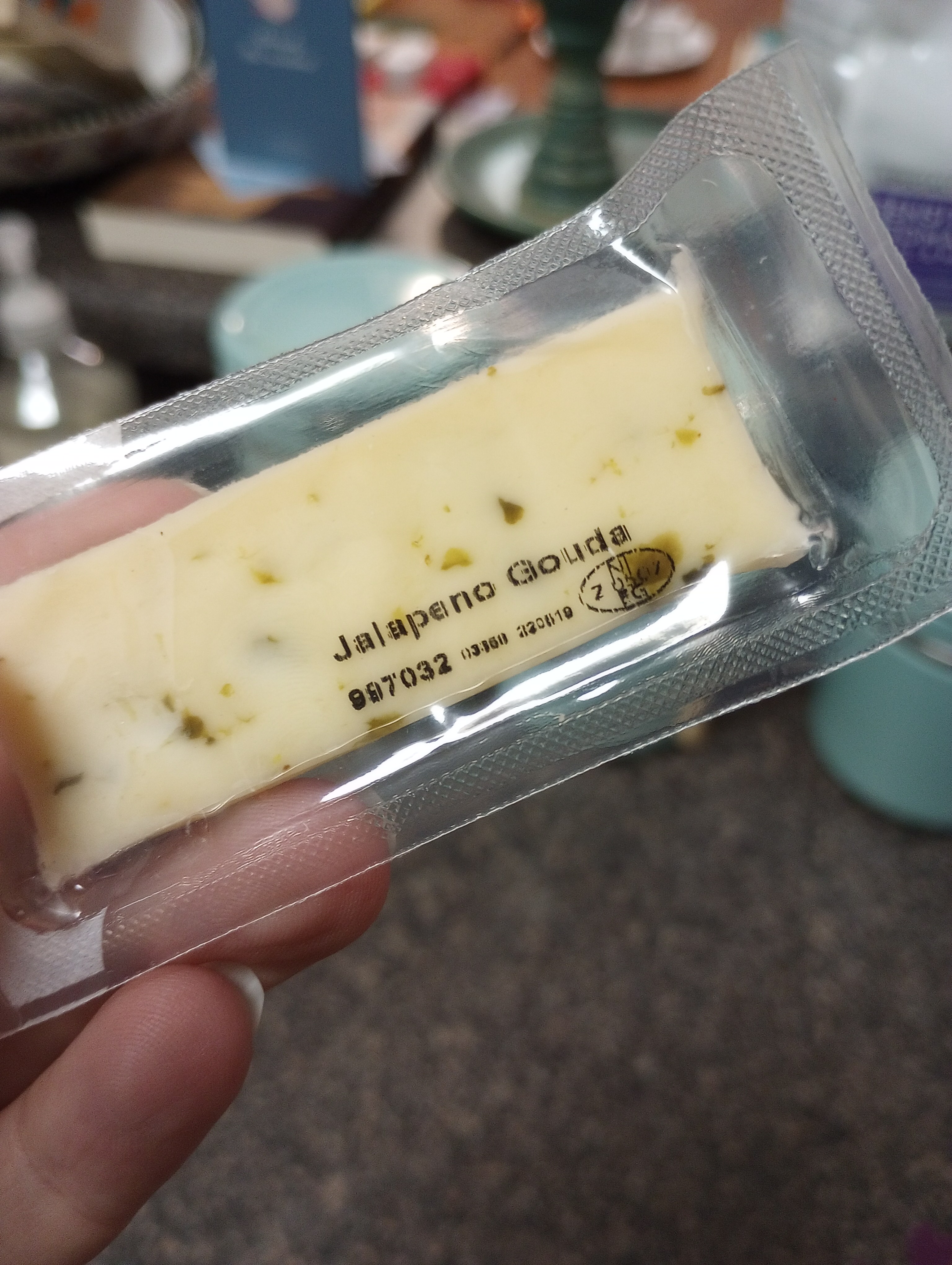
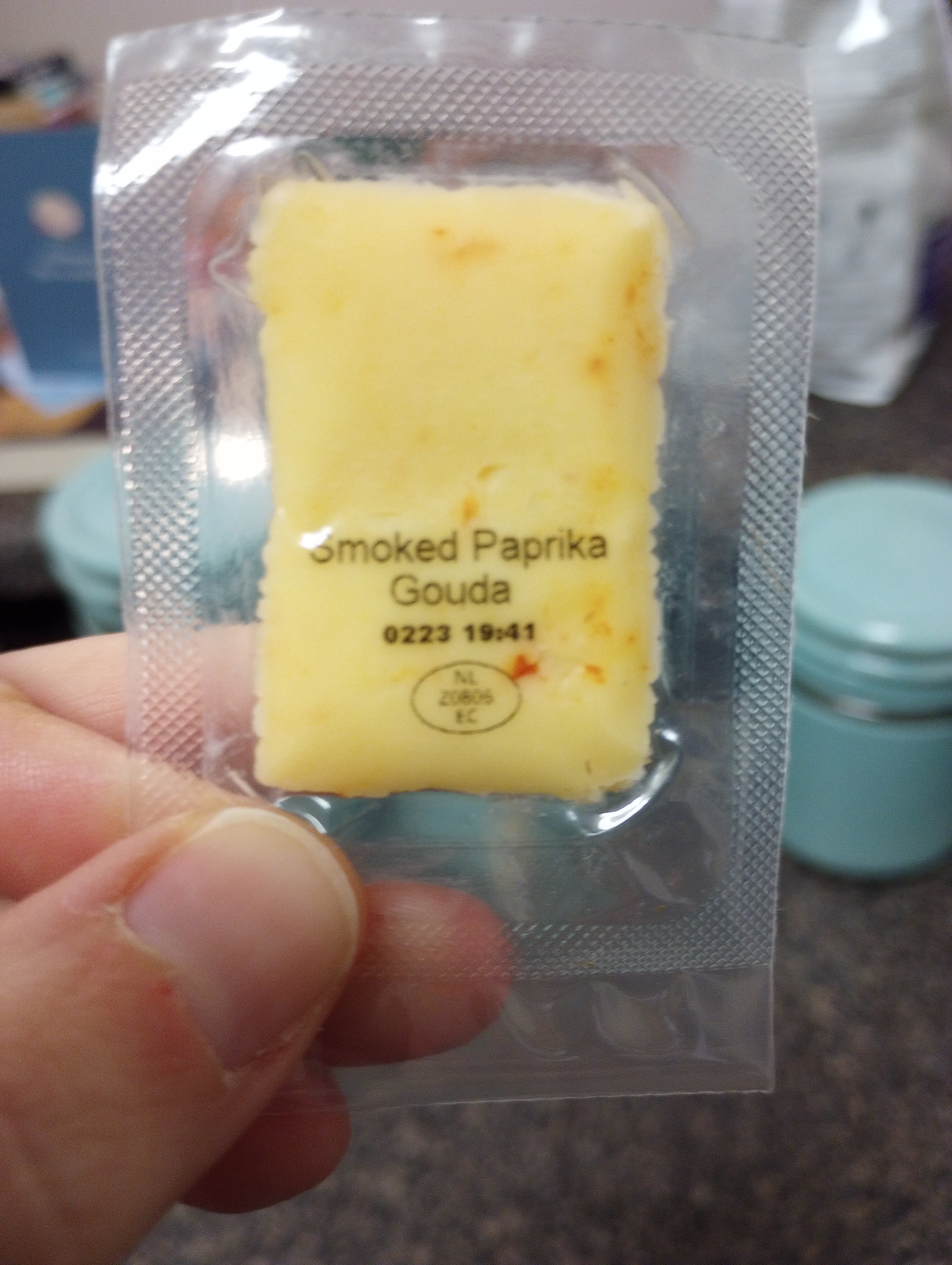
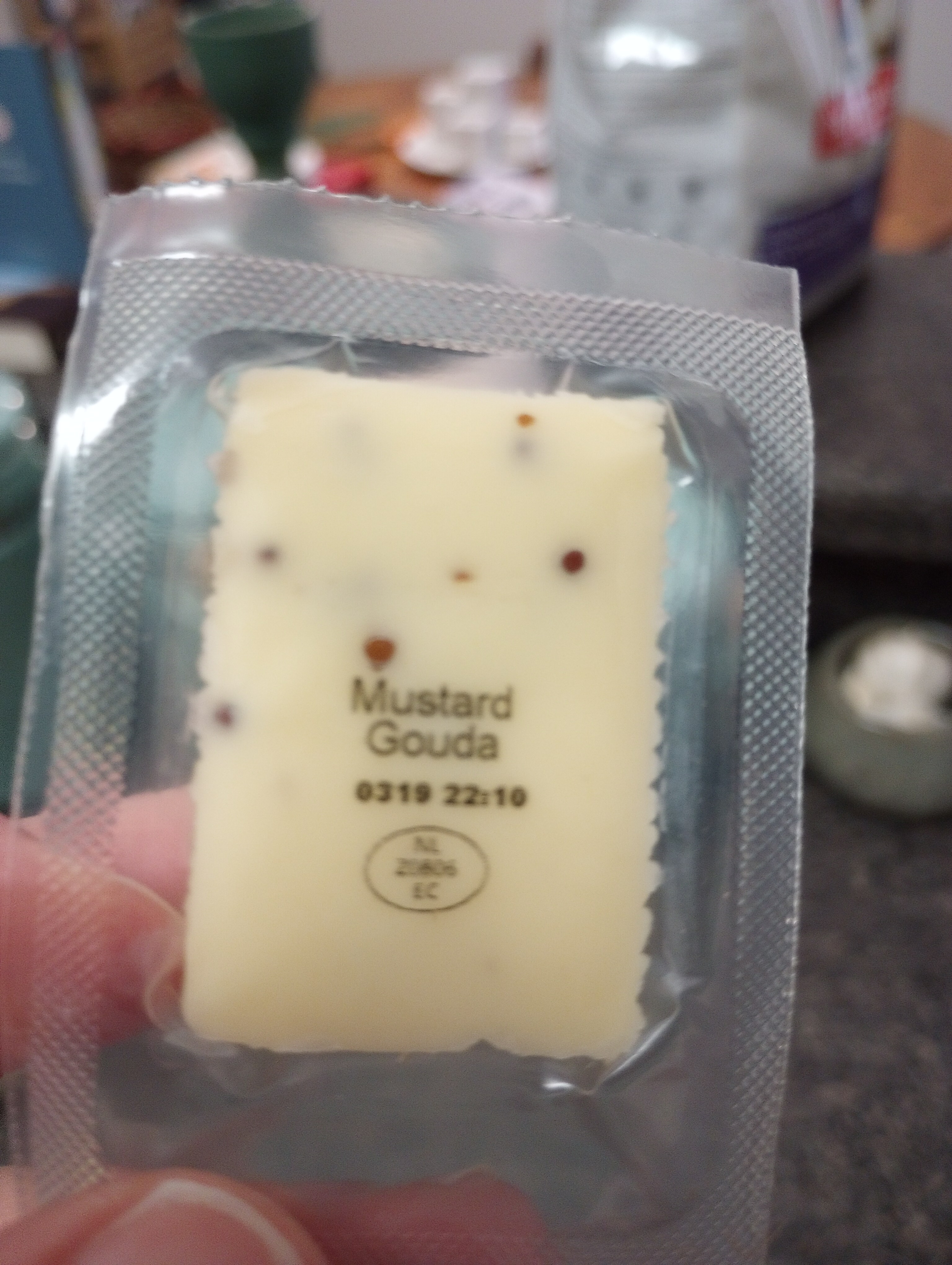
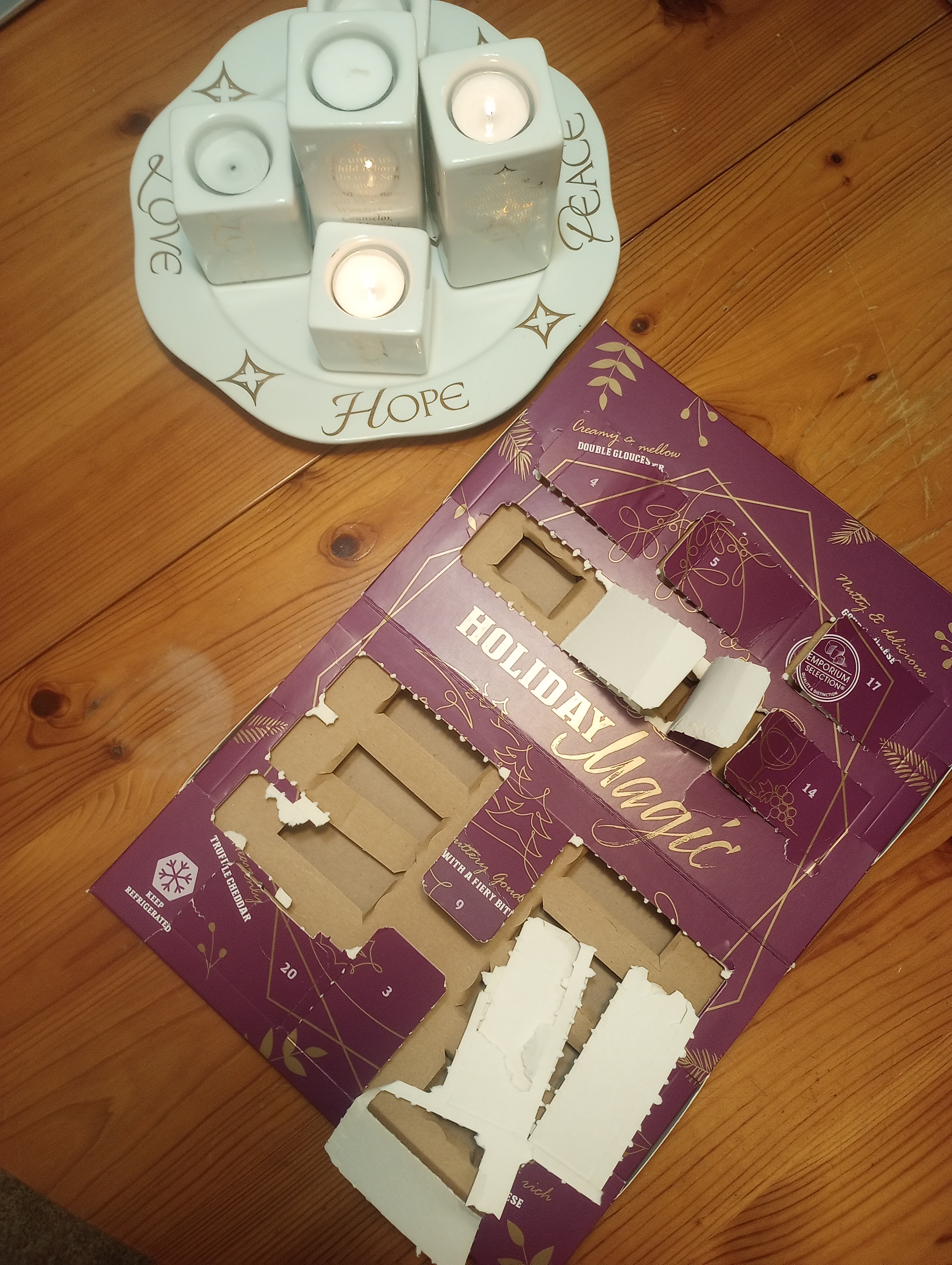
The Aldi Cheese Advent Calendar was very gouda-forward this year. There was regular gouda, yes, but also: mustard gouda, jalapeño gouda, mediterranean gouda, red pesto gouda, black pepper gouda, and smoked paprika gouda. That’s…a lot of gouda.

This is a difficult season for so many people. I’ve been praying for folks who are sick, folks whose kids are sick, people who are stuck at home – and in airports – for Christmas thanks to the once-in-a-generation winter storm, people with fresh grief in need of comfort, people with always complicated family dynamics that are heightened during the holiday season. I’m worried this morning about the unhoused neighbor near our church building and hope he found someplace warm to spend the frigid night, and the power company just announced rolling blackouts to avoid a total power grid failure. On Christmas Eve. Thats…a lot of difficulty.

In these unrelenting seasons, it can start to feel like the difficult things just pile up until they start to repeat themselves. Another day, another weird flavor of gouda. How many ways can this crap get reheated and remixed? What other ridiculous condiment can Aldi throw into cheese? How long can Covid keep ruining Christmases? When will we ever learn to be gentle with one another? Can we ever figure out ways to make sure everyone has a warm place to spend the night? Is it even possible to live lightly enough on the earth so that we don’t face these crises of energy?

I feel you, Advent calendar. I am also limping across the finish line. And yes, I can’t keep the candles in my Advent wreath burning more than a couple of days. Love and joy gave up the ghost (again) this morning. But you know what? John doesn’t kick off his gospel by saying that the Light shines in…the sunshine. Mary and Joseph didn’t get put up in a 5-star Bethlehem resort. Jesus was born in an occupied territory, and his family became refugees as soon as he was born. Hope isn’t a thing we grab onto in times of gentleness and ease. The Light shines in the darkness, and the darkness does not overcome it.

Thanks for being part of this Advent journey, y’all. I’m adding you all to my Christmas Eve prayers, that whatever this day brings, it includes some gentleness and light in the midst of it all. Merry Christmas.

hope in the dark

“Living without expectations is hard but, when you can do it, good. Living without hope is harder, and that is bad. You have got to have hope, and you mustn’t shirk it. Love, after all, ‘hopeth all things.’ But maybe you must learn, and it is hard learning, not to hope out loud, especially for other people. You must not let your hope turn into expectation.” 

That’s from Wendell Berry’s novel, Hannah Coulter. It’s one of the descriptions of “hope” that I’ve been holding close this season, that I hold close all the time, actually. Hope is not expectation, and confusing the two can be horribly devastating. Expectation has a clear end-goal, like your elementary school report card. There are benchmarks and roadmaps and clarity of preferred outcome with expectation. Expectation, especially when we aim it at other people, gets very dicey.

Hope, on the other hand, is rooted in uncertainty. It is a posture that submits to the power of not-knowing. It requires curiosity and humility, a willingness to open our eyes and widen our search criteria. Rebecca Solnit has been another steadfast companion in this hope hunt. From her book, Hope in the Dark:

“Hope locates itself in the premises that we don’t know what will happen and that in the spaciousness of uncertainty is room to act. When you recognize uncertainty, you recognize that you may be able to influence the outcomes – you alone or you in concert with a few dozen or million others. Hope is an embrace of the unknown and the unknowable, an alternative to the certainty of both optimists and pessimists. Optimists think it will all be fine without our involvement; pessimists take the opposite position; both excuse themselves from acting. It’s the belief that what we do matters even though how and when it may matter, who and what it may impact, are not things we can know beforehand. We may not, in fact, know them afterward either, but they matter all the same, and history is full of people whose influence was most powerful after they were gone.”

(A sculpture I stumbled upon at the NC Botanical Gardens this week, the dandelion as a sign of hope)

I am fed up with both pessimism and optimism. They are, among other, more dangerous things, boring. I do not have much patience for hand-wringing these days, and even less for toxic positivity. I want to find out who is doing something interesting, and why, and how. In all the gigantic, complicated, cosmic and geologic conundrums filling the headlines and the cable news tickers, I want to hear stories about people on the margins and around the edges who decided to stop standing idly by and chose, instead, to believe that what they do – alone or with others – matters, whether they’ll ever know it or not.

It’s why I wanted to tell these stories this season – places where something is gaining traction, where people and systems are experimenting, trying and failing, knocking on walls until they hear a hollow spot, examining the perimeters until they notice a tiny place where the barriers are giving way. There’s no room for pessimism in this kind of living, and I imagine constantly brushing up against the violence of the murderous systems that govern our lives makes optimism hard to come by, too. But I do think that there is a lot of joy in it all.

I don’t know what comes next or how we get there, thank God. But I am, here at this strange juncture in this weird timeline, intensely curious and full of hope.