hopeful and hungry

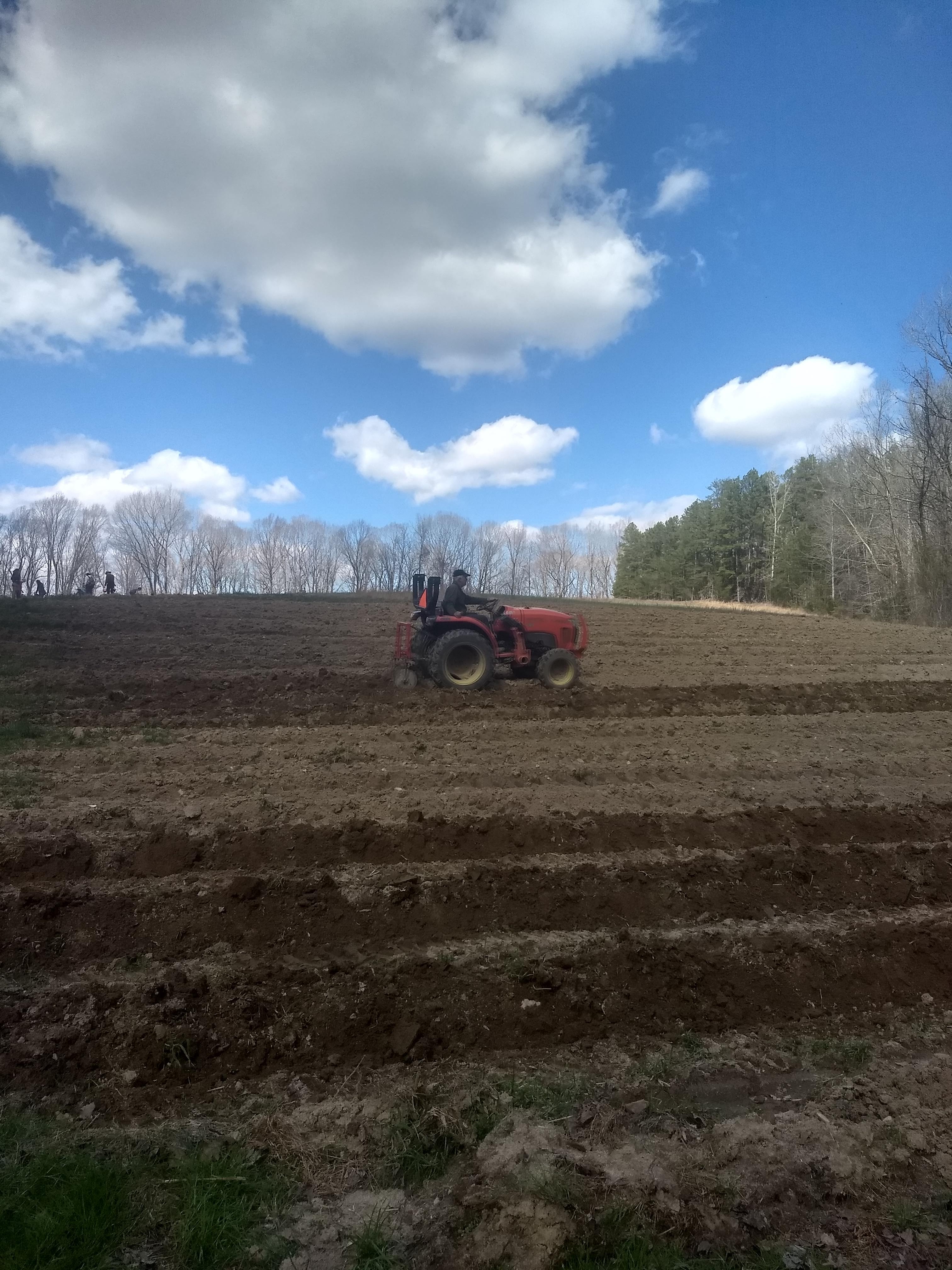
During my sabbatical back in March, I spent one non-preaching Sunday with my friends Lisa and Sharon planting potatoes at Honey Bee Hills Farm. A couple of years ago, grounded at home due to the pandemic after years of traveling all the time, I finally realized my dream of becoming a CSA member, and Honey Bee Hills invited all their CSA members out to the farm to help plant potatoes. It was fantastic!
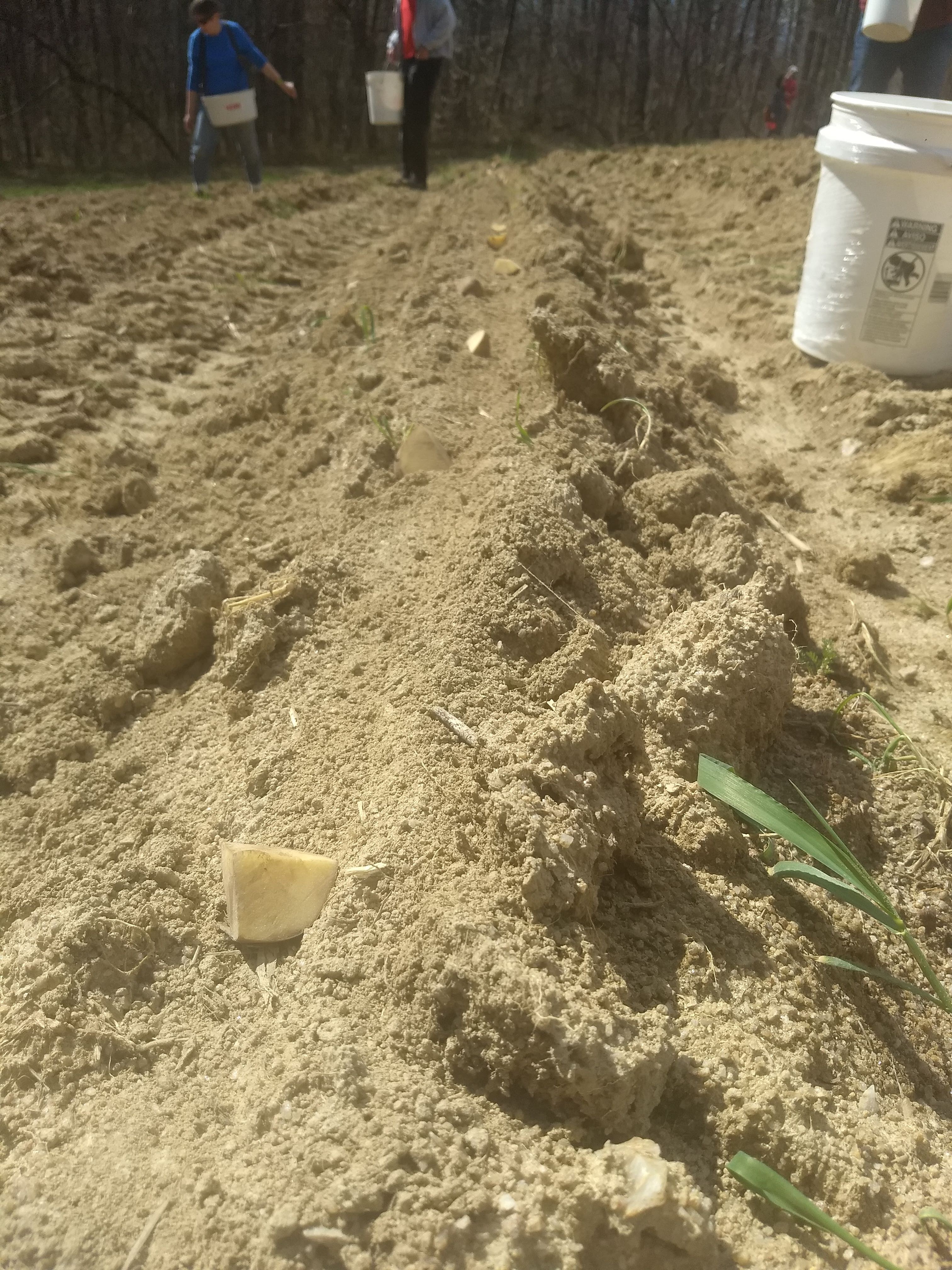
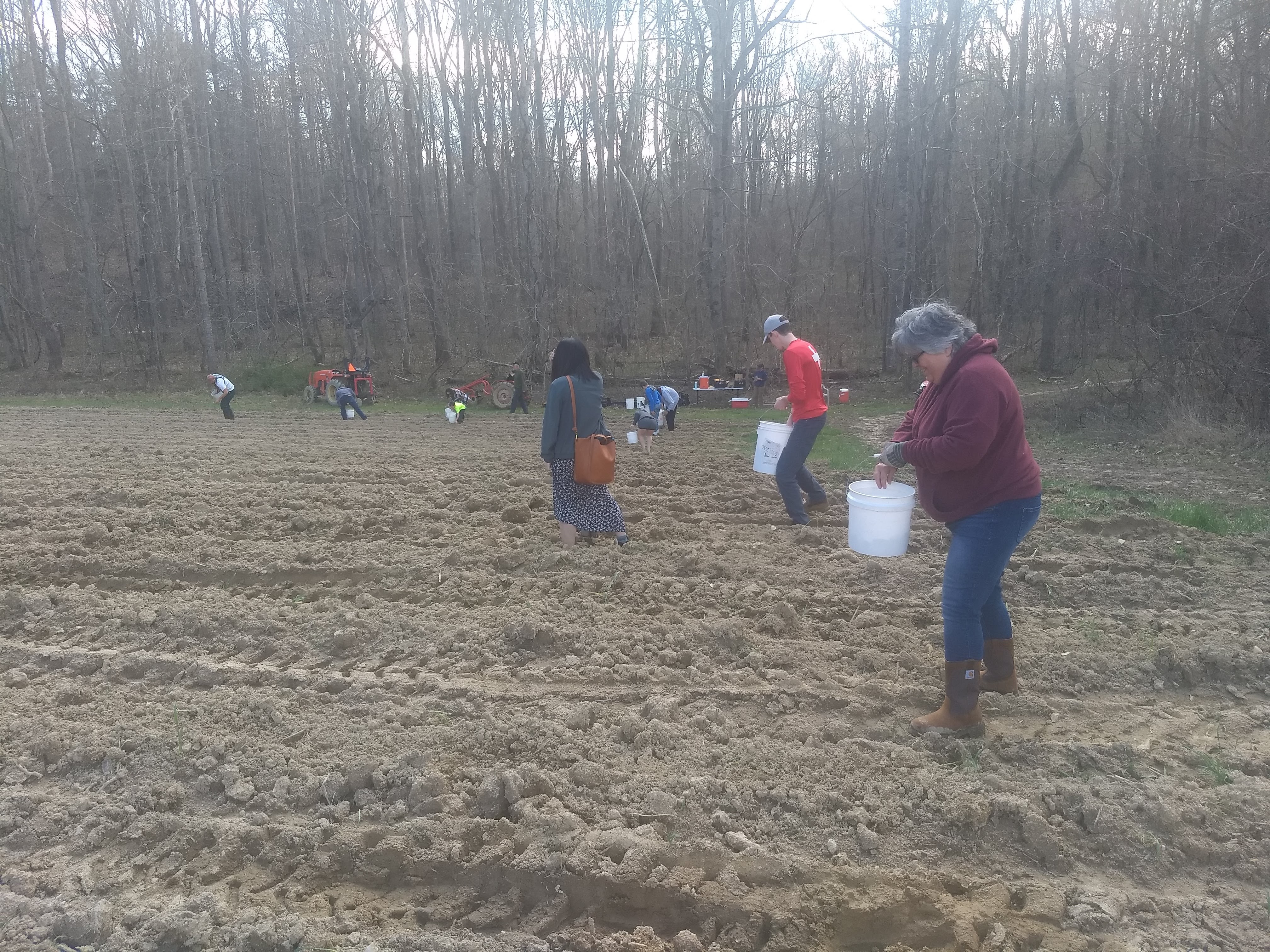
CSA, or Community Supported Agriculture, is a model of supporting small, local farmers. Members pay a flat fee up front at the beginning, and then receive produce regularly throughout the season. That way, farmers have large amounts of cash in hand to get their season started, and members are assured a regular delivery of local, seasonal produce. The customer, having paid up front, assumes risk alongside the farmer. If there’s too much rain or not enough, too many pests or too few pollinators, you might not end up getting what you paid for. But that has always been the way of farming, and it’s much more honest and elemental – and delicious – than buying hothouse tomatoes shipped across the country.

These days, farmer’s markets and CSA arrangements have a whiff of classism and virtue signaling about them. Somehow, we humans have managed to brand and stratify the most elemental of human activities. What and how and where we EAT – one of the only universally necessary activities for existing in a human body – has been turned into a branding tactic, a way to symbolize who we are, how much money we have, what kind of people we hang out with, and how much worth we ascribe to ourselves. Even as I *savored* the produce that filled my fridge and stomach every week from Honey Bee Hills, I wondered about the injustice of the fact that I am able to afford the (steep but worth it) up-front cost while hundreds of families struggle to access much of any fresh produce – much less local, organic, delicious kinds like this.
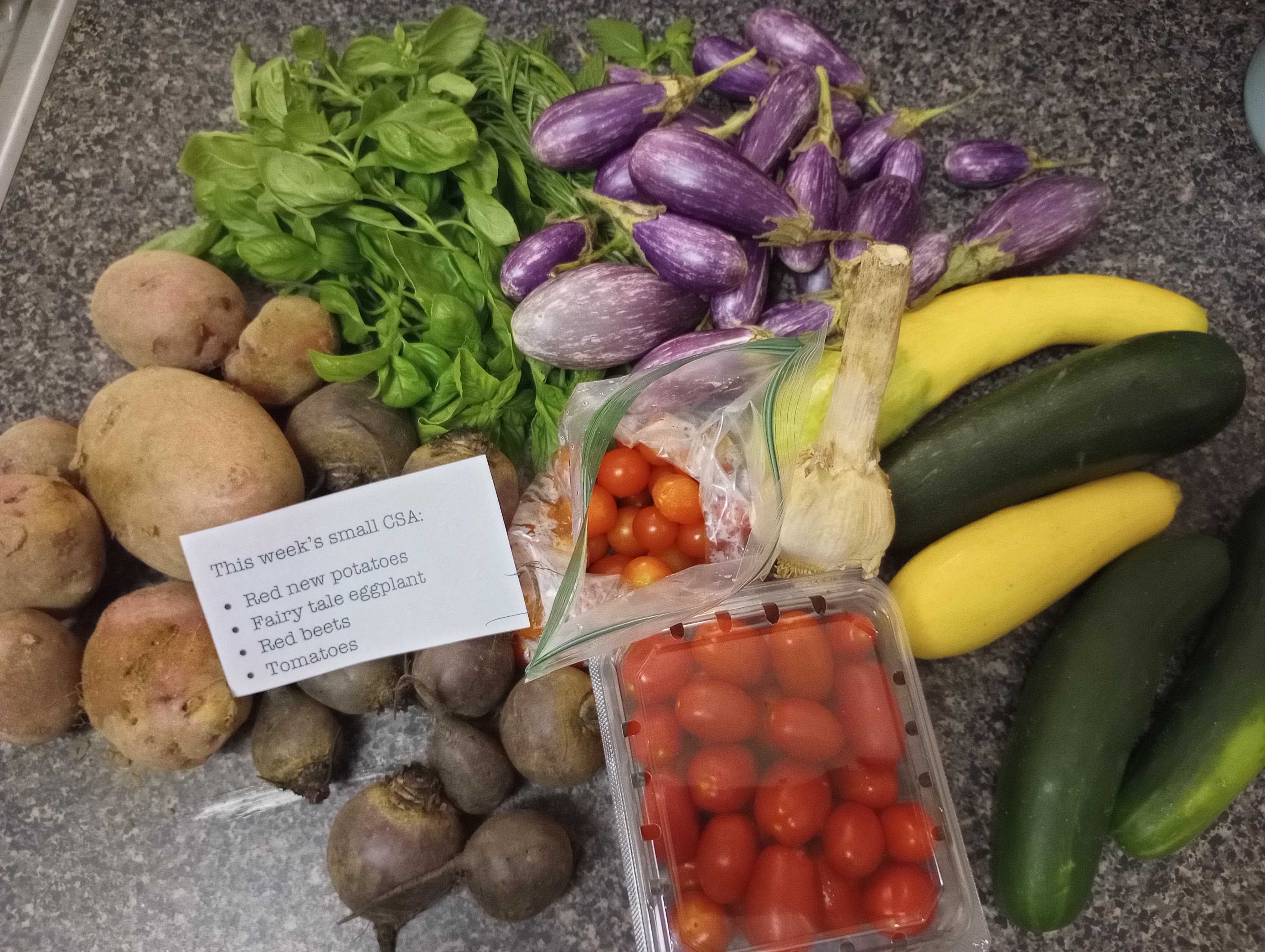
But: I grew up going regularly to the Roanoke City Market, the oldest continuously operating farmer’s market in Virginia. My Grandpa Bobby told a story about being sent down to the market when he was a kid to buy a whole chicken and bring it home on the bus. My grandparents knew the farmers on the market by name, asking after their kids and siblings while they palmed peaches, talking about the possibility of rain while they filled paper sacks with half-runners. Buying your produce from a local farmer wasn’t a status symbol; it was just how you – and everybody else – got the food you needed to feed your family. How did something so simple become so fraught?

I’m not sure how to articulate the hopefulness in this conflicted joy of mine. I have been SO happy and nourished and connected in being a part of this local, organic farm CSA. It changed my diet and the way I deal with waste. It seeded in me a newfound appreciation for the people who grow and tend and harvest the food that nurtures my body and being. And, along with working at a local food pantry, it made me aware of how absolutely ridiculous and inhumane our food systems are.

Farmers Liz and Rich at Honey Bee Hills have been some of the most generous donors to the Parktown Food Hub, where I work. Their local, organic, delicious, fresh produce has fed me and also hundreds of neighbors who struggle to feed their families. The South Durham Farmer’s Market, where I picked up my CSA box every Saturday, participates in both SNAP Double Bucks (doubling the value of public food assistance when folks use it on fresh produce at the market) and a WIC program that makes fresh produce accessible to eligible WIC recipients. There are stopgap measures in place to make good, local food available to everyone. But it isn’t enough. It’s not sufficient. Everyone should be able to have a bag of beautiful, lovingly grown, filling, nurturing vegetables to stock their fridge each week, whether they make $50,000 a year or $5,000.

I suppose part of the hopefulness of this unfairly expensive joy is that my eyes have been opened. I want to continue eating this way AND I want it to be accessible to everyone, too. Farmers Liz and Rich sold the farm this fall and returned to their work as international aid workers, so my fridge is sort of empty and forlorn at the moment. I’m actively searching for ways to eat fresh and local while at the same time supporting processes and practices and policies that allow all my neighbors to do the same. This is Durham, so there are a zillion possibilities: The Tall Grass Food Box supports Black farmers. Feed Durham is a grassroots community cookout that started during COVID and has evolved into a huge, volunteer-led, love-filled operation. I just learned about Transplanting Traditions, which supports refugees in growing and sharing traditional foods, a work of food sovereignty.

And my own South Durham Farmer’s Market is a treasure trove of local food, including mushrooms, honey, even freshly harvested NC OYSTERS. And that in itself – the sheer number of options for eating local food – is hopeful, I suppose. That there are so many folks literally invested in changing the ways we share food, that so many of these people delight in growing things that nourish and surprise and encourage me and all my neighbors, that this fundamental human need to feed ourselves and one another has led to so much innovation and creativity and mouthwatering bliss.

Now I’m hopeful AND hungry.

baldwin

The leader of a course I took this fall mentioned James Baldwin’s memoir, “No Name in the Street” during class one evening, and I went out the next day and bought it. I am not a James Baldwin expert, just an admirer. I haven’t read everything he ever wrote, just a sampling. I cannot tell you anything that Baldwin could not tell you himself, and better. You should read Go Tell it On The Mountain or The Fire Next Time, go watch If Beale Street Could Talk or I Am Not Your Negro. Baldwin opens windows in my brain. It feels like he is writing from yesterday, not half a century ago, reporting from the streets in 2022 instead of 1968.

Lines from Baldwin show up all over the internet, especially if your internet algorithm looks anything like mine. But I hadn’t heard this one, from No Name in the Street, before, and I have grabbed it, claimed it, stocked it in my heart’s library for frequent and eternal reference:

Incontestably, alas, most people are not, in action, worth very much; and yet, every human being is an unprecedented miracle. One tries to treat them as the miracles they are, while trying to protect oneself against the disasters they’ve become.

I have been disappointed again and again by people these last few years – both by other people and by myself. Institutions, individuals, governments and denominations: not, in action, worth very much. I have been disgusted and depressed, thrown my hands up in the air in surrender. And still, even in the midst of this tectonic shifting of belief and belonging, the accelerated erosion of trust and loyalty, the unprecedented miracle of each human being persists. It’s a paradox, requiring more humility and compassion than is regularly at my disposal these days.

But, thanks to Baldwin, I can try: to treat each person as the miracle they are, even while I protect myself against the disaster they’ve become. This is high level hoping, y’all, and I am still a novice. But I am practicing.

HEART

Sometime during the pandemic (my sense of time is addled), a new neighbor moved into the lower level of my building. She kept different hours than I did, going out late at night dressed to the nines and coming home very loudly in the middle of the night. Mostly, that’s just what apartment living is, living differently than the people who share your walls. Russell from downstairs works night shift at the front desk of an airport hotel, and we usually say good morning when I’m walking Fran. I’m sure I disturb Alexis, who lives underneath me, when I get up at the crack of dawn to write prayers on Sunday mornings, when she’s barely gotten home from her Saturday night out. I sort of like sharing walls with people and learning the patterns of their lives.

But this new neighbor didn’t really ever establish patterns. She got up and went to work in scrubs early most mornings, but nothing else ever resolved into predictability. As the weeks went by, it became clear that her new apartment was a place of refuge for a big network of young people. Folks came, stayed a while, got their feet under them, and moved on. I was annoyed at the lack of consistency and revolving door of neighbors, but I also came to have a grudging respect for how this young woman was created stability for a bunch of very young folks, and started to feel a certain protectiveness for them all.

But then one person came, and stayed. They were clearly intertwined in an intense relationship with the woman who had signed the lease, and the relationship got volatile. There were lots of screaming matches, some out in the parking lot. And then the screaming matches got physical. They’d fight, and the building would shake. I wasn’t sure what to do or how to intervene. Friends suggested I let these neighbors know that I was glad to offer a space of refuge or help, but I couldn’t even tell which person was the instigator or abuser and which one was being hurt the most. Usually, the fights would flare up and out pretty quickly, but one night, the building shaking went on, and on, and on, and on. I finally went out into the hallway, where another neighbor, Anna, was also looking worried. “Should we call the police?” I asked, wary of what extra violence and burden that might bring. “Yes,” she said. “I’m calling.”

The fighting neighbors were both young, Black, queer people. The two Durham City Policemen who arrived were very young, white, blonde men, with guns. I did not feel safer with the police and their guns present in the building, and I KNOW my fighting neighbors didn’t either. When the cops knocked on their door and announced who they were, the apartment went quiet. One of the neighbors silently left out the back door. There was no more fighting that night, and the police left without ever interacting with my fighting neighbors, a relief for all of us. A couple months later, those neighbors moved out, and I still wonder where they are and how they’re doing.

//

You’ve probably heard the slogan “Defund the Police,” maybe even read about the abolition movement where that phrase originated. I’ve lived a pretty police-avoidant life, mostly because of my race and class and not because of any particular commitment to clean living. But I have learned from friends and neighbors that in situations involving BIPOC or poor people, calling the police is hardly ever the right move, because police make a situation *more* volatile, bring guns and threat of arrest into conflict, and have a documented history of assaulting, harming and killing the people they are called to interact with. “Unless someone is actively dying,” a neighbor once told me, “we do not call the police. Ever.”

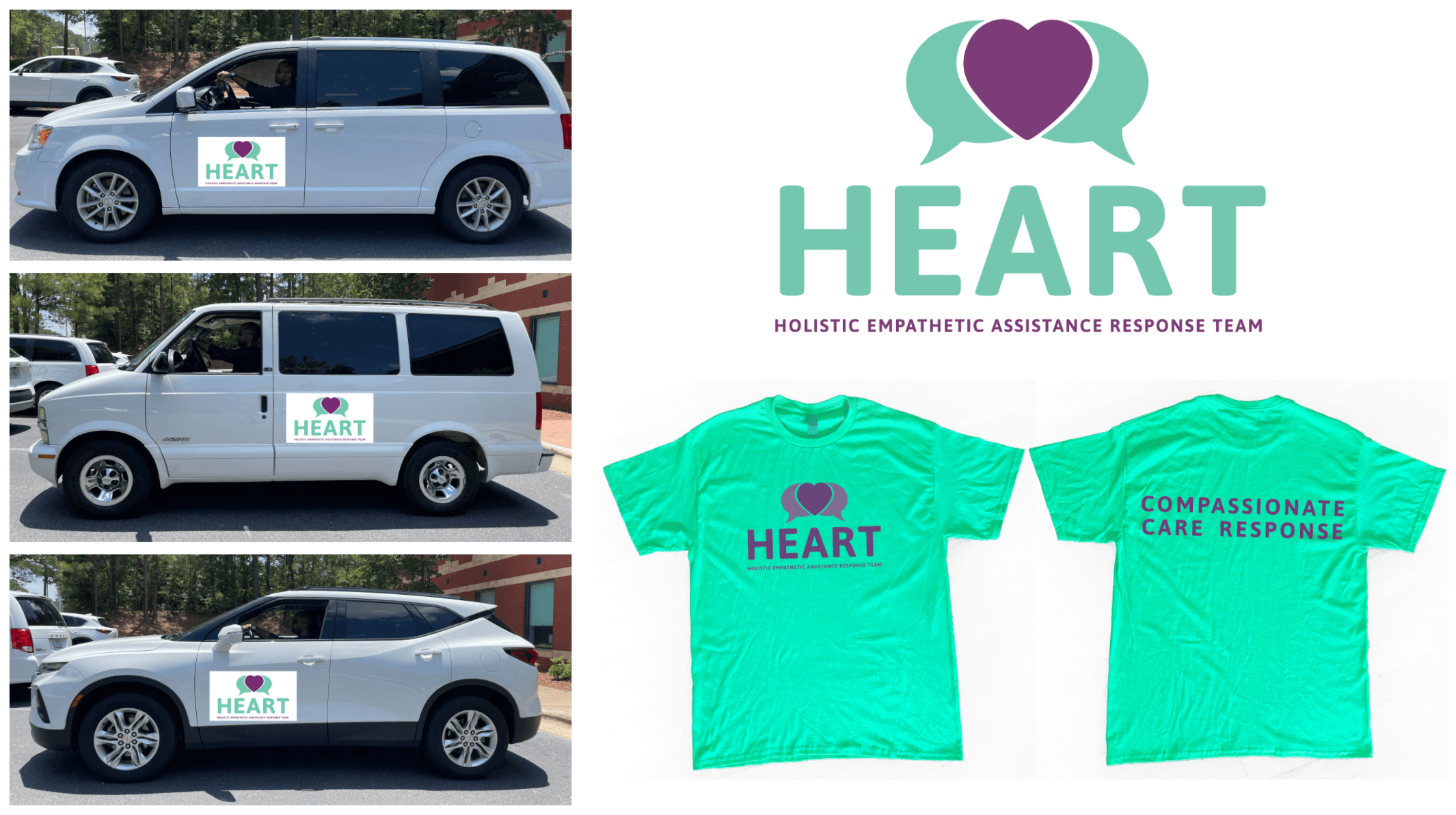
Here in Durham, folks have been organizing for years to shift safety and wellness practices out of the hands of police and into the hands of the community. I have been less active in this work as I might have been, my involvement confined to giving money and signing petitions, but I have been paying attention, too. In 2019, the coalition won their campaign to establish a city office of Community Safety. I 2021, the City shifted funding from 5 open police officer positions and $1 million from the County budget to begin a pilot program. In June of this year, the city deployed its first HEART (Holistic Empathetic Assistance Response Team) teams – unarmed teams of licensed mental health clinicians, peer support folks, and EMTs – to divert 911 calls away from armed police response. If a 911 call comes through the dispatch that is about a suicide threat, a mental health crisis, trespassing, welfare checks, an intoxicated person, panhanding, nuisance, prostitution, public indecency or a lost person (where the person doesn’t have a weapon and isn’t being violent toward others), a HEART team goes to the scene instead of police officers. In some other, more dangerous situations, the Office of Community Safety is piloting a project that sends mental health clinicians out on certain kinds of calls WITH police officers, an attempt to de-escalate situations AND research just how many kinds of calls for help might be served by unarmed response teams.

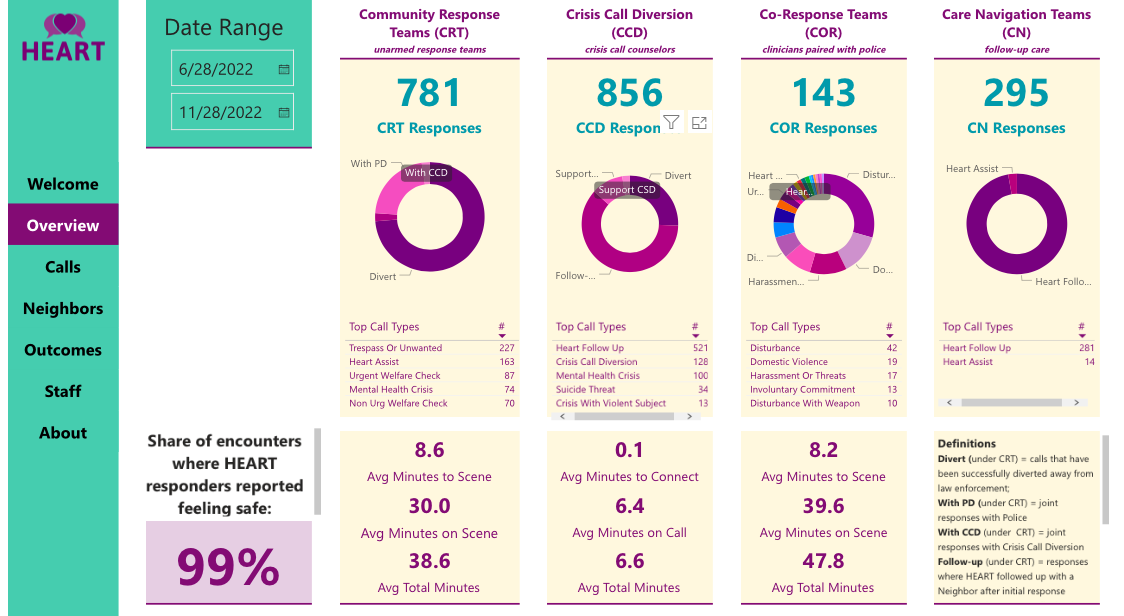
You can learn more about these programs on Durham’s own website, in local news and in this feature spot with Sanjay Gupta on CNN. The data is overwhelming. Check out the city’s dashboard and you’ll see that the new initiative has responded to over 2,000 calls in the last 5 months (and, if they had the capacity, could have responded to over 6,000), that the unarmed responders felt safe 99% of the time, and that more than 3/4 of the situations were resolved immediately on the scene.

The HEART responders weren’t up and running when my neighbor called the police for the domestic disturbance in our building. Even now, a domestic violence call would be one that triggered a “Co-Response Team” visit – maybe a trained mental health professional would have arrived alongside those two young, white, armed policemen. But I read that during one of the HEART team conversations, the neighbor in need of assistance saw their white van and teal shirts arrive on the scene and said, “Oh, I was hoping it would be you guys who showed up!” The pilot program was only operating in a certain geographic area, and confined to weekday business hours. But already, the results have been so promising that the city has added a second team of HEART responders and expanded to 24/7 coverage.

And that, my friends, is hopeful. Another way of responding to need, put into practice, right here in my city. Not cable-news vitriol, not partisan bumper stickers, not empty talk: a real, creative, publicly funded, community supported, on-the-ground alternative, proving its worth and effectiveness in real time. I am so glad to live here in Durham, where hope and HEART walk the streets in teal t-shirts every day.

the dentist

You know those nightmares where your teeth just fall out of your mouth? It happened to me in real life last February. I was sitting on my couch one night, munching on some Cheetos, and an old dental crown just…fell out. Of my mouth. I had one of those hysterical reactions where you can’t decide whether to laugh or cry, called my mom, then made a list of emergency dentists to call the next morning.

I don’t go to the dentist because I hate going to the dentist. I don’t think I had any particularly bad experience at the dentist as a kid – my parents took me regularly, and I always needed something fixed – I just hate the experience. I hate sitting immobilized in that chair, staring up at the ceiling while someone else picks and prods in my mouth. I hate the feeling of that tiny hook they use to get the tartar off your gums, and I hate the way the drilling shudders through your skull when they have to clean something out. I hate going to the dentist, so I just didn’t go.

For, like, seven years.

It turns out that avoiding the dentist is a very bad plan for…avoiding the dentist. The morning after my hysterical tooth-falling-out episode, I called around to find a dentist that could accept a new patient for an emergency procedure. Several places told me no, but I finally got a “yes” from Riccobene and Associates Dentistry, right around the corner from my house. I showed up later that morning filled with dread and anxiety and, to be honest, not a small amount of shame about the way I’d neglected my own self.

Dr. Austin and the team of dental hygienists looked in my mouth, said, yep, that crown sure did fall out, and fixed me right up. And then they said, well, you should probably come in for, like, a regular exam to see what else needs fixing. And I said, sure, but let’s wait until after my month-long sabbatical in March, because Lord knows going to the dentist is not included on the list of things that bring me respite and relief.

In April, I went back. And then I went back again. And again. And again, and again, and again and again. I have been to the dentist TWELVE times this year, all told. Dr. Austin and her team replaced old fillings, did a couple new ones, cleaned my teeth with a WATER THING instead of that horrible old metal pick, sent me to an endodontist to see about re-doing an old root canal gone bad and, when that turned out not to be feasible, pulled an old rotten tooth right out of my mouth. They set me up with flossing instructions and a shiny new electric toothbrush. On Halloween, I went for a 6 month check-up and, for maybe the first time in my adult life, emerged from the visit CAVITY-FREE.

I hate going to the dentist. Every time I went into the office, I told them that, and every time, they responded with patience, kindness, humor and care. I drug so many years of anxiety and shame with me into that dental chair this spring, feeling terrified and panicky, mortified about the state of my teeth, and embarrassed by my mortification. My blood pressure, which they took before every procedure, was off the charts. I have new breathing techniques and meditation destinations, now. If you’re reading this, then I probably prayed for you from that dentist’s chair this spring, because I prayed for every single person I could think of during those procedures in order to distract myself from the terror and anxiety and fear. I read about sedation dentistry – where you’re under anesthesia for the duration of whatever procedure you’re having – and seriously considered it, even though it would have meant spending MORE thousands of dollars in dental bills.

But here’s what happened, at every single one of those appointments this year: I showed up, wracked with fear and worry and shame, and I was received with gentleness, understanding, and compassion. Every. Single. Time. Dr. Austin explained everything in minute detail, which is my love language. Jon, who was my hygienist several times, taught me more about 80s pop music than I ever hoped to learn, keeping up a constant monologue for HOURS to calm me. Another hygienist told me all about her nieces and nephews and what a great place that office was to work in. Another woman, when she learned I was a pastor, spent a solid half-hour detailing her recent molar pregnancy (If you are not a pastor, you may not know that this is an inevitable result of telling someone you are a pastor: they either apologize for their sinful living OR pour our their stories of vulnerability and pain. And, honestly, if you want to be distracted from your own dental discomfort, just do a quick google of what a molar pregnancy entails. Whoa.). One hygienist was pretty quiet, but managed, in her silence, to convey such a depth of care and compassion that I felt rocked to sleep.

What I’m saying is that these precious people saw me, heard me, refused to judge me. They took me in, offered gentle humor and clear explanation, and then they did what they do every single day: they healed me. Literally. They extracted the rottenness that was festering inside of me, and filled it back up with newness. They did not make fun of me for letting the rot grow. They did not shame me for being so wracked with guilt. They did not tell me it was my fault, or chide me for neglecting my dental health. They didn’t criticize or blame me one single time. They just took me in and had compassion on me, told me a joke and got to work fixing what was wrong.

I know, because I have had a lot of conversations about going to the dentist this year, that many people have dental horror stories: botched root canals and criminal prices, callous doctors and unending pain. I am really grateful that this place had an open appointment the day my tooth fell out of my mouth, that I somehow stumbled, blindly, into their care.

And it’s hopeful, you know? That there are people out there – in my case, literally right around the corner – who are showing up day in and day out to receive hurting people with open arms and zero judgement, welcoming us into their care with a joke and a smile, sitting us down, fixing what’s broken, removing the rotten pieces and…healing us. Every single day. Right around the corner.

Thanks be to God.

junior varsity

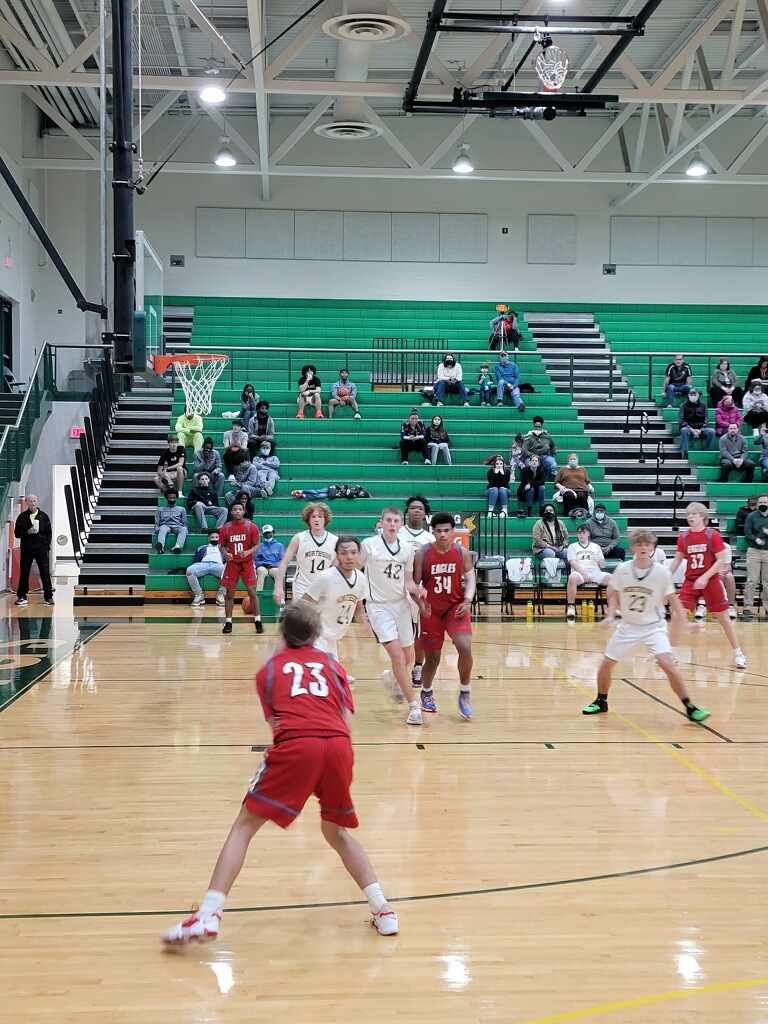
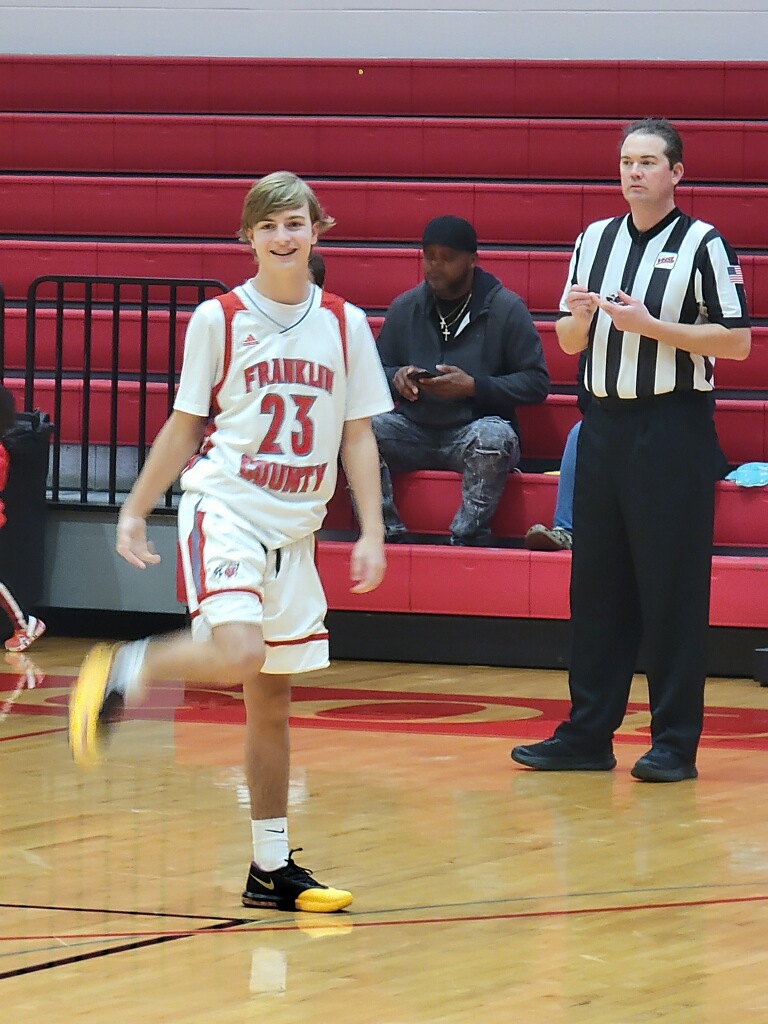
I should really get out more. That’s what I told my sister as we sat in the bleachers of the auxiliary gym watching my nephew’s JV high school basketball scrimmage last week, because I found myself completely, totally, entirely caught up in the high school basketball game. Correction: not the high school basketball game; the junior varsity scrimmage.

The game WAS a good one, even though both Leah and Mike, my brother-in-law, had warned me not to expect too much. But those kids played hard and fast, and Tyler’s team ended up winning by a single point. The gym was full – a huge crowd for a Tuesday night JV scrimmage – and the fans were IN IT. In the 3rd period, a kid from the opposing team ran into a layup – which he missed – and as he and the defender floated back down, the ref blew his whistle. The entire gym waited with bated breath for the call. When he pushed his hands out in front of him and pointed at the shooter, calling an offensive foul and curtailing any chance of a free throw that would tie up the game that had been a hair’s breadth apart for minutes, we all, collectively, as one being, both sighed and cheered in relief.

Here’s what’s hopeful about a JV high school basketballs scrimmage: the coaches for both teams were COACHING. I mean, COACHING – pacing the line, constantly calling out plays and encouragement, giving individual direction, getting the players on the bench to start chants and cheers and applause for their teammates. The bleachers were filled with kids’ parents, families, and friends. There was a varsity scrimmage happening across the parking lot, but still the JV gym was full of people showing up on a Tuesday evening to support those kids. And we weren’t scrolling our phones while we sat there, either, we were present, attentive, totally engaged in what was happening, in what those kids were doing out there on the court.

For a time, my life was filled with teenagers. I spent a few years as a youth minister, and was bowled over by how much I loved it. I’m not a charismatic dude with a guitar, and I prefer a quiet nook filled with books to loud music and amusement parks, but holy cow did I love those kids. They were smart, and honest, and tender and kind and always, always surprising. I didn’t know exactly what being a pastor to teenagers would look like, but it took me to places of incredible joy and incredible pain. My heart will forever be mapped around a teenager-shaped spot of tenderness.

And I realized, sitting in that auxiliary gym last week, what a marvel it is to show up for young people in times like these. Those coaches don’t have to coach like that. Those families aren’t required to show up like that. There are no VHSL rules that require players on the bench to clap and chant and cheer for their teammates. Nobody made the guy standing at the end of the court nod and chant and call&response his way through that scrimmage, cheering those kids like he was on court at an NBA championship game. Leah and Mike could do all kinds of things with their time, but they spend their weeknights and weekends at Tyler’s games – baseball and basketball and then a little more baseball – choosing to invest their time and energy and love with him in the simplest, most powerful way possible: showing up, consistently.

I am thinking, this morning, about all those folks who invest so heavily in young people: parents, yes, and teachers and coaches, youth ministers who lose sleep on lock-ins and retreats and mission trips, grandparents who spend their retirement in stinky high school gyms and elementary auditoriums, mentors and friends and foster parents who make room in their lives for young people, all the ways we wizened, cynical adults insist on loving and encouraging and shaping kids for a future we have trouble imagining. If that’s not hope, I don’t know what is.

advent, anyway

My Aldi Cheese Advent Calendar doesn’t start until December 1st, but here it is Advent already, anyway. For the past few years, I’ve written every day during Advent here in this space. I wasn’t sure I could muster the wherewithal to do it again this year. I’m not ready for the season. It’s 70 degrees here in North Carolina today, a Thanksgiving cold has turned me into a pitiful sack of snot, and it has been a hard year. I don’t want to decorate, I’ve barely thought about gifts, and I’m struggling to get in the appropriate Advent headspace for worship planning and church leading. I am burnt out. I know I am not the only one.

Lately, I have felt like doom, despair and misery are choking out all the good stuff. Maybe I’m a little depressed, or maybe the world is actually not such a great place at the moment. Maybe it’s both. In the last several weeks, I’ve been in multiple conversations with older folks who said, in no uncertain terms, that there is a certain relief in knowing that they will not have to live long enough to see the inevitable consequences of our current collective choices. I’ve also been praying for too many younger people whose friends and peers are choosing to end their own lives – or those of others – rather than continue enduring the pain of living in this world.

I am neither old nor young. I turned 40 this year, so I don’t have the luxury of knowing that I’ll exit this world before climate change renders it uninhabitable or virulent politics make it even more inhumane than it already is. But I am also old enough to know that things do, as they say, get better, that how I feel today is not how I will feel forever, that no pain is eternal. I am a little annoyed at the older people for their relief at impending exit and I am a lot heartbroken for the young people who chose theirs prematurely. I am here, in the middle, forced to reckon with how to live in the mess.

So, I think this Advent I will write each day about a thing I have witnessed or experienced or encountered that gives me hope. Not ephemeral, generic, free-floating “hope,” but grounded and gritty, real people doing real work that has real power. I am out of practice, in both writing and hoping. We’ll see how it goes.

If all else fails, there’ll still be cheese.

the institution cannot love you

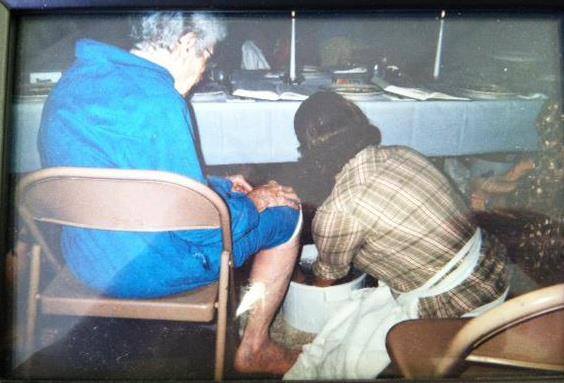
That’s me, 14 years ago, washing the feet of an elderly church lady at a Love Feast service during my Brethren Volunteer Service orientation in Kansas City. For years, this framed photo sat on my desk. I love it. I love Love Feast, I love foot washing, and even though I do not know the woman in this photo – a stranger who welcomed me to her church’s meal that fall – the picture reminded me that what I was choosing a life of service. Every day, while I attended Zoom meetings and worked on databases and sent emails, this photo reminded me that what I was doing was actually serving the church.

I took that photo off of my desk last year. I still love Love Feast, and foot washing is still a big part of how I understand following Jesus. But I don’t believe, anymore, that serving the church is a worthwhile way to spend my life.

The Queen’s death this week brought out all kinds of feelings from all over the world. I recommend, especially if you are a white person from the United States, seeking out the responses from people who live in nations colonized by the British Empire. Those responses comes in all shapes and sizes, and especially for people who’ve been colonized and oppressed by the monarchy to which Elizabeth willingly and repeatedly sacrificed her humanity, they don’t necessarily include mourning.

I cannot imagine the pressure that Elizabeth endured as Queen, the expectation that she would live up to the circumstances of her birth and family and subsume her humanity into a role of power stretching back centuries and undergirding global empire. That she was so young when she was coronated compounds the pressure, I’m sure. And yet, decade after decade, she continued to decide to serve the institution and present a facade of stability cloaking centuries of violence, murder, oppression, and dysfunction. There’s no way the Queen was unaware of the harm her reign imposed – her own uncle abdicated the throne because of its restrictions on relationship, her daughter-in-law was killed by intrusive paparazzi, her grandson left public life because of the white supremacy baked into the whole thing. And that’s just her family, not to mention the constant clamor for relief from people of nations her crown colonized and invaded and held under her thumb. You can read historical accounts of all the horrific things the Queen refused to acknowledge or address – a simple Google will get you all you need to know.

I’m not British, and I am not the subject of any royal, so I don’t know what it’s like to have my Queen die. And I wasn’t born into a royal family, so I have no idea what it’s like to ascend to the crown and live a life with the attendant expectations. But I do know a little about the pressure to serve an institution, to maintain institutional stability, to pretend to be a “bridge-builder” or “peace-maker.” I know a little about being expected to ignore and paper over violence and harm for the sake of “unity.”

There is a wily idea that loyalty to institution, that spending an entire life in service to an organization or structure or system is laudable. In institutional life, loyalty, stability, and consistency are held up as the greatest good. “Keep calm and carry on,” right? But what happens when you learn that the institution, organization or system to which you’ve pledged your loyalty is consistently doing harm to people, and refusing to acknowledge or repair it? What does “stability” mean when it maintains violent practices and structures?

When I started listening to people who were being harmed by the institution, the virtue of loyalty came into question. Those folks were being hurt and harmed repeatedly, and the church had zero mechanism for hearing their cries, much less acknowledging or addressing them. Forget about repentance and repair – not even on the table. I was getting praise left and right for being a “church leader,” maintaining the institution for another generation. Someone even said to me “you know, I used to worry about the survival of the church, but then I listen to young people like you and I’m much less concerned.” I heard that, then, as a deep compliment – and that’s how it was meant. I hear it now as a horrifying prediction: that I could have continued sacrificing own humanity and that of others to a harmful institution indefinitely.

Tressie McMillan Cottom says, over and over, “the institution cannot love you.” Institutions are not people. They are systems and structures built with the express purpose of maintaining themselves from generation to generation. Institutions do not take into account the well-being of individuals. They do not contend with power dynamics. They do not CARE who they hurt or harm: they exist in order to exist. Only human beings are capable of love. Only human beings can grapple with the complexities of human relationship. Only human beings can participate in repentance and repair.

So, I stopped expecting the institution to love me back. I stopped sacrificing my own humanity for the sake of institutional stability. I stopped willfully ignoring people in pain in order to keep systems and structures viable. I would much, much, much rather hold on to that part of my humanity and the humanity of people I love, even if it means witnessing structural and institutional collapse. Because the institution cannot love us. But we can love one another.

Who knows how much grappling the Queen of England did with these questions. She had access, after all, to unlimited distraction and immense amounts of power. Plenty of opportunity to ignore the deep ethical questions of a human life, just like all of us. Her death mostly makes me sad – not for England or the Commonwealth, but for her. Sad that she decided, over and over again, in the current of incredible global and ancestral pressure, to sacrifice her humanity for the sake of a violent, inhumane and evil institution that repeatedly and unapologetically harmed human beings across the globe.

It seems like a good occasion for us to reflect on our own willingness to do the same.

how to do nothing

There’s this story about Jesus healing a crippled woman in a synagogue on the sabbath. There were all kinds of rules, then, about what you could and could not do on the sabbath, and healing was very clearly against the rules. It wasn’t so much that it took too much out of the healer to heal one crippled woman, it was more that the synagogue staff really needed ONE DAY off from the crowds of sick and worn out people seeking healing and relief. Jesus is in a synagogue on the sabbath, receives a crippled woman seeking healing, lays his hands on her and says “woman, you are set free!” And the woman stands up straight and walks out of the synagogue healed.

The bosses of the synagogue are non-plussed: “Don’t get the wrong idea!” They shout to the crowds who saw Jesus heal the woman. “We don’t heal on the sabbath here! There are rules and regulations about all this! Take your crippled mothers and leprosy-ridden children home and come back during regular business hours!”

I studied this story with some of my favorite theologians -the Jr. High youth of Manassas Church of the Brethren circa 2013 – and their reading of the text is, to date, the most profound I’ve heard.

“Wait a minute,” the middle schoolers said. “The guys who got mad at Jesus, the bosses of the synagogue, wasn’t their job to make sure everybody followed the rules? That was sort of their work?” “Yes,” I said, wondering where they were going with this. “Well, then weren’t THOSE GUYS doing EXACTLY what they got mad at Jesus for doing? Weren’t THEY working on the sabbath?!”

Blam. Jr. High theology is the best theology.

In another story about a similar thing, Jesus heals someone else on another sabbath and, when the synagogue bosses get predictably angry at him for breaking the rules, he says “DUDE. YOU GUYS. The sabbath was made for PEOPLE – it’s for our own good, meant to be a means of grace. People weren’t created for the sole purpose of following the rules of sabbath. Don’t y’all know by now that I AM GOD? I can break the rules if I want to. And, uh, if I’m breaking the rules and I’m God, then you should probably pay attention to how and why and in what ways rule-breaking makes sense.”

I have spent the last month on sabbatical from my work as a pastor. I haven’t had any earth-shattering revelations about myself or the world. I just…rested. I prayed, I read, I hiked. I spent a lot of time doing nothing with my dog, and staring at flowers in the process of blooming. I saw friends I haven’t seen in years. I got to be Dana, instead of Pastor Dana.

I love being a pastor, and I love my congregation, so the distinction I felt this month between the two – Dana and Pastor Dana – sort of surprised me. It surprised and pleased me to recognize that I have managed to build a life that is still rich and full even without my work, which often feels all-consuming. It surprised and delighted me that in 31 days, I did not once feel bored or lonely. I felt curious and unencumbered, relaxed and attentive to the world.

I sat down yesterday to write a sermon for the first time in several weeks and the weight of my work settled once again on my shoulders. This job is a half-time commitment, 20-25 hours per week, but that doesn’t come close to capturing the mental and emotional responsibility of caring for the spiritual well-being of several dozen folks, or working alongside them to exist as a community of witness and faithfulness. I don’t know how to describe the work to people who have not done it. It is consuming. Pastors are in danger of allowing the work to consume them, body, mind and soul. I have been surprised and pleased this month to realize that I have actually been doing a decent job of avoiding that.

In his book “Living Buddha, Living Christ,” Thich Nhat Hanh says “When we are caught in notions, rituals, and the outer forms of the practice, not only can we not receive and embody the spirit of our tradition, we become an obstacle for the true values of the tradition to be transmitted. We lose sight of the true needs and actual suffering of people, and the teaching and practice, which were intended to relieve suffering, now cause suffering.”

That’s what Jesus meant when he told the angry bosses that the sabbath was made for people, not the other way around. Traditions, rules, habits, practices intended to relieve suffering end up causing it when we pledge our allegiance to institution and ritual instead of the spirit…instead of the Spirit.

My congregation paid me a month’s salary to step away from the outer forms of practice, to take a break from being their pastor and re-orient myself to the true value of our tradition, the real purpose of our work and witness. It’s a privilege, I know, but it shouldn’t be. Everyone deserves rest. Everyone deserves sabbath. It is a gift and a grace and – more than that – the rhythm of work and rest is written into God’s design for life.

If you haven’t rested for a while, why not? Maybe it’s because circumstances aren’t allowing you; but maybe it’s because you, like me, get caught in the outer forms of practice, the rules and regulations, the inhumane pace of modern life, the lie that your worth lies in your productivity. Here’s a dispatch from my small re-orientation, a tiny bit of advice from a mostly-rested body: take a vacation day. Use your comp time. Don’t answer email on your day off. Stop participating in the destructive falsehood that humans are not worthy of rest, that our value lies in what we DO or accomplish. It’s what I’m attempting.

pick a side

I did 30 days of yoga, started taking a multivitamin and slept a full 8 hours last night, so all these disparate pieces of processing the last couple years’ grief and anger are finally falling into place.

Today, I finally managed to recognize that I believe Jesus is asking us to choose sides. It’s not a conservative versus progressive kind of choosing, or a Republican versus Democrat kind of choosing, or a Duke versus UNC kind of choosing, but it is choosing sides nonetheless. Over and over again, the choice is set before us to choose to honor the dishonored, believe the maligned, center the marginalized – or not. The denominational structure I left is designed to forbid people within it from making this choice. The system asks every individual who functions within it to “represent the fabric of the whole church” and give equal weight to both poor and rich, abuser and abused. But that is the exact opposite of what Jesus asks of us.

I don’t think it is possible to “represent the whole fabric of the church” and follow Jesus’ commands. It’s not just difficult, it is actually impossible. Jesus says “blessed are the poor, the hungry, the reviled” AND “woe to the rich, the over-filled, the highly respected.” We get called to honor the ones who are without honor in the world, and reminded that in God’s realm, the last are first and the first are last. Over and over again, Jesus points out the person the rest of the crowd has ignored and makes them the center of attention. Over and over again, Jesus invites us to see the world from the perspective of the underside. Over and over again, Jesus calls us to go cast our lot with the hungry, the oppressed, and the outcast. Not just pity them or give them charity or tokenize them, but to go, listen, learn, honor, and follow the people the world hates. You can’t run a majority-rules, profit-motivated, representing-the-whole-fabric, everybody-gets-the-same-airtime kind of organization and follow those commands. Trying to do both at once is impossible, dangerous, and harmful.

The misguided attempt to follow Jesus and keep everybody happy leads you do things like remove a Black Lives Matter statement because a powerful white man asked you to do it. It puts you in the position of being required to defend an abuser instead of protecting the people he harmed. It leads you to asking brilliant, compassionate queer people who insist on their sacred worth to sit side by side on a stage with people who have insulted, threatened, and demeaned them, as if each position were equally valid. It asks you to require your leaders of color to pretend that the vile, racist trash they receive in their inboxes and voicemail is legitimate discourse and respond to it as such. 

You can’t follow Jesus like this. It’s not just that trying to hold space for every perspective or finding a “middle way” is a difficult position to be in, a complicated role that we should respect for its challenge. It is actually antithetical to the radical call of Jesus. And, in my experience, it kills you. Sometimes slowly, sometimes all at once. But death is sure and certain. That’s why I left, and it’s why I’m writing about it: I don’t want to die. I want to choose the other side.

the risk of birth

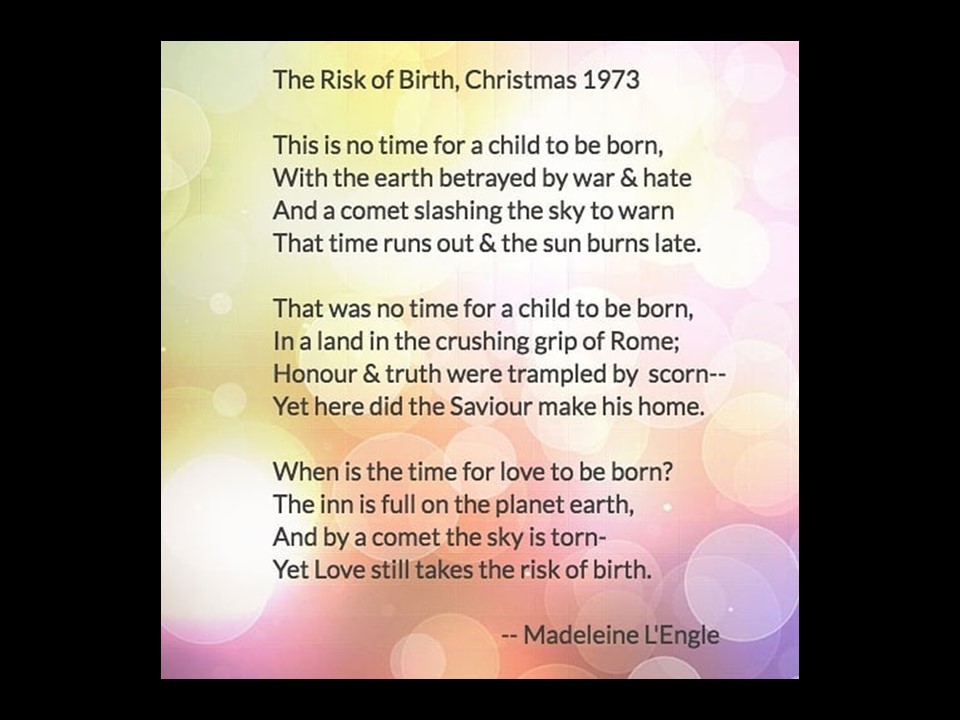
Here’s a Madeleine L’Engle poem that I always think of during Christmastime:

Sometimes I suspect that our insistence on the use of the word “unprecedented” and our slack-jawed confusion at the state of things is grounded in a sense of historical and situational hubris. Things feel awful and chaotic right now. If you are a practiced doomscroller, like me, the benefits of knowing what’s going on around the world can be quickly outweighed by our collective alarmist pessimism. In general, modern-day American humans are fairly ahistorical. We don’t understand ourselves as situated within a very long, cosmic sweep of time. This year feels different than last year, and the last five years feel like they’re trending in a worsening line, and it is very easy to get very fatalistic very quick.

And, to be honest, the reality of climate change and the destruction of the planet ARE irreversible, doggedly slouching toward assured self-destruction if we humans don’t take swift and decisive action to change our ways.

But other things, like plagues and tyranny, are, in the grand scope of human existence, just part of human existence. Yes, American democracy is a farce, but democracy in America has always been a farce. Yes, we are still in the midst of an on-going global pandemic that is killing millions, but this has happened many times before in the course of human history. Yes, our society is crushing the poorest and most vulnerable among us in favor of lining the pockets of the already obscenely rich, but isn’t it sort of utopian to imagine that human society would ever trend any other way?

I’m not saying that utopia is impossible – every bit of scripture I read and everything I know about following Jesus is command and invitation and encouragement to live against this grain of human tendency toward violence and oppression. I’m all in on following Jesus into another way of being human together. It is the raw material of my entire theological framework.

But somewhere along the line, we started assuming that all of that would be…easy. Or given. Or unchallenged. Somewhere along the line – at least in my privileged, middle-class, white, southern, american christian formation – the status quo became acceptable, and we started assuming that things would, for the most part, work out. We got the idea that we wouldn’t have to suffer or grieve or be cast out or challenged or faced with impossible, life-altering decisions.

Which was, to be fair, our own dang fault. Jesus never says that living another way or practicing mercy or pursuing peace or being people of grace and justice will be easy. In fact, he says things like “this will tear families apart.” He tells people to give up burying their dead parents in order to follow him. He predicts weeping and gnashing of teeth, wars and rumors of war, earthquakes and famines that are “only the beginning of the suffering.”

Some of us know this better than others. Those of us who have been on the underside of empire, who have lived intimately with the suffering inflicted by unjust and callous systems of the world understand that the status quo is usually pretty awful. That has always been true, and it is still true, today.

All of this was true on the night that Jesus was born – his parents had just been forced by the government to undertake an expensive, dangerous journey in order for their Adjusted Gross Income to be accurate in the IRS accounting system. Plagues and famine were stories woven into Mary and Joseph’s religious upbringing. As soon as Jesus was born, a jealous king would kill all the baby boys in town in a cruel attempt to keep a hold on his immense political power, and Jesus’ own family would be forced to flee their home as refugees.

Sure, yes, this time is awful. Lament is real and necessary and a spiritual practice gifted to us by God. We SHOULD notice and name and cry out about all the ways that life sucks. And, we might also remind ourselves that none of this is actually “unprecedented.” All of this HAS happened before. Pandemics HAVE raged and killed percentages of the human population. Governments HAVE abused their people and their power. Families HAVE been torn apart because some want to follow Jesus and others are hell-bent on serving only themselves.

That’s the whole point, actually. It’s why Jesus came, in the first place. Not to institute some sort of exit plan and gift those of us who are fed up with the state of things a parachute and a push out of this standard reality, but to remind us and invited us and reassure us that IT DOESN’T HAVE TO BE THIS WAY. That there is ANOTHER WAY OF LIVING. That God did not create us to live selfishly unto ourselves, but that we are created as people who belong to one another, called to love one another, practice mercy, and work together so that everyone might experience it.

Jesus wasn’t born in a palace, and he didn’t run for office. His preaching didn’t show up in the headlines or on CNN, and both the religious authorities and political powers hated his presence so much that they colluded to have him assassinated. Christmas isn’t meant to be pablum, insipid insistence that “all is calm” or “everything will be fine.” Christmas is God tearing open the heavens and coming down to earth – in the midst of all of it, all the violence, all the death, all the grief, all the suffering, all the joy, all the delight, all the love, all the mercy – to show us that another way is possible.

So, if you’re feeling less than festive right now, you are in good company. This is no time for a child to be born, right? But here, in the midst of omicron raging and gun sales skyrocketing and democracy crumbling; now, in the midst of hurricanes swirling and drought extending and industry emitting on; right here and right now, love still takes the risk of birth. We are always invited in, to take the risks ourselves.